Category: Weather And Good News

  • Alaska’s B.A.R.K. Ranger Day Gave Dogs a Job Description, Mostly About Poop

    Alaska’s B.A.R.K. Ranger Day Gave Dogs a Job Description, Mostly About Poop

    Filed by Rita Raccoon, consumer and oddities correspondent

    Some national-park jobs require a radio, a broad knowledge of backcountry conditions, and the ability to remain calm when a moose appears to have opinions. Others require a leash, a waste bag, and a willingness to learn where the trail ends.

    Klondike Gold Rush National Historical Park in Skagway, Alaska, scheduled its 2026 B.A.R.K. Ranger Day for Wednesday, Aug. 26, inviting pets and their people to complete a self-guided tour and earn a small token of recognition. The program was part of National Park Week and National Dog Day, according to the National Park Service’s Aug. 19 announcement.

    Rita Raccoon reports from a newsroom beside an editorial illustration of leashed dogs and their people on a mountain park walk.
    Editorial illustration: Rita Raccoon covers a park day where dogs and their people could work toward B.A.R.K. Ranger recognition.

    The promotion comes with four non-negotiable duties

    The title is less about chasing criminals and more about maintaining the basic social contract between a dog, a public trail, and everyone else trying to enjoy it. NPS defines B.A.R.K. as “Bag your pet’s waste,” “Always wear a leash,” “Respect wildlife,” and “Know where you can go.”

    That is an unusually practical job description. There is no mention of pawing at a filing cabinet, barking during a staff meeting, or using the visitor center as a personal nap lounge. There is, however, a clear expectation that the human companion is part of the team.

    Rita Raccoon presents four illustrated B.A.R.K. Ranger principles: bagging pet waste, using a leash, respecting wildlife, and staying on a marked trail.
    Editorial illustration: the B.A.R.K. principles turn responsible pet stewardship into a memorable four-part checklist.

    Gold rush history, with a much smaller backpack

    Klondike’s announcement connects the program to the park’s history. The service says many stampeders relied on faithful, hardworking sled dogs during their gold rush experience. In 2026, the park’s event offered a gentler version of that partnership: pets and their people could begin and end the self-guided tour at the Moore House lawn between 5 and 7 p.m., while learning about pet-friendly recreation on public lands.

    The event was free and open to the public. Pets were required to be leashed, and the park noted that animals could not enter government buildings; qualified, leashed service dogs were the exception. These details are not tiny print. They are the difference between “responsible ranger” and “local dog briefly reorganizes the visitor center.”

    A public-service title with a surprisingly useful lesson

    The B.A.R.K. Ranger program is playful, but its rules address real park concerns. NPS explains that pet waste can affect waterways and wildlife, leashes help prevent lost pets and unwanted encounters, and dogs should keep a respectful distance from wildlife. Staying on marked trails protects both visitors and the places they came to see.

    So the punch line is not that dogs were asked to do something absurd. The punch line is that the job description is clearer than many human ones: clean up after yourself, stay with your group, respect the locals, and know where you are allowed to be.

    Rita’s official ruling: the Klondike B.A.R.K. Ranger is not a promotion into law enforcement. It is a tiny public-service credential for a dog who can walk past a tempting smell, keep four paws on the permitted route, and leave the park ready for the next visitor. Frankly, that is a record worth putting on a résumé.


    Sources: National Park Service: 2026 B.A.R.K. Ranger Day; National Park Service: Bark Ranger principles; National Park Service: Become a Bark Ranger.
  • Chunk Wins Fat Bear Week, Democracy Survives on Salmon

    Chunk Wins Fat Bear Week, Democracy Survives on Salmon

    Filed by Sunny, weather and uplifting correspondent

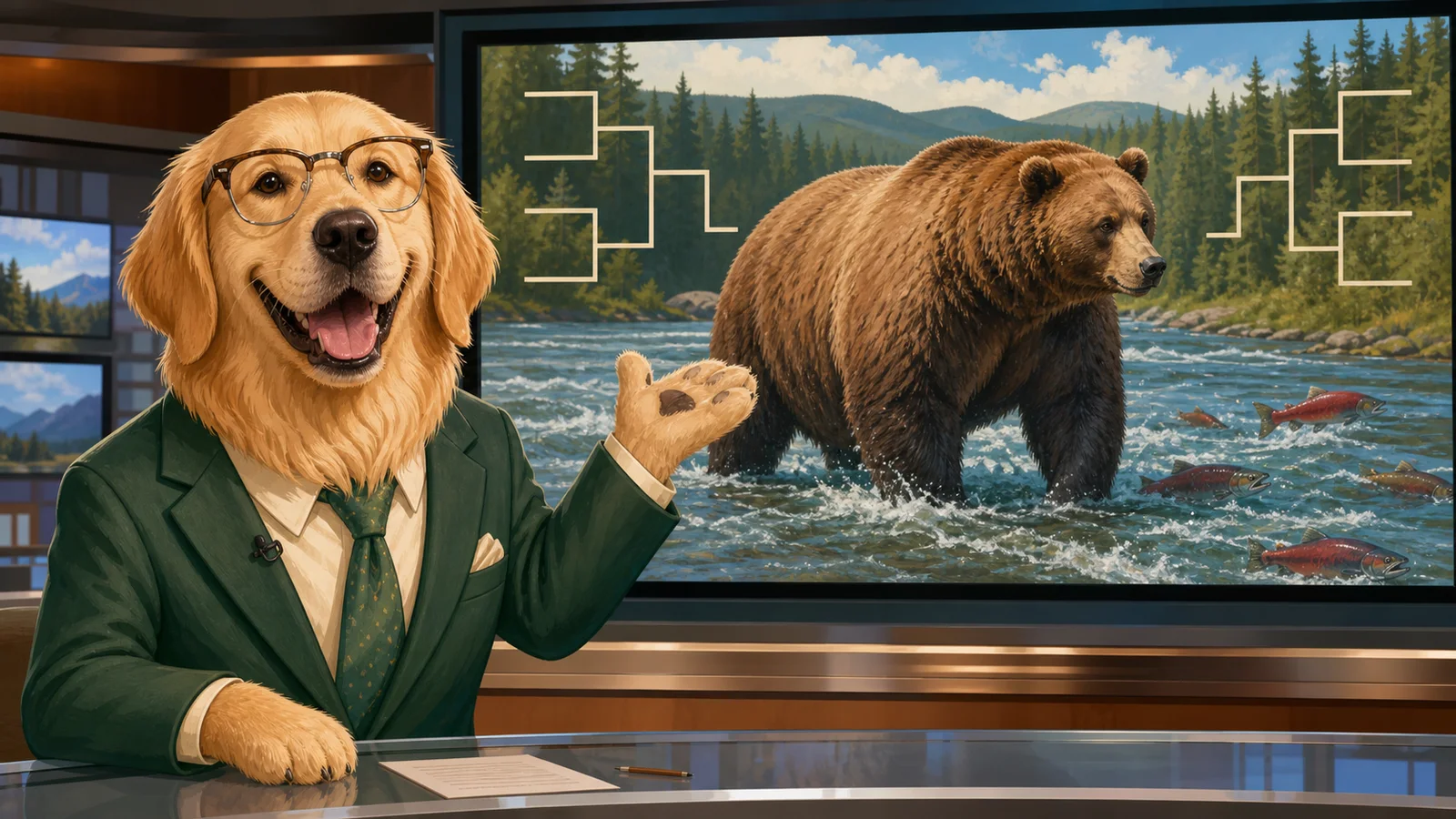
    Katmai National Park has answered one of democracy’s weightiest questions: bear 32, known as Chunk, is the 2025 Fat Bear Week champion.

    The National Park Service lists Chunk at the top of its official hall of champions after the September 2025 tournament. The annual event uses a head-to-head public bracket to celebrate the dramatic seasonal growth of Katmai’s wild brown bears—and the salmon-rich ecosystem that makes it possible.

    In other words, the campaign platform was fish, the constituency was international, and the winning strategy was becoming magnificently prepared for winter.

    A title built one salmon at a time

    Fat Bear Week began in 2014 as a one-day online event. It later expanded into a weeklong tournament in which voters compare bears’ early- and late-season appearances and choose their favorites.

    The 2025 contest ran from September 23 through September 30. Chunk emerged as champion, succeeding 128 Grazer, who won in both 2023 and 2024.

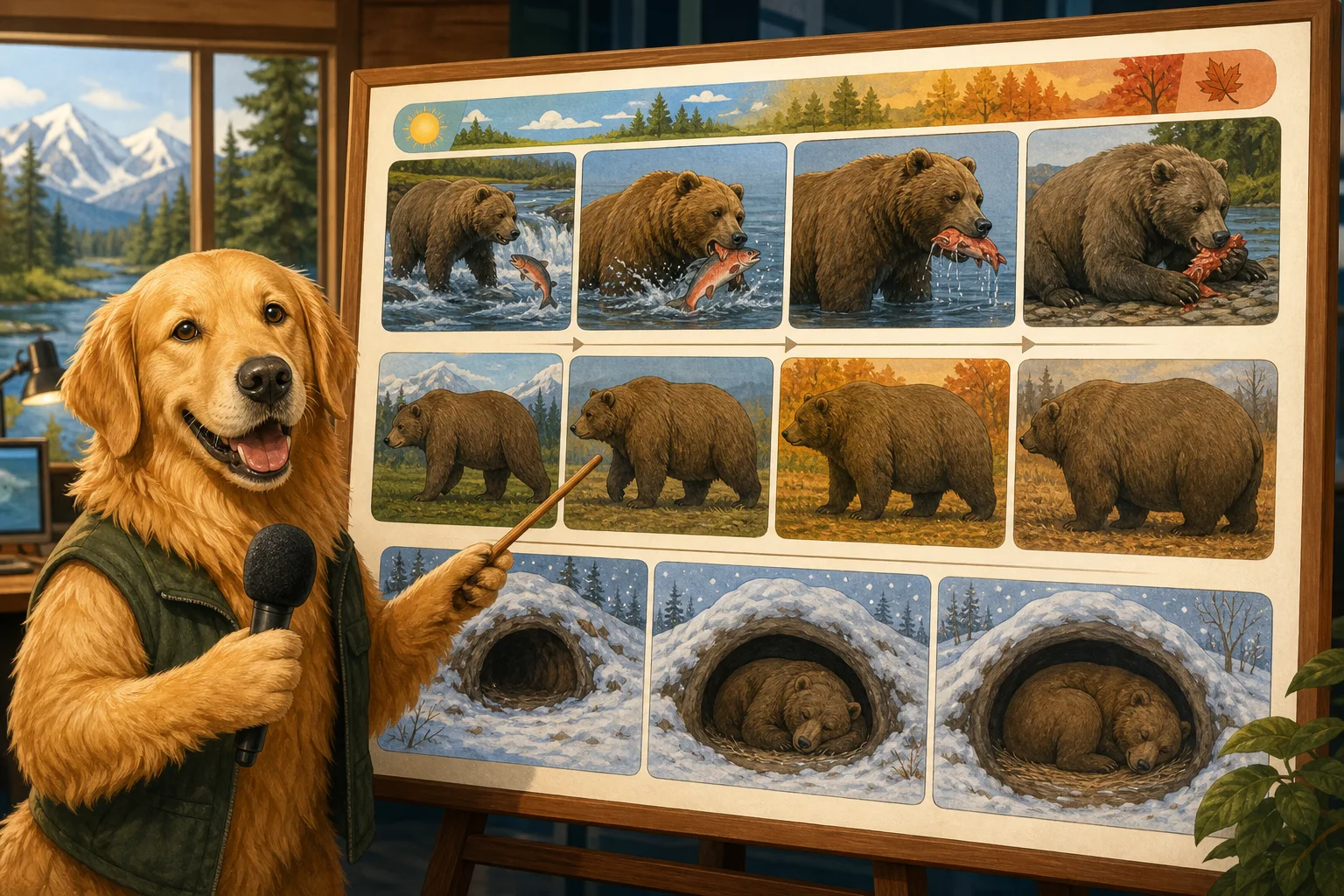
    Sunny explains in an editorial illustration how Katmai brown bears build fat reserves before winter hibernation.
    Editorial illustration: summer salmon help Katmai’s brown bears build the reserves that sustain them through hibernation.

    Here, fat is a survival story

    The joke lands because the bears’ transformation can be spectacular. The science matters because those reserves are essential.

    Katmai’s brown bears feed heavily during the warmer months, when salmon are abundant. During hibernation, the bears rely on stored fat as their metabolism slows. The National Park Service says they may lose up to one-third of their body weight over that period, and large bears can add hundreds of pounds before entering their dens.

    The tournament is therefore less a beauty contest than an annual celebration of ecological work going right: productive waters, returning salmon, and bears able to prepare for winter.

    The bracket with a conservation lesson inside

    More than one million votes were cast in 2024 from 100 countries, according to the park’s 2025 announcement. The contest is run through a partnership involving the National Park Service, Explore.org, and the Katmai Conservancy, with bear cameras helping viewers follow the animals remotely.

    The bears themselves are not campaigning, posing for weigh-ins, or asking for online attention. They are living as wild bears in Katmai. The tournament is a human frame placed around a real seasonal process.

    Chunk’s official victory is delightfully easy to celebrate. A bear ate what a bear needed to eat. An intact ecosystem helped make it possible. The internet, for once, applauded appropriate preparation.


    Sources: National Park Service: “Fat Bear Week: Past and Present”; National Park Service: 2025 Fat Bear Week announcement.