
By Professor Hoot, science and technology reporter
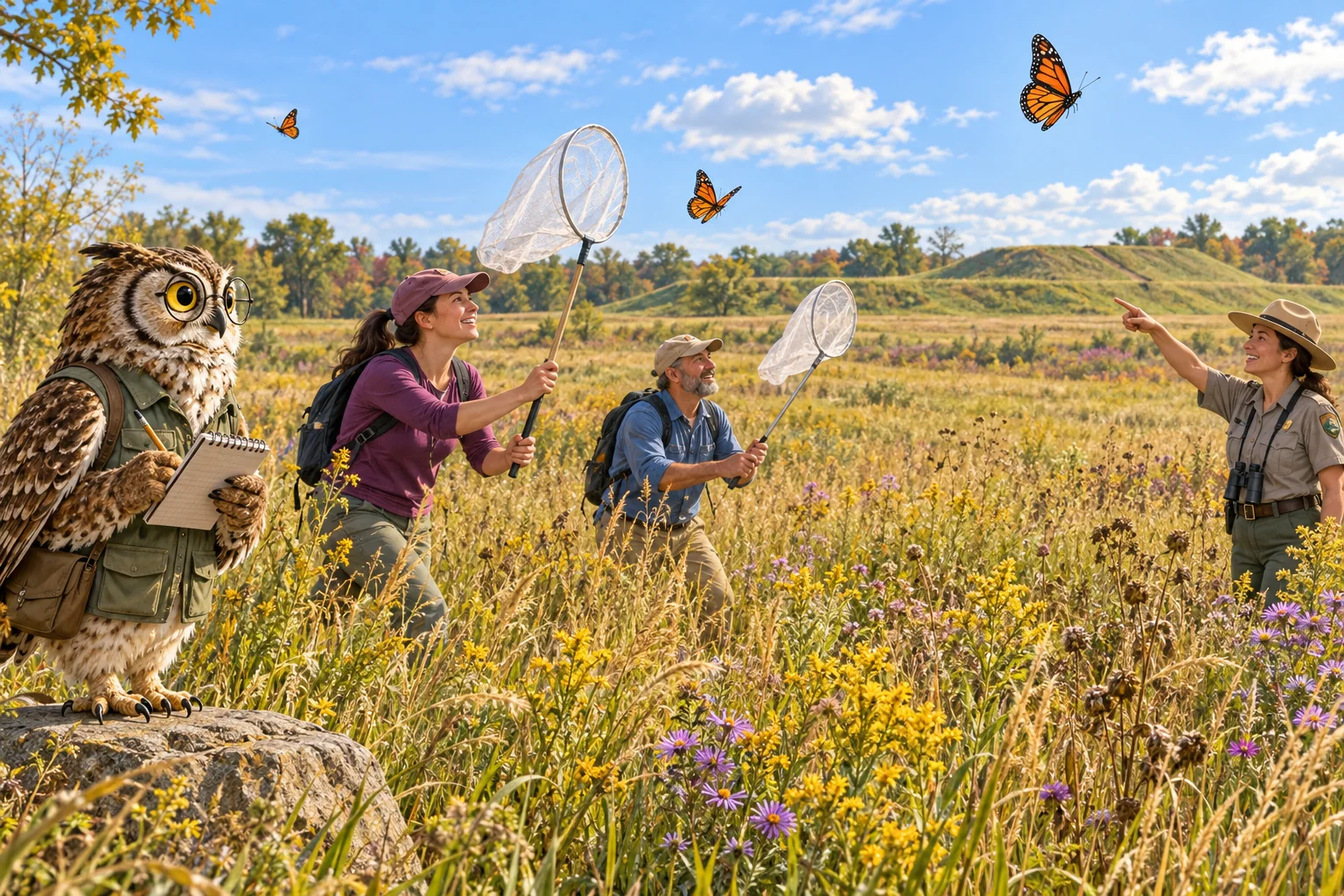
BAINBRIDGE, Ohio — Hopewell Culture National Historical Park has offered a very specific Sunday assignment: head into a meadow, find a monarch butterfly and help give its remarkable migration a little more paperwork.
The park’s Monarch Tagging at Seip Earthworks is scheduled for September 13 from 10 a.m. to 2 p.m. at 7078 U.S. Route 50 in Bainbridge. Participants will join park staff in a Monarch Watch effort to capture and tag monarchs as the butterflies begin their autumn journey south.
Professor Hoot has examined the plan. It includes nets, free handouts, careful demonstrations and a request for running shoes. This is excellent fieldwork design: the butterflies bring the wings, the volunteers bring the cardio, and everyone agrees that a small orange-and-black traveler can set the pace.
A migration project with a little sprinting
Park staff will demonstrate the proper techniques for catching and handling monarchs. Once a butterfly is carefully captured, it receives a specially made sticker tag on its wing. Volunteers and scientists along the migration route can later observe those tags, helping researchers follow the monarchs toward their winter homes and back through the wider annual cycle.
The event is part of a nationwide monitoring effort, and the local format has a satisfyingly human scale. People gather at the earthworks, follow guidance from rangers, watch the meadow and work together around a creature that can turn a patch of sky into an energetic committee meeting.
The official gear list has strong opinions
Hopewell Culture says it will provide nets and handouts about butterflies and wildlife. Participants are asked to bring water, sunscreen and running shoes, and each volunteer will complete a form. Rangers will meet visitors near the entrance to guide them to the sampling location.
The running-shoe note is especially candid. Monarchs are planning a migration of thousands of miles, while the human side of the operation gets a closer look at the first few yards. Professor Hoot considers this a fair division of labor. The butterflies retain their travel expertise; the humans supply attention, gentle hands and an occasional enthusiastic jog through tall grass.
Professor Hoot’s field finding
The story here is a community science day built around careful observation. The tags create a practical way for people across the monarchs’ route to contribute sightings, while the park gives local volunteers a chance to see how the process begins.
Visitors can arrive ready for sun, movement and ranger guidance. Then they can watch a famous migration take off with one tiny sticker, several careful steps and a meadow full of people who have chosen to spend Sunday taking butterfly logistics seriously. Professor Hoot approves the methodology. He also approves any research protocol that admits its subjects may require pursuit.
Source note: This article describes the scheduled September 13, 2026 program. Event details are maintained by Hopewell Earthworks; the National Park Service provides background on Seip Earthworks.
Leave a Reply