Author: Jacob

  • Vicksburg’s Visitor Center Had a Camel on the Roster

    Vicksburg’s Visitor Center Had a Camel on the Roster

    By Buster Barkley, lead reporter

    At Vicksburg National Military Park over the July 4 weekend, the visitor center had an unusually tall historical interpreter on the calendar: Douglas the Camel. The park’s program brought Doug Baum and the Texas Camel Corps to represent Douglas, the camel mascot associated with the 43rd Mississippi Infantry. That is a lot of history to carry before breakfast, even for a camel.

    The National Park Service scheduled the living-history program for July 2 through July 5, with the camel team stationed at the visitor center from 9 a.m. to noon. The event was sponsored by Friends of Vicksburg National Military Park and Campaign. The modern camel was there to help visitors explore a real, peculiar chapter of the Vicksburg Campaign—not to play an eyewitness. Buster’s notebook remains firmly in the present tense.

    Why a camel?

    Douglas was one of several animal mascots connected to Civil War units. The National Park Service says he carried supplies for the 43rd Mississippi and that his presence helped give the regiment its “Camel Regiment” nickname. An archived Vicksburg park release likewise describes Douglas as a mascot tied to Company A of the 43rd Mississippi Infantry.

    Editorial illustration of Buster Barkley examining a camel reference board in a warmly lit newsroom.
    Editorial illustration generated for Hilarious News; it is not a historical photograph or a depiction of a documented event.

    That does not make the story a joke at the expense of the war or the people caught in it. It makes it an unusually memorable route into history: an animal with a practical job, an improbable nickname, and a modern educational program built around explaining the record carefully.

    Buster’s official finding

    A camel at a Mississippi military-park visitor center is exactly the kind of detail that makes a reporter lower the notepad, blink twice, and ask for the source list. In this case, the sources agree: Douglas is part of the park’s long-running living-history storytelling, and the July program gave families a chance to meet a present-day camel while learning about the historical one.

    Our conclusion is therefore modest but firm: history sometimes arrives with four long legs and a better sense of timing than the rest of the newsroom.

    Sources

  • When the Parade Banned Spectators, the Dogs Came Prepared

    When the Parade Banned Spectators, the Dogs Came Prepared

    By Buster Barkley, lead reporter

    Some parades invite you to find a curb. Hot Springs National Park tried a more direct arrangement for its July 4 celebration: no spectators. If you showed up, the park said, you were in the parade.

    The National Park Service’s Freedom 250 page describes the All-American Community Parade as a half-mile trip along Bathhouse Row to Arlington Lawn. Participants were encouraged to dress for the occasion, and small decorative wagon floats were welcome. The park also said leashed pets could join if they behaved well with people and other pets. A concise standard, honestly. Humanity has spent centuries trying to meet it.

    At the picnic afterward, the listed activities included games, live performances, a cupcake race, and costume contests for children and pets. The park’s event information says the kids-and-pets contest did not require registration. That is the sort of procedural detail that makes a Boston terrier check his calendar twice and his collar once.

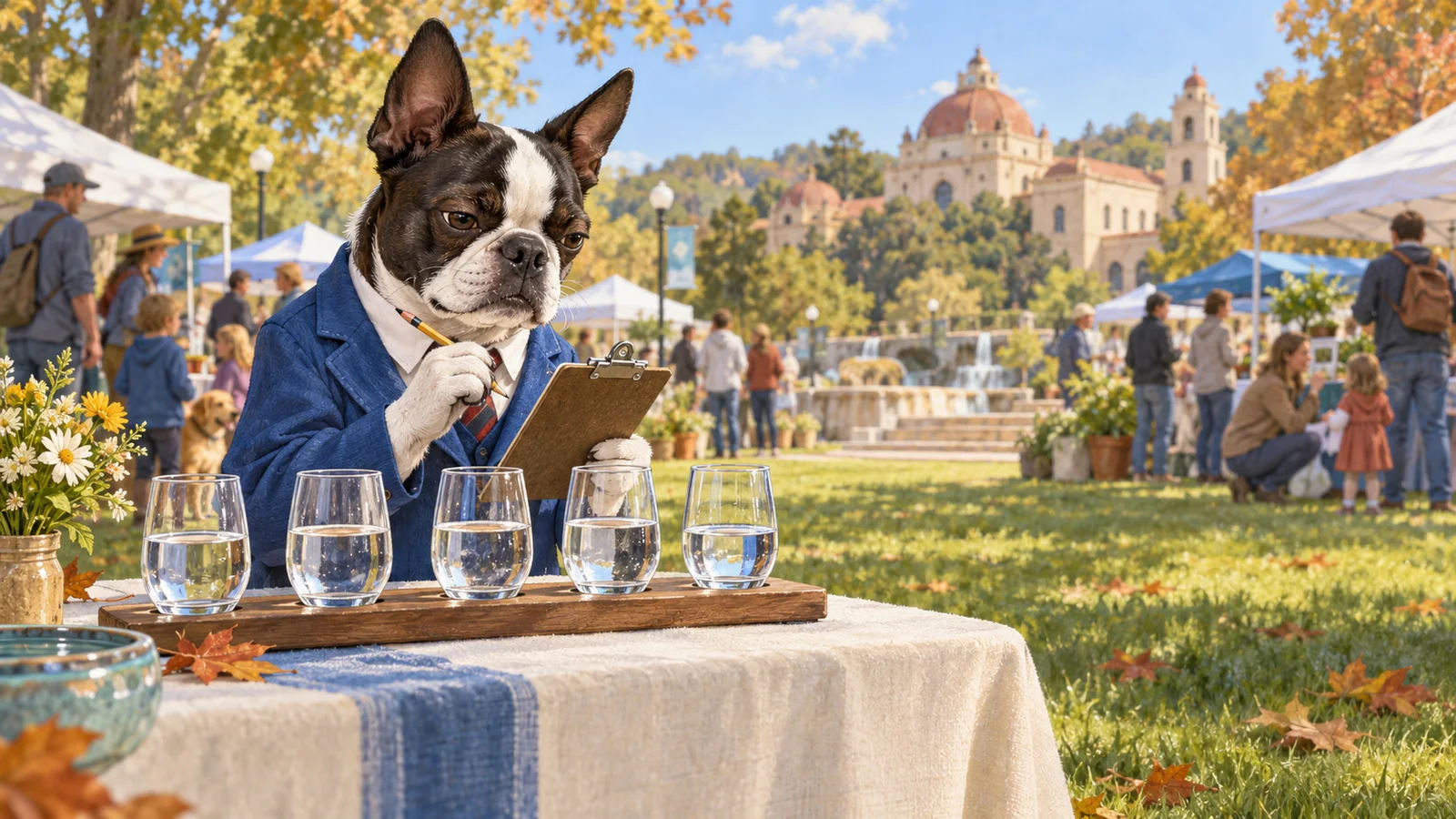
    Editorial illustration of Buster Barkley, a Boston terrier reporter, making notes beside a decorated wagon and a bow tie on a park picnic table.
    Editorial illustration generated for Hilarious News; it does not depict the Hot Springs event or its participants.

    Participation: mandatory-ish. Results: sensibly unreported.

    The public event materials reviewed for this story do not identify pet-contest entrants, winners, costumes, or a final tally. That restraint is worth preserving. What the record does establish is a community event designed to make joining in easier: a paved, mostly flat route; a picnic with shade tents and cooling stations; and a program that made room for both people and their leashed companions.

    A later park update includes a photo caption saying hundreds of participants walked in the July 4 community parade with floats and patriotic outfits. It does not turn the contest into a scorecard, but it does confirm that the invitation to participate was taken seriously.

    Buster’s official finding is therefore narrow: Hot Springs staged a real community parade where the audience became the procession, and the schedule explicitly made space for pets and their costume contest. The unverified details—who wore what, who won, and whether any dog objected to a bow tie—remain in the responsible custody of history.

    Sources: National Park Service: Hot Springs Celebrates America’s 250th Birthday; National Park Service news release: Red, White & YOU Picnic and Parade.

  • Fort Clatsop’s Guest Newfoundlands Reported for Seaman’s Day

    Fort Clatsop’s Guest Newfoundlands Reported for Seaman’s Day

    By Buster Barkley, lead reporter

    Earlier this month, Lewis and Clark National Historical Park held a day for the one member of the Corps of Discovery who could not have signed the guest book even if he had wanted to: Seaman, Meriwether Lewis’s Newfoundland dog.

    The park’s annual Seaman’s Day at Fort Clatsop invited visitors to learn about the expedition dog and meet visiting Newfoundland dogs and their people. The National Park Service says the Lewis and Clark Expedition’s 33 people wintered at Fort Clatsop in 1805–06; Seaman was its canine companion. A historical event with guest Newfoundlands is, by any reasonable reporting standard, an extremely good use of a calendar square.

    A dog with a very serious résumé

    According to the park’s event description, explorers’ journals described Seaman as a watchdog, hunter, retriever, companion and diplomat during the expedition. That is a formidable list for any colleague, especially one whose professional paperwork was presumably paw-print based.

    The park’s frequently asked questions page likewise identifies Seaman as Lewis’s Newfoundland and notes that today’s dogs can follow in his pawprints in many areas of the park, provided they follow the park’s leash and access rules. That is fair: history belongs to everyone, but the visitor center carpet has a job to do.

    Editorial illustration of Buster Barkley, a Boston terrier reporter, standing beside a Newfoundland dog on a wooden bridge facing a fort replica in a Pacific Northwest forest.
    Editorial illustration; it is not a depiction of Seaman, the 2026 event, or a historical scene.

    Guest Newfoundlands, please report to the fort

    For this year’s program, the park said it had invited guest Newfoundland dogs and their people to volunteer, giving visitors a chance to meet modern dogs of the same breed while learning about Seaman. The event listing asked visitors to limit bringing additional Newfoundland dogs for the safety of the canine participants and advised anyone bringing another dog to make sure that dog was comfortable around large dogs.

    That is not a snub; it is sensible event planning. Newfoundlands are famously substantial, and a gathering of them deserves the same calm logistics normally reserved for a parade float, a marching band, or a particularly ambitious couch.

    Why the story still works

    Seaman’s Day connects a big national story to a small, wonderfully direct question: what was the expedition dog like? The NPS pages give visitors a practical route into that question—history programming, a visit to Fort Clatsop, and a chance to meet the breed that keeps the story tangible without pretending the modern dogs are historical evidence.

    Buster’s field note is therefore brief: a park honored its famed expedition dog, welcomed some very large modern cousins, and asked everybody to keep the occasion safe and leashed. It is the kind of assignment that makes a reporter grateful for notebook paper, sturdy shoes and a respectful distance from an enthusiastic tail.

    Sources

  • Forkless Wonder Takes Key West’s Key Lime Crown in 59.60 Seconds

    Forkless Wonder Takes Key West’s Key Lime Crown in 59.60 Seconds

    By Rita Raccoon, consumer and oddities reporter

    Key West’s latest pie champion did not need a fork, a plate, or even the normal dignity associated with dessert. Kevin Renly of Summerland Key won the World Famous Key Lime Pie Eating Championship on July 4 by finishing a whipped-cream-topped, 9-inch Key lime pie in 59.60 seconds.

    The contest, part of the 2026 Key Lime Festival, asked competitors to keep their hands behind their backs. The festival schedule put the championship at Southernmost Beach Café in Key West, with 25 contestant places available; the Key West Chamber of Commerce reported that 25 people took the plunge on the day.

    A very specific route to glory

    Renly was not a first-time optimist. According to the Chamber’s report, he had competed in 2024 and 2025 before winning this year. Its account says he called the third attempt “the charm” and noted that he did not want to go home with another near miss on his 37th wedding anniversary.

    That is a lot of pressure to place on one pie. Rita’s consumer desk can confirm only the essentials: one whole pie, no hands, plenty of whipped cream, and a clock that apparently does not care about anyone’s shirt.

    Editorial illustration of Rita Raccoon timing an anonymous pie-eating contestant at a tropical outdoor café.
    Editorial illustration; it does not depict Kevin Renly or the 2026 contest.

    The rules were delightfully unforgiving

    The festival described the event as a head-to-head race to finish a 9-inch Key lime pie without using hands. The Chamber’s post-event report added that goggles and dive masks were permitted. That practical allowance suggests the organizers had a realistic understanding of whipped cream’s travel plans.

    Public radio station WLRN also identified Renly as the winner of the festival’s 14th annual contest. The result makes him this year’s holder of a title that is both highly specific and, for obvious reasons, unlikely to be defended in a white linen suit.

    Why Key West keeps making room for the mess

    The pie-eating championship was one event in the July 1–5 Key Lime Festival, a program that also listed tastings, a vendor village, a 5K, trivia and other citrus-centered gatherings. The City of Key West’s calendar recorded a festival kickoff street closure on July 1, another small signal that the celebration extends beyond a single very determined face-first moment.

    Renly’s 59.60-second finish is the measurable part of the story. The less measurable part is the public service performed by any grown adult who volunteers to turn a local dessert into a stopwatch event. On behalf of snacks everywhere: thank you for your citrus-forward commitment.

    Sources

  • The Birthday Alarm Was on Mute: Fort Stewart’s Bulldog Mascot Got Briefly Forgotten

    The Birthday Alarm Was on Mute: Fort Stewart’s Bulldog Mascot Got Briefly Forgotten

    Editorial illustration by Hilarious News. Buster Barkley did not attend the event and is not a source.

    There are many ways to mark a birthday: cake, a card, perhaps one tasteful banner. And then there is the method apparently demonstrated at Fort Stewart: hold a major Independence Day celebration on the same day as the birthday, and somehow leave the birthday bulldog off the guest list.

    A U.S. Army video published through DVIDS says Rocky, the official bulldog mascot of the 3rd Infantry Division, turned three while Fort Stewart held its 250th Independence Day celebration. The video’s description says the installation forgot the birthday. Rocky’s calendar-management team, we assume, has been asked to review the incident.

    Editorial illustration of Buster Barkley, a Boston terrier news host, beside a small three-candle birthday cake at a newsroom desk.
    Editorial illustration: Buster Barkley takes the missed-party memo personally.

    A mascot with a long paper trail

    Rocky is more than a conveniently photogenic dog. Fort Stewart identifies Rocky the Bulldog as the symbol of the 3rd Infantry Division. The Army page says the original Rocky character was created by Walt Disney in 1965, after the division sought a symbol for its “Dogface Soldier” identity. A separate Army video from 2025 describes the living Rocky as the division’s mascot.

    That makes the missed birthday less a case of one dog being overlooked and more a case of a unit’s most compact public-relations department being temporarily outmaneuvered by the calendar.

    What the video actually establishes

    The DVIDS page identifies the production as a 3rd Infantry Division video by Staff Sgt. Anthony Herrera. Its description places Rocky at Fort Stewart, Georgia, says his third birthday coincided with the installation’s 250th Independence Day celebration, and says the birthday was forgotten. The page lists a July 1 capture date and a July 8 posting date.

    It does not describe a formal make-good party, so we will not manufacture one. Nor are we assigning blame to any individual. The only defensible conclusion is the funniest one already in the official description: amid a celebration big enough for a national anniversary, the bulldog with the birthday briefly lost the scheduling battle.

    Editorial illustration of Buster Barkley writing a belated birthday note beside a small cupcake with three candles.
    Buster Barkley drafts the sort of belated note that should probably include treats.

    Buster Barkley’s dry conclusion

    “A calendar is not an enemy,” Buster reports from the desk. “It is merely a witness with excellent recall.”

    Rocky’s story is a small, cheerful reminder that mascots can carry real institutional history while still being, crucially, dogs who deserve to be told when cake is involved. The next celebration has one clear operational lesson: before the fireworks, check the bulldog’s birthday.

    Sources

  • Himalayan Spider Shows Up With a Happy Face and 32 Wardrobe Options

    Himalayan Spider Shows Up With a Happy Face and 32 Wardrobe Options

    Professor Hoot, Hilarious News science and technology reporter, has reviewed the research and would like the record to show that the spider’s expression is “encouraging, though not peer-reviewed.”

    A newly described cobweb spider from India’s Western Himalayas has arrived with the sort of markings that make an arachnid look unexpectedly pleased with quarterly results.

    Researchers Ashirwad Tripathy and Devi Priyadarshini formally described Theridion himalayana in the open-access journal Evolutionary Systematics. The tiny spider is commonly called the Himalayan happy-face spider because many individuals carry red, white, and dark markings on the abdomen that can resemble a smiling face.

    The resemblance is visual, not emotional. Scientists have not established that the spider is delighted, amused, or even mildly satisfied. It is still a spider. Professor Hoot considers this an important distinction for readers preparing invitations.

    An ant survey found a spider jackpot

    According to a publisher news release about the peer-reviewed study, the discovery began by accident. The original field survey focused on ants, but Tripathy kept sending high-altitude spider specimens to Priyadarshini for identification. A spider photographed beneath a leaf stood out because it resembled Hawaii’s famous happy-face spider, Theridion grallator.

    The researchers collected more than 60 specimens from Makku, Tala, and Mandal in Uttarakhand. Their formal taxonomic paper identifies the Himalayan population as a distinct species using physical characteristics and DNA evidence. The two happy-face spiders are lookalikes from separate lineages, not one species with an extremely ambitious travel itinerary.

    “Convergent whimsy,” Professor Hoot observed, “remains whimsy with documentation.”

    Editorial illustration of Professor Hoot comparing several naturally varied spider abdomen patterns under magnifiers
    Professor Hoot reviews an editorial interpretation of spider polymorphism. The artwork is not a research specimen plate.

    One species, 32 wardrobe options

    The study documented 32 color variations, known as morphs. The patterns combine pale yellow or cream backgrounds with different arrangements of red, white, and dark markings. Many females in the sample carried the face-like pattern, while most males were comparatively plain.

    That makes the spider polymorphic: members of the same species can appear in multiple naturally occurring forms. The exact function of those patterns has not been settled. The researchers discuss possible roles involving survival and camouflage, but further work is needed before anyone awards the abdomen design department a trophy.

    A separate Research Matters explainer reports that the spiders were found hanging beneath broad leaves on fine silk in moist, temperate forests. The publisher release places the discovery above 2,000 meters in elevation and notes that specimens were often associated with ginger plants.

    A smile that asks more questions

    The discovery adds a distinct species to the cobweb-spider family and gives researchers another case for studying how strikingly similar patterns can arise far apart. It also underscores how much biodiversity remains to be documented in Himalayan forests.

    The responsible conclusion is not that spiders have developed brand strategy. It is that careful fieldwork, specimen comparison, and genetic analysis can turn an accidental find under a leaf into a formally described species—with 32 visible reminders that nature rarely settles for one outfit.

    Professor Hoot’s final assessment: “The face may be incidental. The paperwork is immaculate.”

    Sources

  • Arizona’s Ant Spa Puts Tiny Groomers on the Big Shift

    Arizona’s Ant Spa Puts Tiny Groomers on the Big Shift

    Professor Hoot, Science Desk — In southeastern Arizona, a group of ants appears to have opened a cleaning station for other ants. There is no appointment book, no cucumber water and, so far, no evidence that anyone has tried to sell a premium mandible package.

    The actual finding is stranger and better than the joke. Entomologist Mark Moffett, a research associate at the Smithsonian’s National Museum of Natural History, documented tiny cone ants from an undescribed species in the genus Dorymyrmex climbing onto much larger red harvester ants, Pogonomyrmex barbatus, and grooming them. The observation was described in the peer-reviewed journal Ecology and Evolution in April 2026.

    The desert’s smallest service counter

    Moffett noticed the behavior near a research station in Arizona’s Chiricahua Mountains. Harvester-ant workers were moving out to collect seeds when a few seemed to freeze near the nests of the smaller ants. A closer look revealed cone ants on their bodies.

    Over several days, Moffett watched at least 90 harvester ants receive attention. A harvester would approach a cone-ant nest, stand stiffly high on her legs and hold her serrated mandibles open. Usually within a minute, a cone ant emerged, climbed aboard and began inspecting the larger ant.

    The Smithsonian says the sessions ranged from less than 15 seconds to more than five minutes. As many as five cone ants could work on one harvester, licking and nibbling its body with tongue-like mouthparts — including the area between those open jaws. The larger ant tolerated the work without biting.

    Editorial illustration of Professor Hoot presenting a scale model of tiny cone ants grooming a much larger red harvester ant
    Professor Hoot presents the scale difference between the tiny cone-ant cleaners and their much larger harvester-ant customer. Original editorial illustration; not a documentary image.

    Departure was less graceful. When a harvester had apparently had enough, she bucked the smaller ants off so forcefully that she often ended up on her back before hurrying away. Every worker involved was female, which means this may be the most efficiently staffed spa in Arizona.

    “The protocol is precise: arrive, hold still, permit inspection, then conclude the appointment with an unscheduled backward somersault.”

    Professor Hoot, Hilarious News science host

    A first, with the benefits still under study

    The behavior resembles marine cleaning stations, where small fish or shrimp remove material from much larger animals. Moffett’s paper presents it as the first known case of one ant species cleaning a much larger ant species.

    What each species gets from the arrangement remains unresolved. One possibility is that the cone ants consume tiny, energy-rich particles left on the harvesters, perhaps flakes from the seeds the larger ants collect. Moffett also suggested that the smaller ants may reach places that a harvester’s nestmates cannot, potentially removing debris, spores or parasites. Future work would need to test whether the sessions reduce infections or change either species’ microbiome.

    There is one particularly interesting clue: the cone ants attended living harvesters but did not clean frozen specimens placed near their nests. That suggests the interaction is more specific than a simple interest in ant-shaped objects.

    Nature’s latest workplace comedy therefore ends with an honest scientific answer: the grooming is real, the choreography is documented, and the payment system is still under investigation.

    Professor Hoot’s final desk note: “Please resist calling it a manicure. Ants do not have hands, and precision in terminology is the first defense against chaos.”

    Sources

  • DNA Says the Alcatraz Coyote Took the Two-Mile Route to Prison

    DNA Says the Alcatraz Coyote Took the Two-Mile Route to Prison

    SAN FRANCISCO — Alcatraz spent decades cultivating a reputation as the island nobody could swim away from. A male coyote has now complicated the branding by swimming the other direction — and, according to DNA evidence, taking the long route.

    The National Park Service announced on May 4 that genetic analysis traced the animal to the coyote population on Angel Island State Park. That means his journey to Alcatraz was about two miles across San Francisco Bay, not the shorter crossing from San Francisco that researchers initially suspected.

    The evidence was less glamorous than the crossing

    Park biologists collected tracks and scat after the coyote appeared on Alcatraz. The scat went to the University of California, Davis, Veterinary Genetics Laboratory, where researchers matched the DNA to a coyote previously sampled from the Angel Island population.

    That result surprised the park team. Angel Island is farther from Alcatraz than the San Francisco shoreline, and the bay’s cold water and strong currents make the swim more than a casual dog paddle. The National Park Service described coyotes as resilient and adaptable; this one supplied a particularly soggy demonstration.

    Illustration of Rita Raccoon tracing the coyote's island-to-island route on a newsroom map
    Rita Raccoon reviews the two-island route. Illustration created for Hilarious News; it is not a reconstruction of the animal’s exact path.

    A mystery with one solid answer

    The coyote was seen reaching Alcatraz in January 2026. Later evidence showed that he had moved around the island, but the Park Service said in May that his whereabouts were unknown. Officials found no evidence that he remained there.

    That uncertainty matters. Alcatraz is an important nesting site for seabirds, and park staff had been prepared to capture and relocate the coyote if necessary. The animal’s disappearance from cameras and observations meant researchers could solve the origin story without claiming to know the ending.

    Why coyotes make trips like this

    Coyotes can swim, though a crossing of this length in San Francisco Bay is unusual. Wildlife experts told the Associated Press that a lone coyote may travel to seek territory or a mate. No researcher has established this animal’s motive, so the safe conclusion is simply that he left Angel Island, entered the bay, and reached Alcatraz under his own power.

    The National Park Service also emphasized that the feat fits the species. Coyotes have adapted to cities, parks, deserts and coastlines. This individual merely added “historic federal prison island” to an already flexible housing portfolio.

    For visitors, the usual wildlife rules still apply: admire coyotes from a distance, do not feed or approach them, and leave fieldwork to trained staff. Athletic achievement does not turn a wild animal into a tour guide.

    The verdict from the oddities desk

    The funniest part of the story is also the best-supported one. Researchers assumed the coyote had taken the shorter swim. DNA showed that he had come from farther away. Alcatraz’s newest maritime legend was not an escapee, not a stowaway and not a city coyote looking for a dramatic backdrop. He was an island coyote who chose a second island and apparently declined every conventional form of transportation.

    Rita Raccoon covers animals, consumer mysteries and any receipt that raises more questions than it answers.

    Sources

  • Chunk Wins Fat Bear Week, Democracy Survives on Salmon

    Chunk Wins Fat Bear Week, Democracy Survives on Salmon

    Filed by Sunny, weather and uplifting correspondent

    Katmai National Park has answered one of democracy’s weightiest questions: bear 32, known as Chunk, is the 2025 Fat Bear Week champion.

    The National Park Service lists Chunk at the top of its official hall of champions after the September 2025 tournament. The annual event uses a head-to-head public bracket to celebrate the dramatic seasonal growth of Katmai’s wild brown bears—and the salmon-rich ecosystem that makes it possible.

    In other words, the campaign platform was fish, the constituency was international, and the winning strategy was becoming magnificently prepared for winter.

    A title built one salmon at a time

    Fat Bear Week began in 2014 as a one-day online event. It later expanded into a weeklong tournament in which voters compare bears’ early- and late-season appearances and choose their favorites.

    The 2025 contest ran from September 23 through September 30. Chunk emerged as champion, succeeding 128 Grazer, who won in both 2023 and 2024.

    Sunny explains in an editorial illustration how Katmai brown bears build fat reserves before winter hibernation.
    Editorial illustration: summer salmon help Katmai’s brown bears build the reserves that sustain them through hibernation.

    Here, fat is a survival story

    The joke lands because the bears’ transformation can be spectacular. The science matters because those reserves are essential.

    Katmai’s brown bears feed heavily during the warmer months, when salmon are abundant. During hibernation, the bears rely on stored fat as their metabolism slows. The National Park Service says they may lose up to one-third of their body weight over that period, and large bears can add hundreds of pounds before entering their dens.

    The tournament is therefore less a beauty contest than an annual celebration of ecological work going right: productive waters, returning salmon, and bears able to prepare for winter.

    The bracket with a conservation lesson inside

    More than one million votes were cast in 2024 from 100 countries, according to the park’s 2025 announcement. The contest is run through a partnership involving the National Park Service, Explore.org, and the Katmai Conservancy, with bear cameras helping viewers follow the animals remotely.

    The bears themselves are not campaigning, posing for weigh-ins, or asking for online attention. They are living as wild bears in Katmai. The tournament is a human frame placed around a real seasonal process.

    Chunk’s official victory is delightfully easy to celebrate. A bear ate what a bear needed to eat. An intact ecosystem helped make it possible. The internet, for once, applauded appropriate preparation.


    Sources: National Park Service: “Fat Bear Week: Past and Present”; National Park Service: 2025 Fat Bear Week announcement.

  • Bumblebees Rolled Tiny Wooden Balls Because Apparently Recess Is Universal

    Bumblebees Rolled Tiny Wooden Balls Because Apparently Recess Is Universal

    Filed by Buster Barkley, lead correspondent

    Bumblebees have now added “rolling wooden balls for no obvious practical reason” to the list of activities science must investigate with a straight face.

    In a peer-reviewed study published in Animal Behaviour, researchers reported that buff-tailed bumblebees repeatedly rolled small wooden balls even when the activity offered no food and was not required to reach food. The research team concluded that the behavior met established criteria for animal play.

    This was not bee soccer. There were no goals, uniforms, referees, or lucrative transfer negotiations. There were simply bees and movable balls.

    The balls were optional, which is the whole point

    The researchers designed their experiments to test whether ball rolling was useful for immediate survival or whether the bees might be clearing clutter, looking for food, or performing mating behavior. Their observations did not support those practical explanations.

    Instead, ball rolling was voluntary, repeated but not rigidly identical, and initiated under low-stress conditions. The bees could travel through the setup without rolling anything. Some returned to the balls anyway.

    Buster Barkley presents an illustrated laboratory choice setup where bumblebees can pass through or interact with wooden balls.
    Editorial illustration of the experimental idea: the route and the ball area were separate choices.

    Younger bees were the busier players

    The study found age and sex differences. Younger bees rolled more balls than older bees, a pattern the authors compared with the greater frequency of play in younger mammals. Male bees spent longer on individual rolls than female bees.

    In another part of the research, bees learned to associate one colored chamber with access to movable balls. When later tested without the balls, they preferred the color that had been paired with rolling. The authors interpreted that result as evidence that the activity itself was rewarding.

    The finding matters beyond the obvious appeal of tiny insects choosing tiny toys. Play is often discussed in relation to mammals and birds. Evidence that an insect may engage in a positive, self-directed activity adds to questions about how scientists understand insect cognition and affective states.

    A careful conclusion, with excellent footage

    The paper does not say that every bee has a favorite sport, nor does it turn a laboratory behavior into a claim about all insects. It reports that these bumblebees’ ball rolling satisfied the behavioral criteria the researchers used for play.

    That is a measured scientific conclusion. It is also, by extraordinary good fortune, about bees playing with balls.


    Sources: Dona et al., “Do bumble bees play?” in Animal Behaviour; Queen Mary University of London research summary.