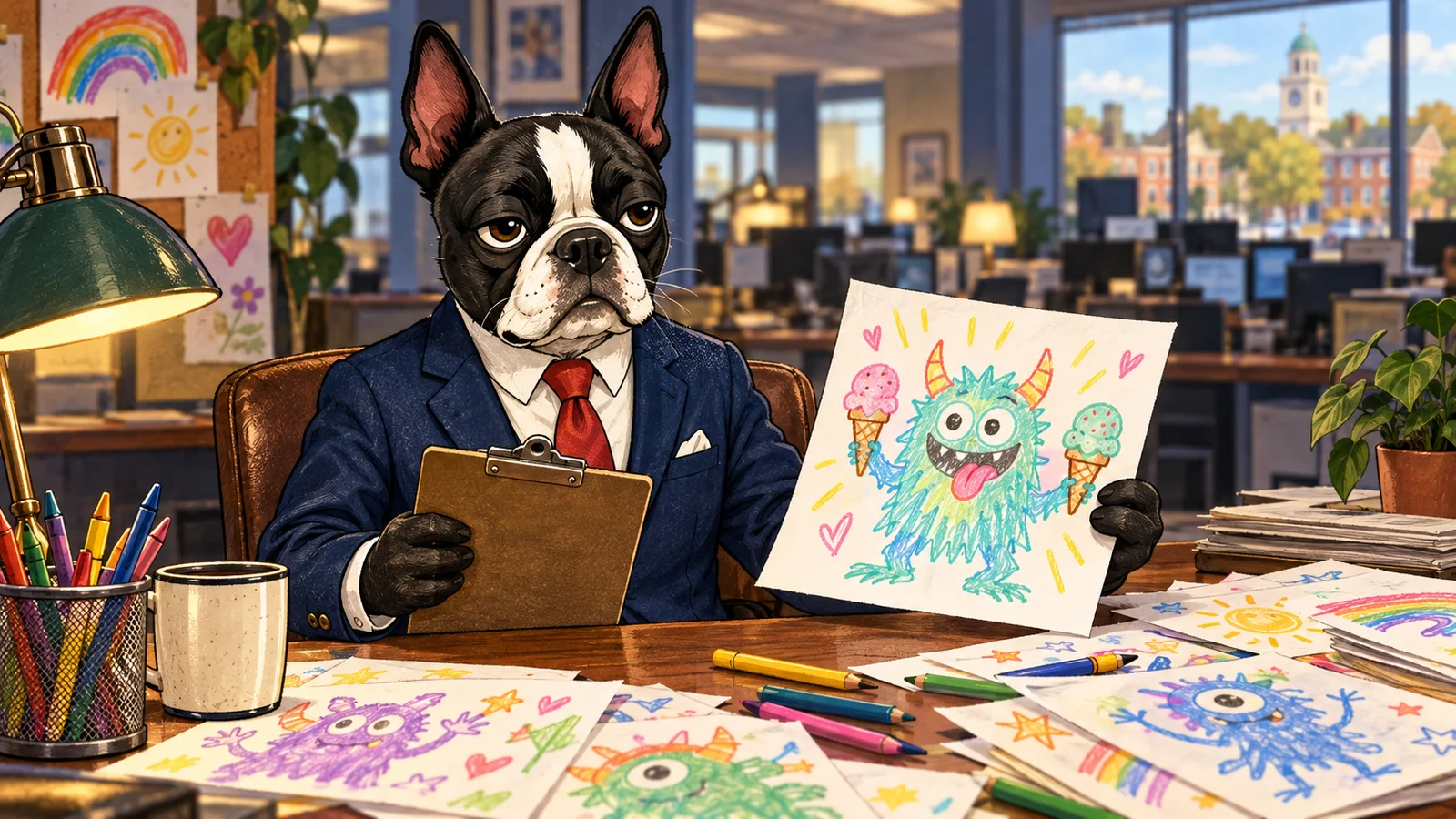
Maidstone’s newest official monster has an appetite for ice cream and a very respectable set of credentials: it won the town’s mascot contest. Kent Local News reports that Kevin the Ice Cream Monster was designed by local primary school pupil Mya Edwards and selected as the town’s official mascot.
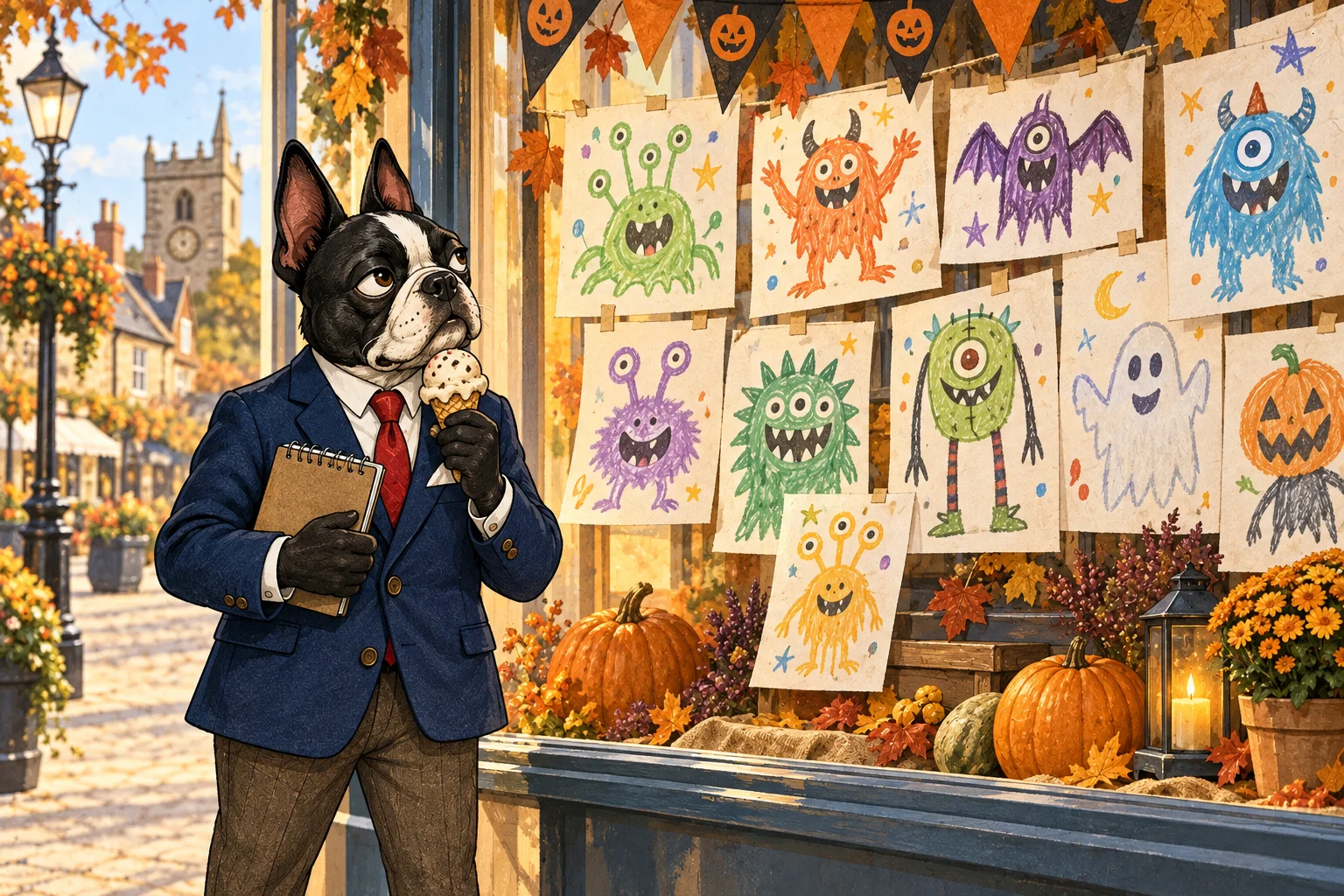
That gives Maidstone’s upcoming Halloween invasion a mascot with excellent priorities. Buster Barkley, Hilarious News’ earnest Boston terrier reporter, has reviewed the brief and would like to note that a monster powered by ice cream is already prepared for the toughest part of public life: snack planning.
A community contest with a monster-sized payoff
One Maidstone’s event page sets Monster Mash for Oct. 25–31, 2026, during the October half-term break. Kevin’s design will lead a weeklong Halloween takeover in the town centre.
Organizers plan to bring 16 community-created monster designs to life around Maidstone town centre as larger-than-life inflatables. A free trail will help visitors find them, while a Meet the Monsters exhibition on Gabriel’s Hill will display the competition designs.
Kent Local News credits Mya Edwards with Kevin’s design. A favorite frozen treat has now landed its creator’s character the title role in a townwide monster hunt—an efficient route from drawing to municipal fame, even by Buster’s newsroom standards.
Editorial illustration
Kevin’s first big week
Monster Mash is organized by One Maidstone BID with support from Maidstone Borough Council. The winning design will join the community creations visitors can find across town, and the competition gallery will let people see the broader range of ideas that inspired the takeover.
For a young artist, seeing a drawing become an official mascot and a larger-than-life town feature is a remarkable local victory. For Kevin, the new job appears to come with one clear responsibility: keep Maidstone’s monster hunt sweet.
Filed by Buster Barkley, Boston terrier correspondent
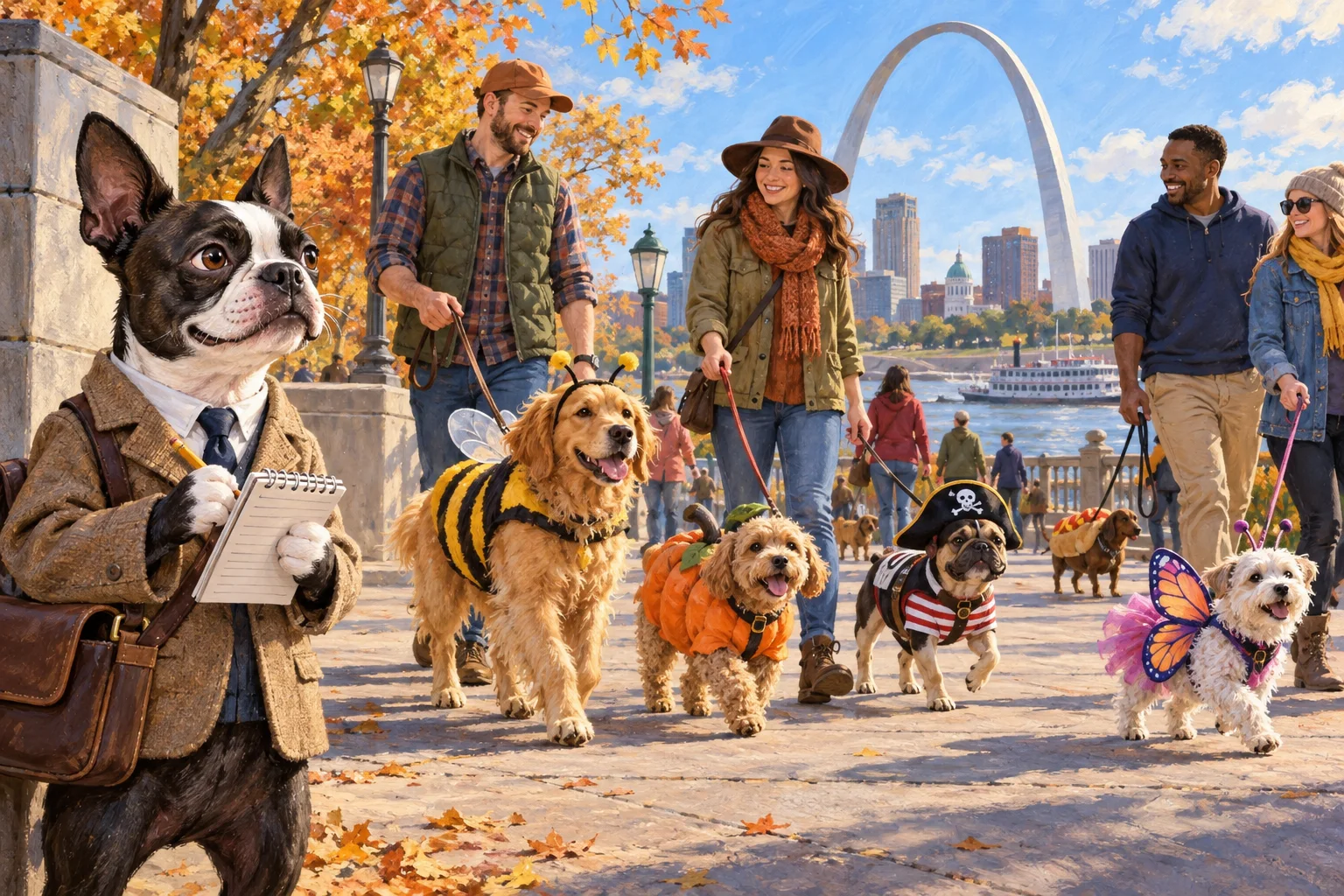
Dogs will get a one-hour runway beneath the Gateway Arch when Gateway Arch National Park holds its free B.A.R.K. Costume Parade on Saturday, Oct. 17. The park’s event page lists a 10 a.m. start outside the visitor center entrance, with dogs asked to arrive leashed and friendly.
That is a tidy assignment for a Saturday morning: arrive in costume, keep the leash attached, and give St. Louis a little extra tail-wagging pageantry. The National Park Service lists the parade as free and open to everyone. Its outdoor schedule also comes with a sensible weather note: the event will be canceled if conditions turn inclement.
Buster’s field note: the leash is part of the ensemble
The park’s B.A.R.K. Ranger guidance supplies a useful set of ground rules for four-legged visitors: bag pet waste, always wear a leash, respect wildlife, and know where pets may go. That last item matters at a national park: Gateway Arch welcomes pets outdoors, while service animals are permitted inside the visitor center.
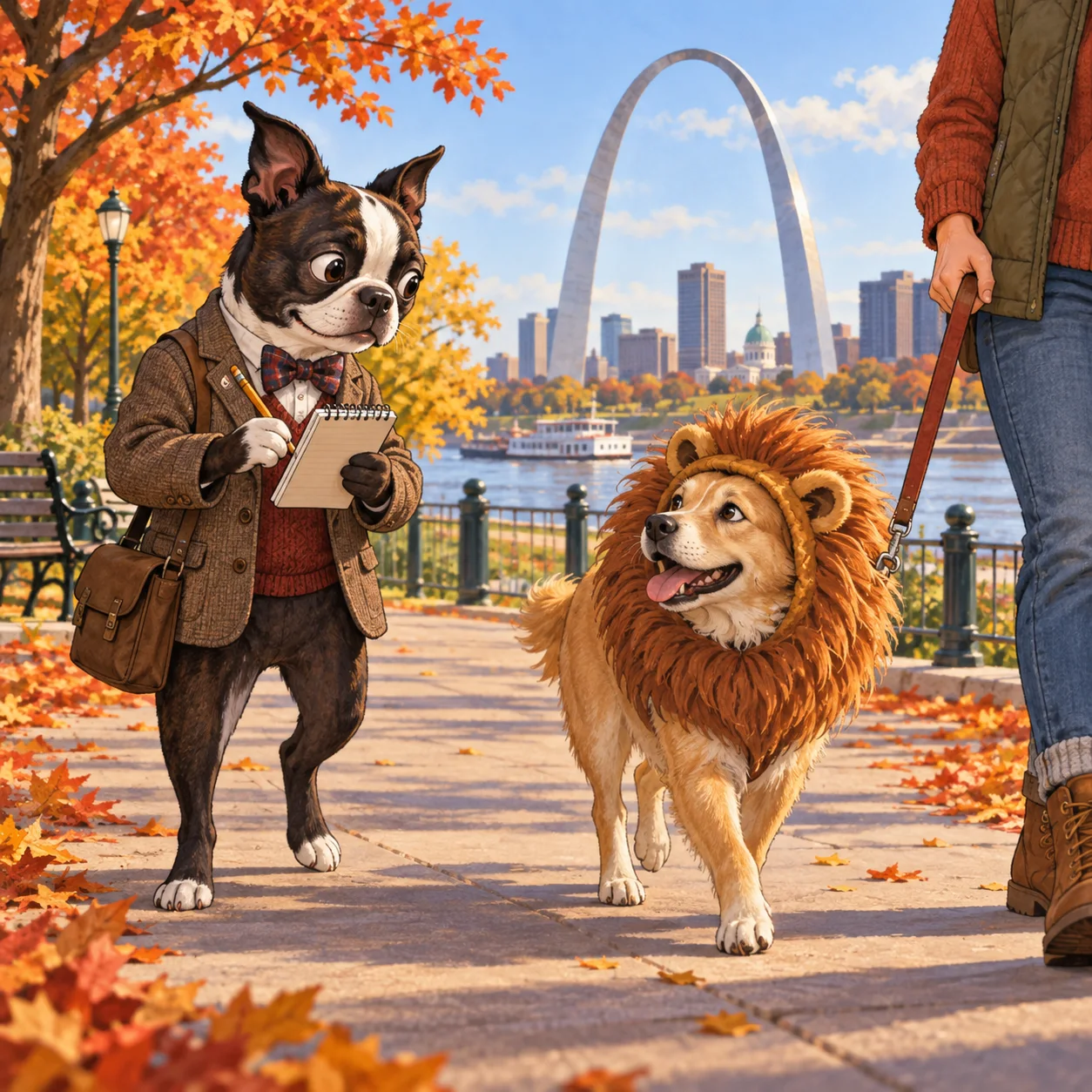
Editorial illustration: Buster checks the field notes while a costumed dog and its person enjoy the Gateway Arch riverfront.
For Buster, the official dress code has one clear accessory requirement: a leash. The costumes can supply the flourish, whether a dog arrives with a little extra mane, cape, or seasonal color. The park’s instructions keep the outing comfortable for the dogs, their people, and the wildlife sharing the grounds.
A parade with a very good view
The event listing describes a one-hour program beginning at the park entrance. Visitors can meet outside the Gateway Arch visitor center, then enjoy a dog parade with one of the country’s most recognizable landmarks in the background. NPS asks participants to keep dogs leashed and friendly throughout the event.
Buster’s closing assessment: a costume parade beneath a 630-foot monument is a strong way to spend an autumn hour. The dogs provide the fashion desk; the Arch handles the skyline; and the humans can focus on holding the leash and remembering the waste bags.
Event details: Saturday, Oct. 17, 2026, at 10 a.m.; free; meet outside the Gateway Arch visitor center entrance. The outdoor event is subject to cancellation in inclement weather. Check the National Park Service event page for current details and the park’s pet guidance before heading out.
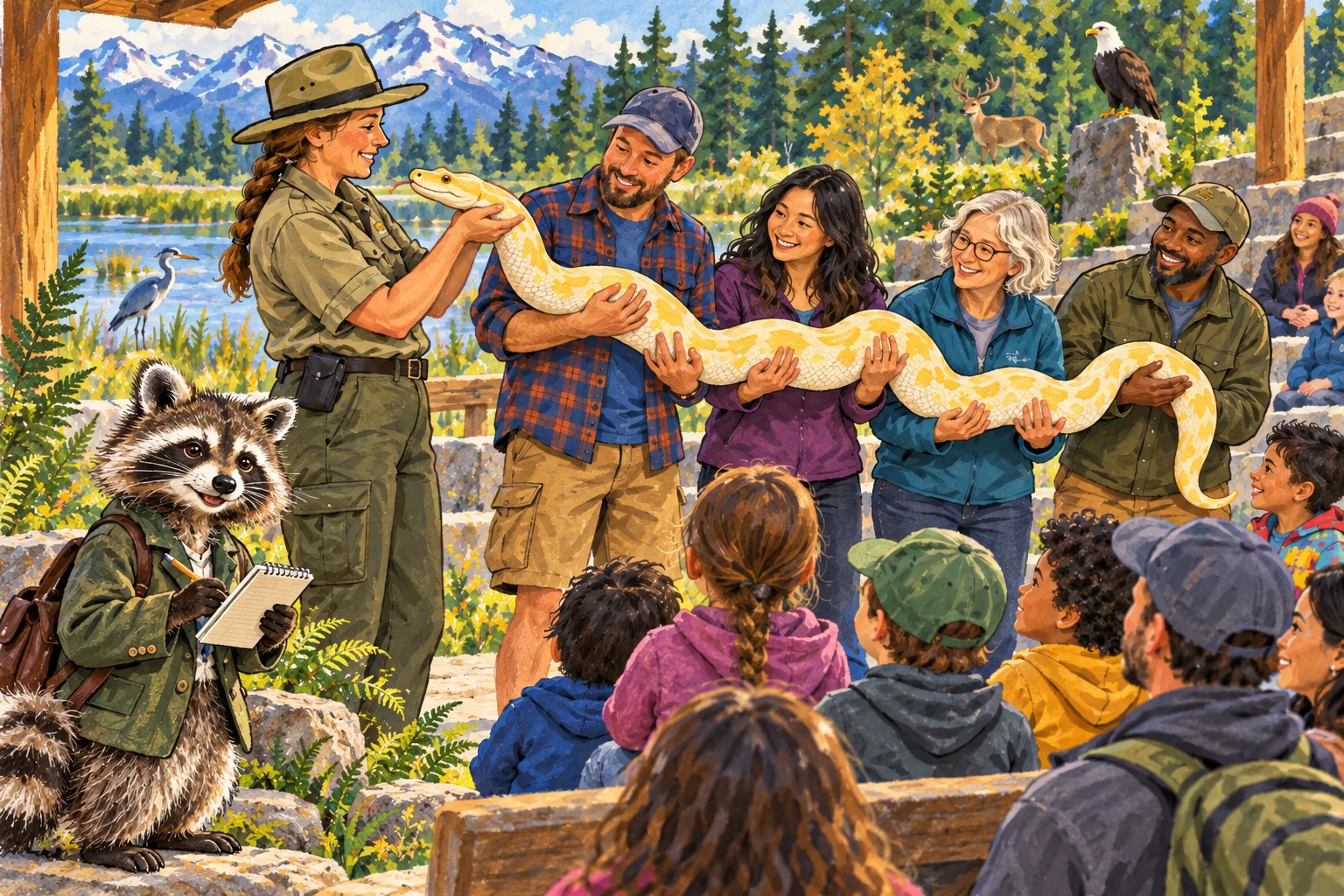
At the 37th Nisqually Watershed Festival, the line of willing volunteers for a very large snake was one of the day’s most memorable attractions. Reptile presenter Scott Petersen lifted a yellow-and-white albino python at the Billy Frank Jr. Nisqually National Wildlife Refuge, and volunteers lined up to support the animal as families watched.
Rita Raccoon’s field note: when the guest list includes a python, “hands-on” becomes a surprisingly literal phrase.
Editorial illustration: Rita Raccoon observes a volunteer-led python presentation.
The Sept. 26 gathering drew an estimated 1,585 visitors, according to refuge visitor-services manager Julia Pinnix. Organizers hired four school buses to bring visitors from the Hawks Prairie Park and Ride, while the refuge amphitheater filled with people eager to see salmon and dogfish-shark dissections.
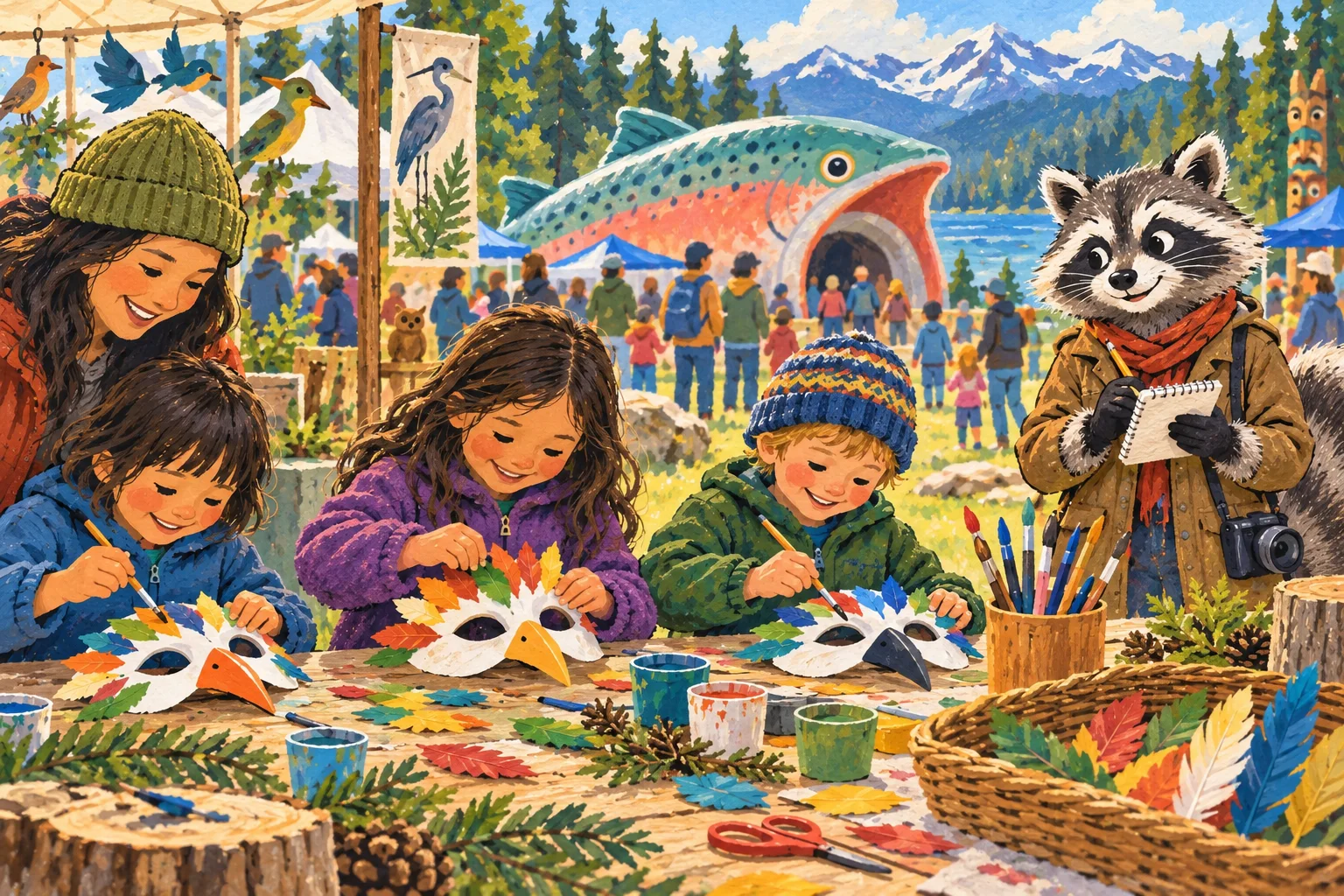
The festival’s itinerary kept several kinds of curiosity busy. Children decorated paper windsocks and bird-beak masks, climbed into an inflatable salmon tent for traditional stories, and tried an obstacle course. Guests could also meet animals with the Reptile Man and falconer John, browse wildlife exhibits, pick up books from the Timberland Library bookmobile, and hear Olympia band Vendredi’s Bag.
Editorial illustration: bird-mask making brought festival creativity to the craft table.
The annual festival is organized by a committee that includes the Nisqually Indian Tribe, Tacoma Power, the Nisqually River Council and River Foundation, the Nisqually River Education Project, the Nisqually Reach Nature Center, Friends of Nisqually National Wildlife Refuge Complex, and the refuge. This year’s student poster theme was birds of the watershed.
It took at least 70 volunteers to run the day, Pinnix said. That is a sizeable crew for a community event—and, apparently, enough people to form an orderly support team when an albino python makes a main-stage appearance.
The 38th Nisqually Watershed Festival is scheduled for Sept. 25, 2027. The current event page is maintained by the Nisqually River Council, with the U.S. Fish and Wildlife Service’s report documenting this year’s attendance and activities.
By Rita Raccoon, consumer and oddities correspondent
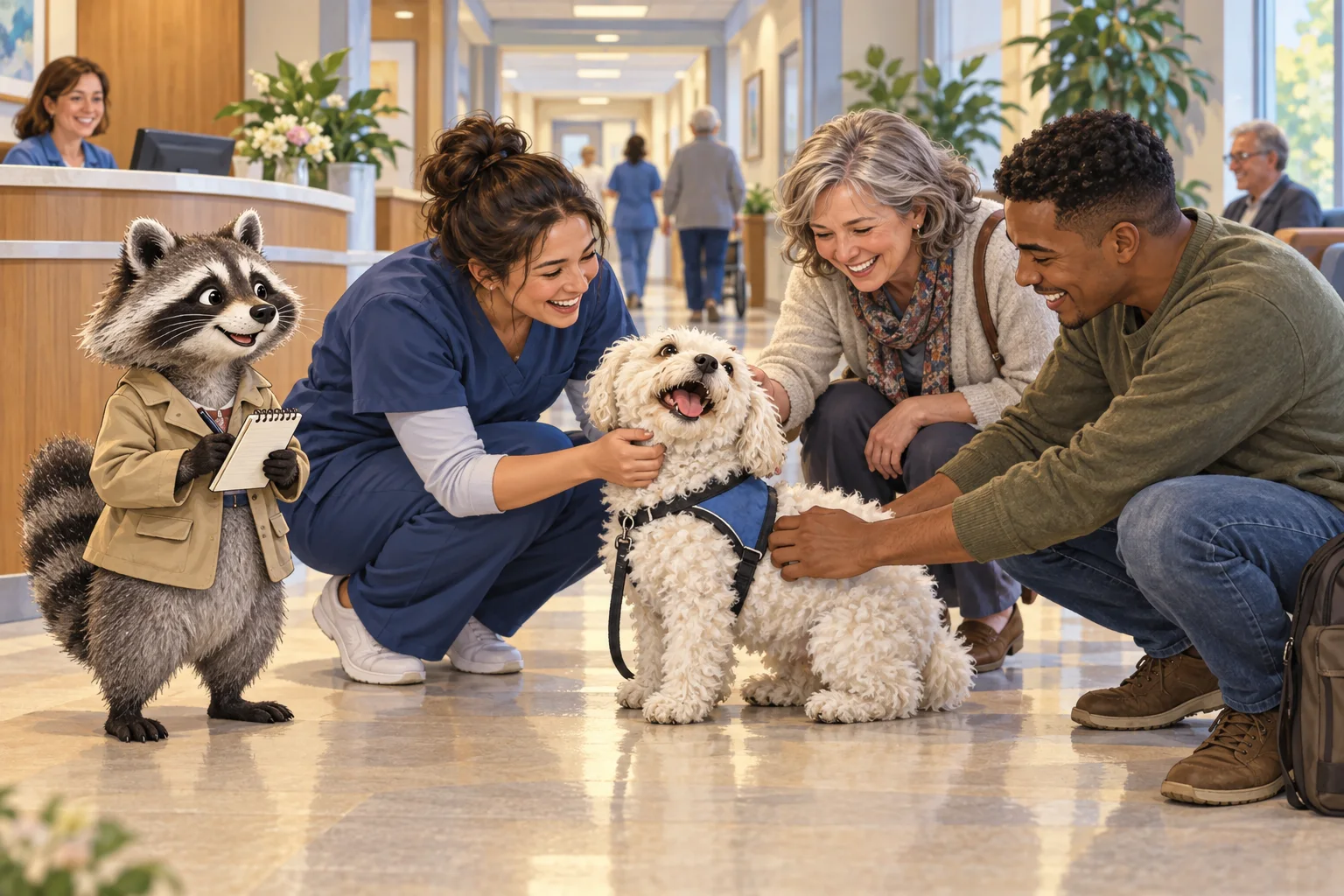
At Martin Army Community Hospital, a volunteer shift can begin with a 10- to 15-minute greeting at the front door. Wednesday, a certified therapy dog, has a way of turning the trip inside into a meet-and-greet whenever people spot her, according to a July report from DVIDS.
Rita has reviewed Wednesday’s calendar. She visits on Monday, Wednesday and Friday, which gives the schedule a tidy bit of name recognition before the first tail wag.
Editorial illustration: Rita reports as a therapy dog representing Wednesday turns the hospital entrance into a cheerful greeting stop.
A volunteer who knows the whole hallway
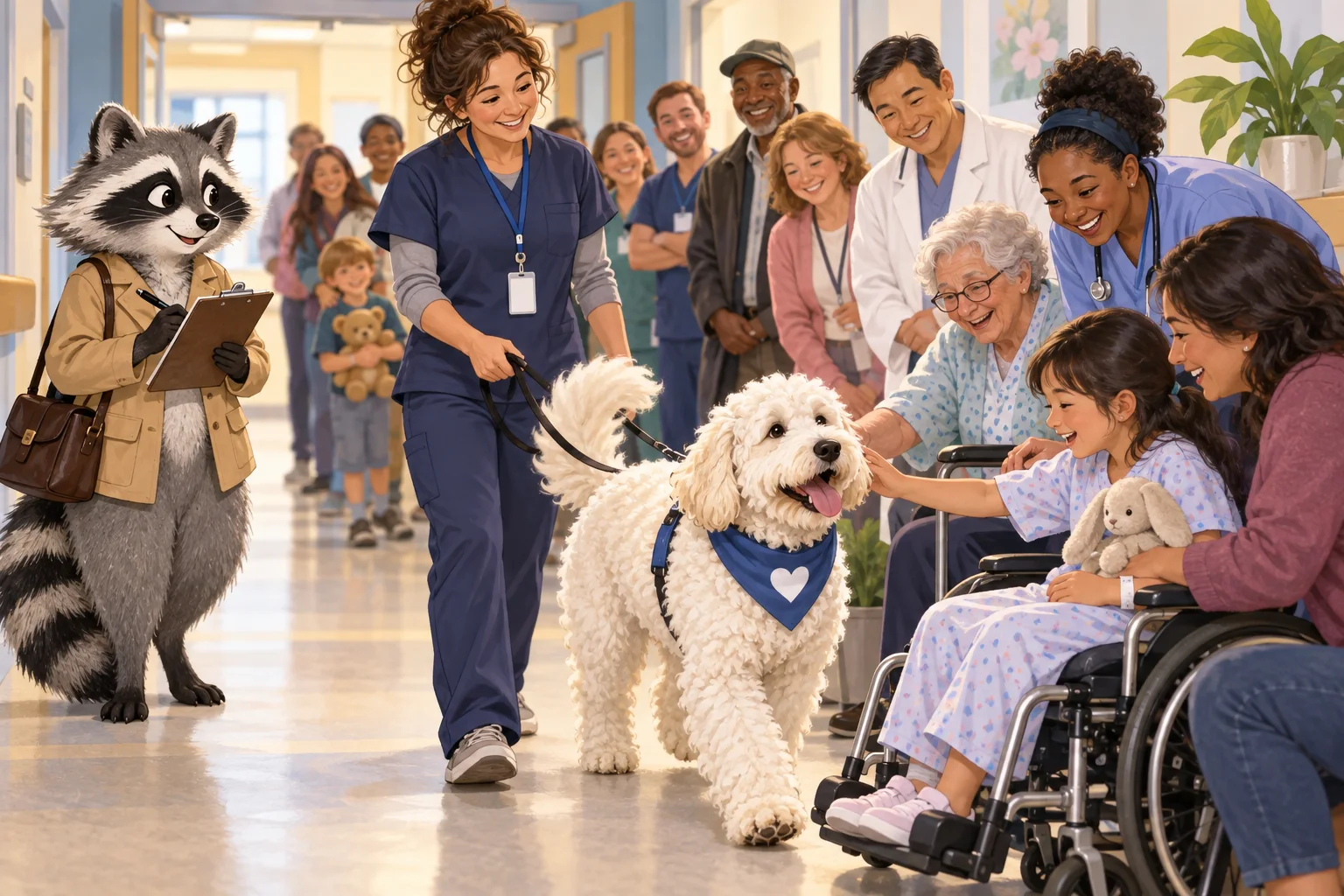
Wednesday visits the hospital with her handler, Brittney LaFreniere, through the American Red Cross Volunteer Services program. DVIDS reports that the pair stop in the emergency department, physical therapy clinic, administrative offices and ultrasound department, with staff in some hallways keeping treats for therapy dogs.
The rounds have a practical rhythm and a friendly interruption built in. Wednesday greets people she has met before, and the story describes patients and staff pausing to visit. The front-door delay is a useful reminder that a popular volunteer may need a little extra time to reach the volunteer desk.
Editorial illustration: the dog representing Wednesday’s rounds gets plenty of time for familiar hellos.
Wednesday began as the family dog
LaFreniere told DVIDS that the family originally wanted a pet, then Wednesday’s friendly personality led to puppy training, Canine Good Citizen certification and therapy-dog training. Wednesday earned her therapy certification shortly before the family moved to Fort Benning, where they found a volunteer role at Martin Army Community Hospital.
Wednesday’s visits also give patients, trainees and staff a natural opening to talk about pets and home. Her handler recalled that a patient’s farm-scented boots caught Wednesday’s attention and sparked laughter over several hospital visits. Rita considers this excellent reporting: sometimes a hallway conversation begins with a dog’s nose doing the introductions.
The best part of Wednesday’s schedule may be the part that refuses to stay on schedule. A greeting turns into a conversation; a familiar face gets a wag; the volunteer desk can wait another few minutes. Rita’s official finding: Wednesday works three days a week, and every shift appears to include a generous allowance for hellos.
Filed by Rita Raccoon, consumer and oddities correspondent
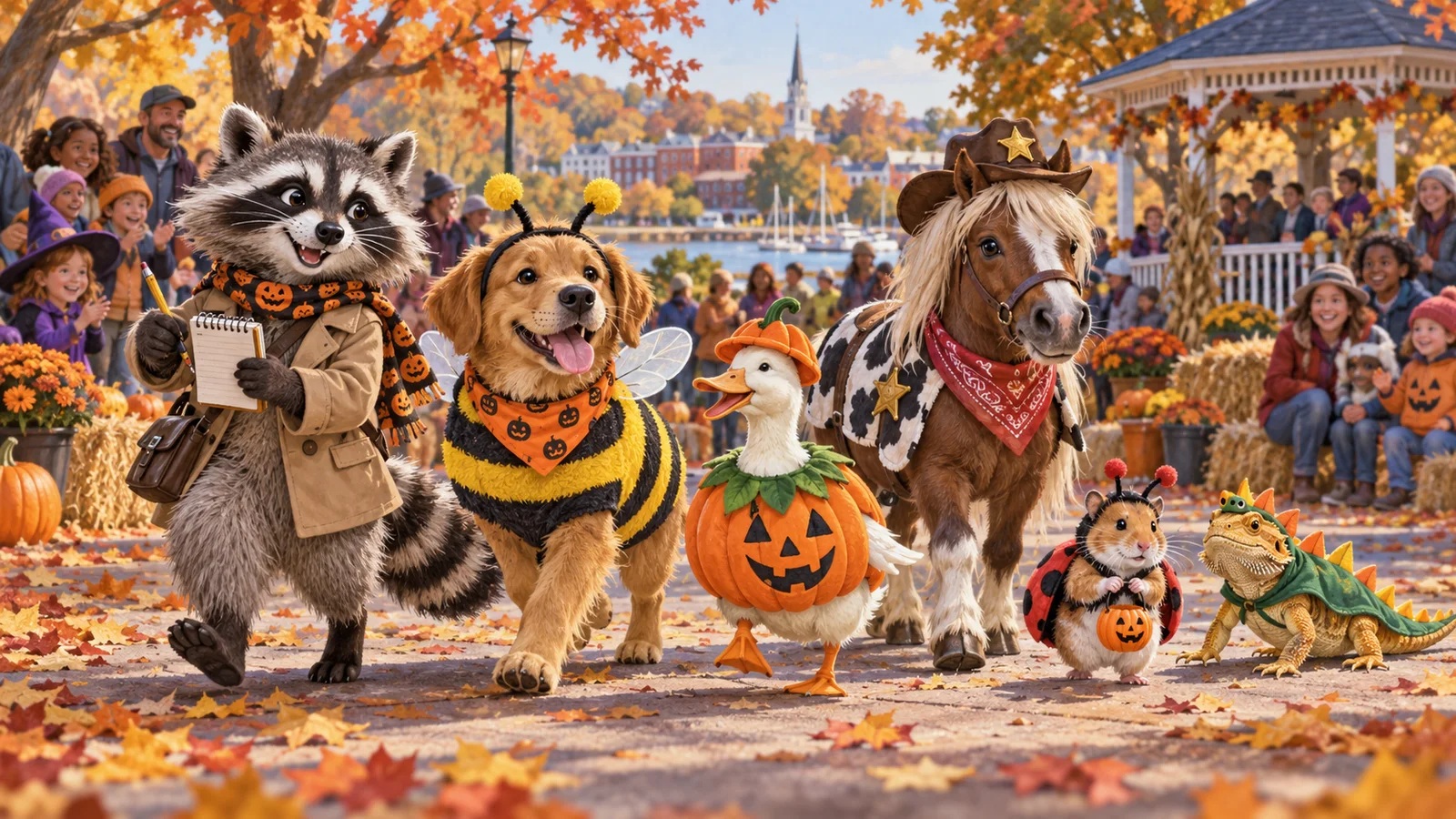
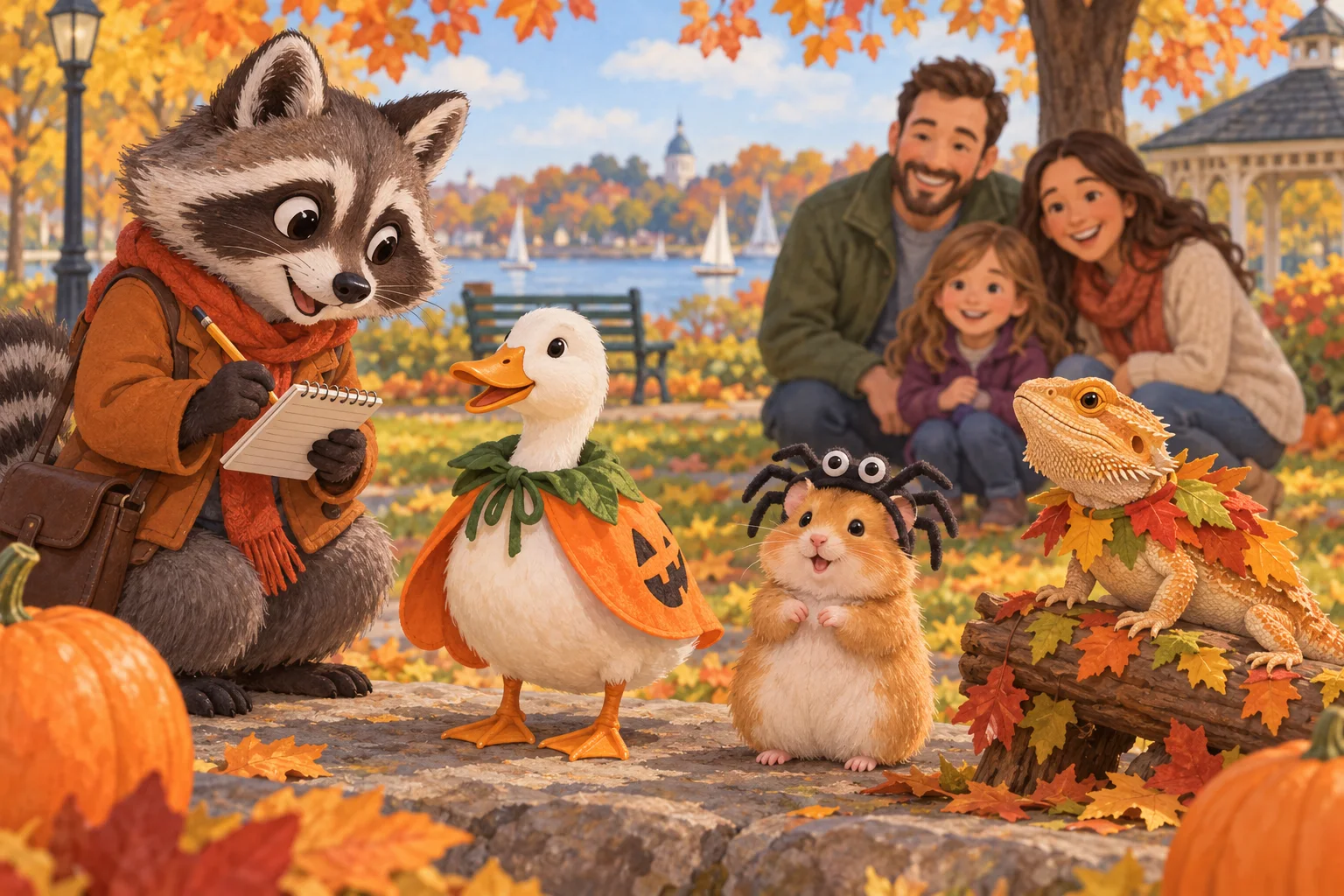
Mount Airy, Maryland, has issued a Halloween casting call with unusually generous species requirements: its annual Mount Scary Pets on Parade contest welcomes dogs, cats, ducks, horses, hamsters, bearded dragons and more.
The town has scheduled the free costume contest for Tuesday, Oct. 27, from 11 a.m. to noon at Wildwood Park. Its invitation welcomes funny, scary, unique or cute costumes, leaving each contestant plenty of room to define “red carpet” at its own preferred walking speed.
The casting call has range
Dogs and cats may be familiar Halloween headliners. A duck, horse, hamster or bearded dragon gives the lineup a wider talent pool—and a different set of costume fittings. The Town of Mount Airy says the contest will have different categories, with certificates for the winners.
Editorial illustration: the town’s invitation gives pets of many kinds a place in the Halloween lineup.
A small parade with clear ground rules
The event is free and open to the public. The town asks that every animal stay on a leash or be contained during the contest, a practical rule for a gathering whose guest list spans hooves, paws, scales and feathers.
Wildwood Park is at 400 Park Avenue in Mount Airy. The one-hour schedule gives each entrant a compact runway and the town’s certificates a tidy delivery window.
Rita’s preview
Mount Scary has built a costume show around the full neighborhood of pets. Some contestants may arrive ready to strut; others may prefer the calm confidence of a well-secured carrier. Either way, the invitation is delightfully clear: bring a pet, choose a costume, and let the town’s Halloween parade welcome the whole cast.
HAWAIʻI VOLCANOES NATIONAL PARK, Hawaiʻi — Hawaiʻi Volcanoes National Park has a Halloween assignment for families: follow a bingo card through the Kahuku landscape, line up five discoveries, and head back to the visitor station for a goodie bag.
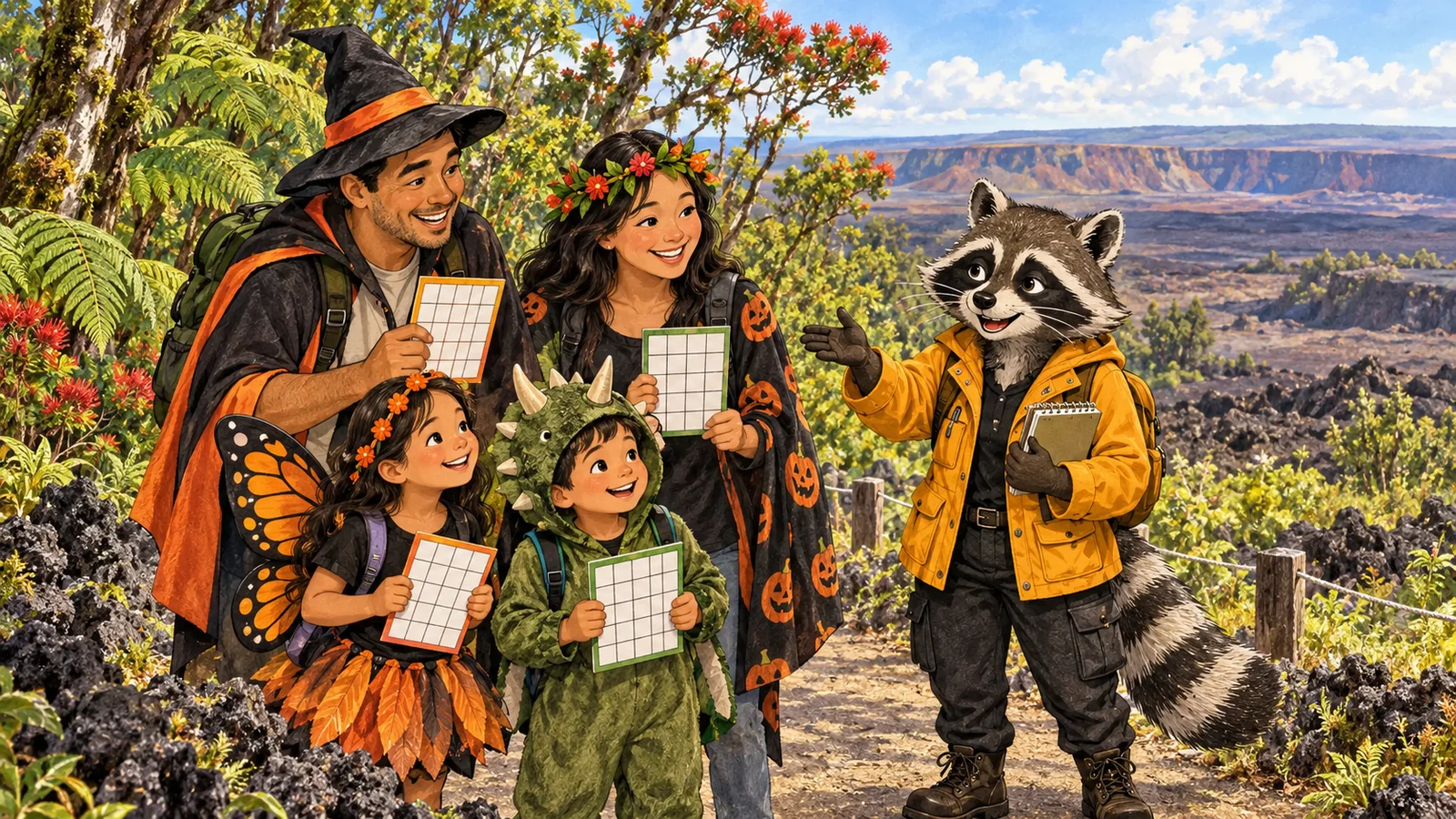
The park’s Annual Halloween Bingo Scavenger Hunt is scheduled for Saturday, October 31, from 9 a.m. to 3 p.m. at the Kahuku Unit Visitor Contact Station. Families can pick up free bingo cards, search for the pictured items, and return for a goodie bag provided by the Hawaiʻi Pacific Parks Association. Costumes are encouraged, so the field team may include capes, masks, and at least one person who takes their bingo rows very seriously.
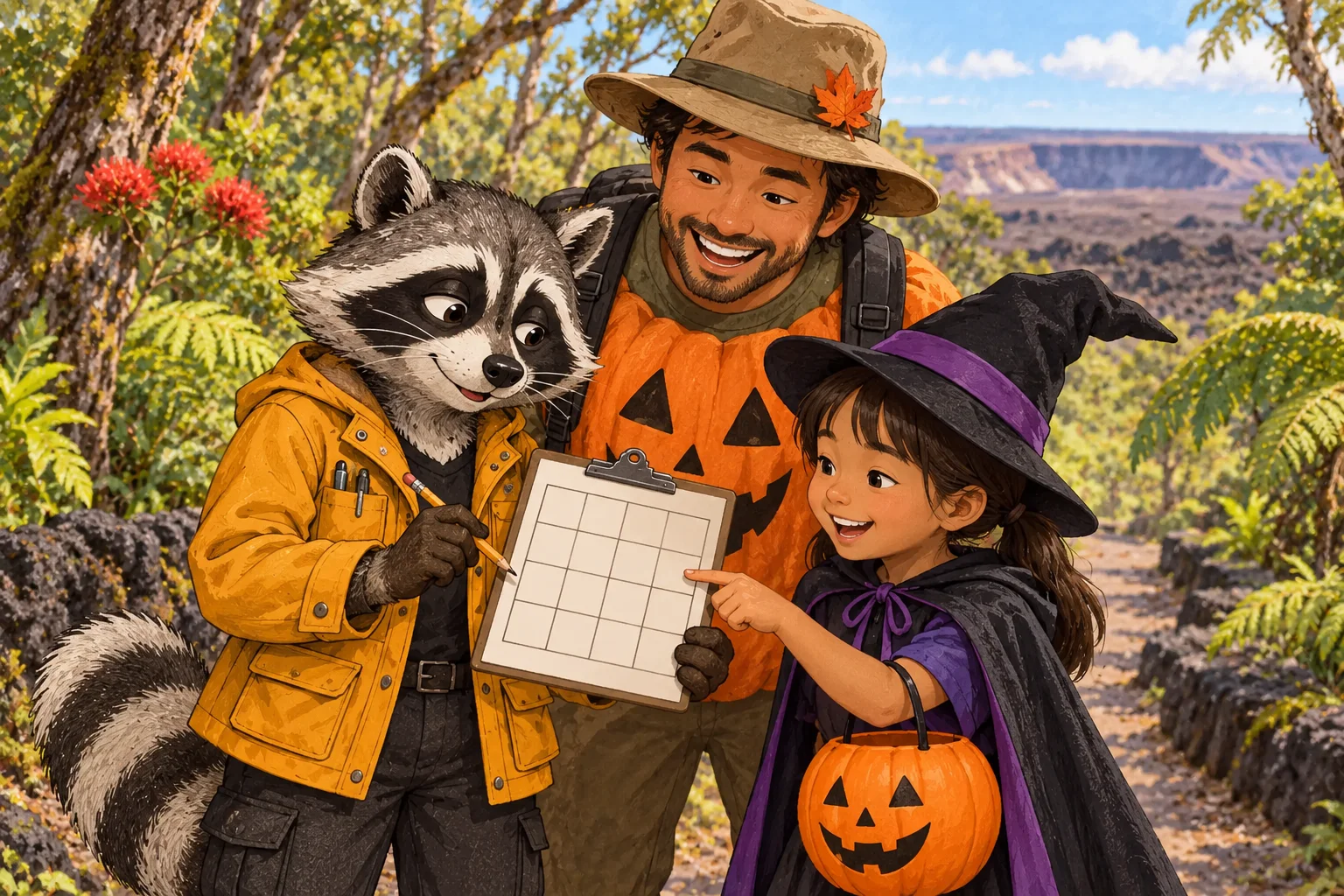
Editorial illustration: Rita Raccoon checks a family’s bingo card before the Halloween hunt.
Five in a row, one tidy field report
Rita Raccoon, Hilarious News’ consumer and oddities reporter, considers this an exceptionally clear assignment: collect five pictured discoveries in a row, report back to the visitor station, and let the goodie bag close the case. The park describes Kahuku as a place to explore, and the event gives families a playful reason to take in the landscape together.
The Kahuku Unit entrance is near the 70.5-mile marker on Highway 11 in Kaʻū. The National Park Service says its October programs are free to attend, with regular park entrance fees applying. Event plans can change, so families should check the park’s current updates before setting out.
Editorial illustration: Rita joins a family’s Halloween bingo search at Kahuku.
Rita’s field note: a five-square streak is a fine reason to celebrate, and every costume deserves a little trail time. The hunt is scheduled for Halloween morning through mid-afternoon, giving families plenty of room to compare cards, enjoy the park, and see which row becomes the day’s headline.
Kentville, Nova Scotia, has opened its annual autumn roll call, and the population includes more than 300 Pumpkin People. They appear around town in clever, unexpected displays from October 3 through October 25, giving visitors a very seasonal reason to keep their eyes on the sidewalks.
“Rita Raccoon is checking the route twice,” says Hilarious News’ resident oddities reporter. “With this many pumpkin citizens, somebody has to make sure every hat has a proper address.”
The Town of Kentville’s 2026 theme is “Witches, Wizards, and Warlocks.” Its visitor guide points people west to east along Highway 1, beginning near Exit 14 in Coldbrook and continuing into Kentville along Park Street and Main Street. The map turns a fall drive into a town-sized character hunt.
Editorial illustration: Rita Raccoon checks a festival passport beside a pumpkin-headed display.
There is also an official Pumpkin People Passport. Visitors can pick one up at the Kentville Visitor Information Centre, then collect stamps when they shop at participating local businesses. The town says each additional stamp brings more chances to win, which gives the pumpkin census a satisfying side quest: find the displays, meet the shopkeepers, and build a passport that looks like autumn kept good records.
The festival’s playful lineup includes contests, children’s activities, trivia, bingo, scavenger hunts, and a participation ribbon for completing activities at Pumpkin People Headquarters. This year’s displays began appearing on October 3, so the town’s gourd-sized cast has the rest of the month to welcome visitors.
For a town that has invited 300-plus pumpkin people onto its streets, Kentville has made one thing clear: the fall season comes with a full guest list—and a passport is a useful way to keep track.
Editorial illustration: Rita Raccoon discovers the town’s whimsical Pumpkin People displays.
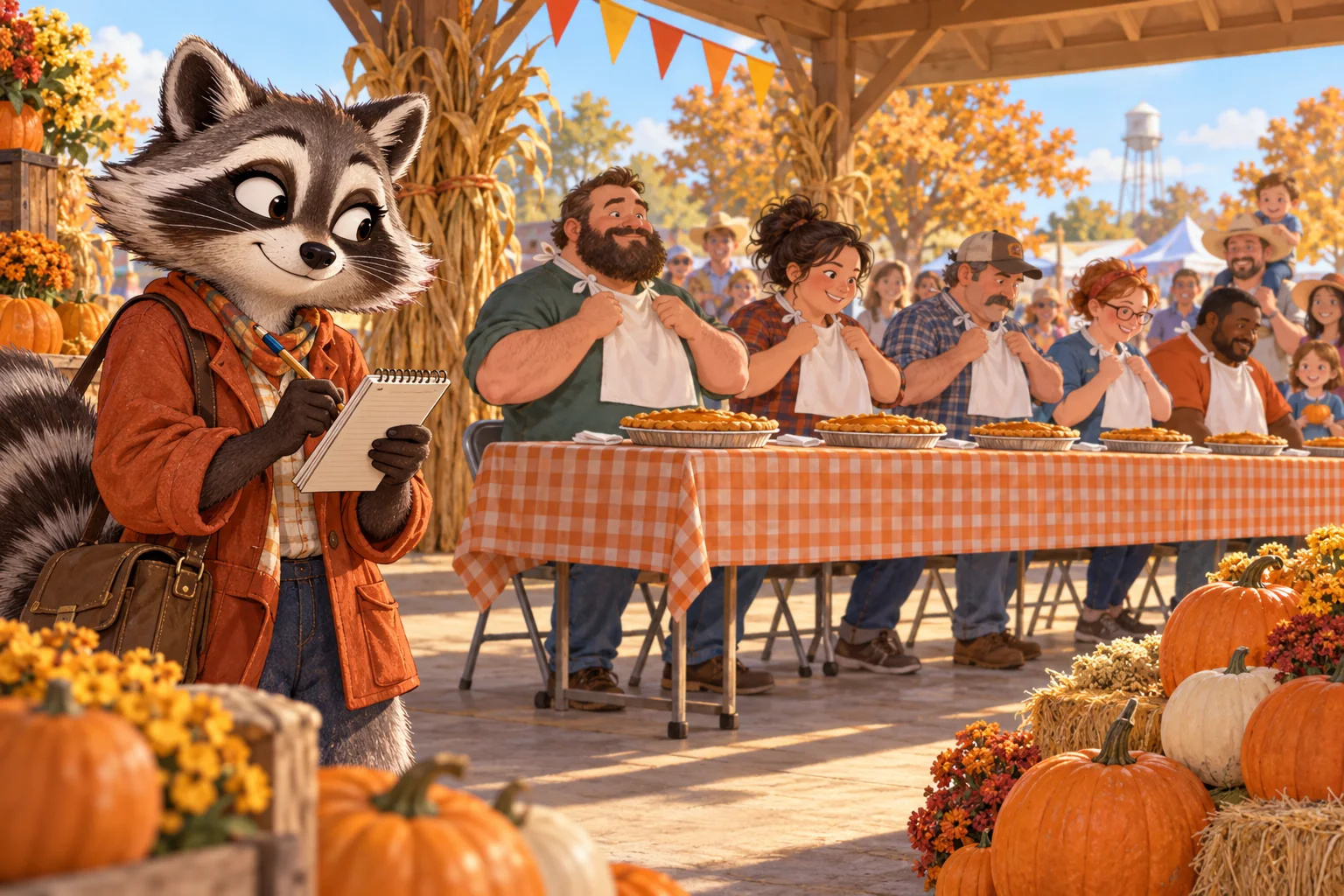
Orange, Texas, has put pumpkin pie on the schedule for 3 p.m. Saturday, and Rita Raccoon has circled the appointment in her notebook. The Orangetober Festival’s pie-eating contest has 20 entry spots, three prize places, and the sort of clock-aware opening round that makes punctuality a dessert strategy.
Texas A&M AgriLife Extension will host the contest at Riverside Pavilion during the festival, according to the official Orangetober Festival listing. The first 20 people who arrive can compete, and prizes go to the top three winners. The listed start time is 3 p.m. on Saturday, Oct. 3.
Rita’s newsroom note: a 20-person field is a tidy assignment—arrive, take your place, and let the pie handle the closing argument.
A festival with a very large pumpkin desk
The contest is one stop in the sixth annual Orangetober Festival, scheduled for Oct. 2–4 at Riverside Pavilion, 708 Simmons Drive. The festival’s 2026 events page lists the weekend dates, while the festival page describes a Pumpkin Village with more than 10,000 pumpkins, a vendor market, a gumbo cook-off, family activities, live music and a mascot run.
Saturday’s gates open at 10 a.m., giving visitors a few hours to explore before the pie contest begins. Admission and parking are free, the festival page says. That makes the afternoon’s main tactical question remarkably clear: when to arrive, and how confidently to approach a pumpkin-themed pie.
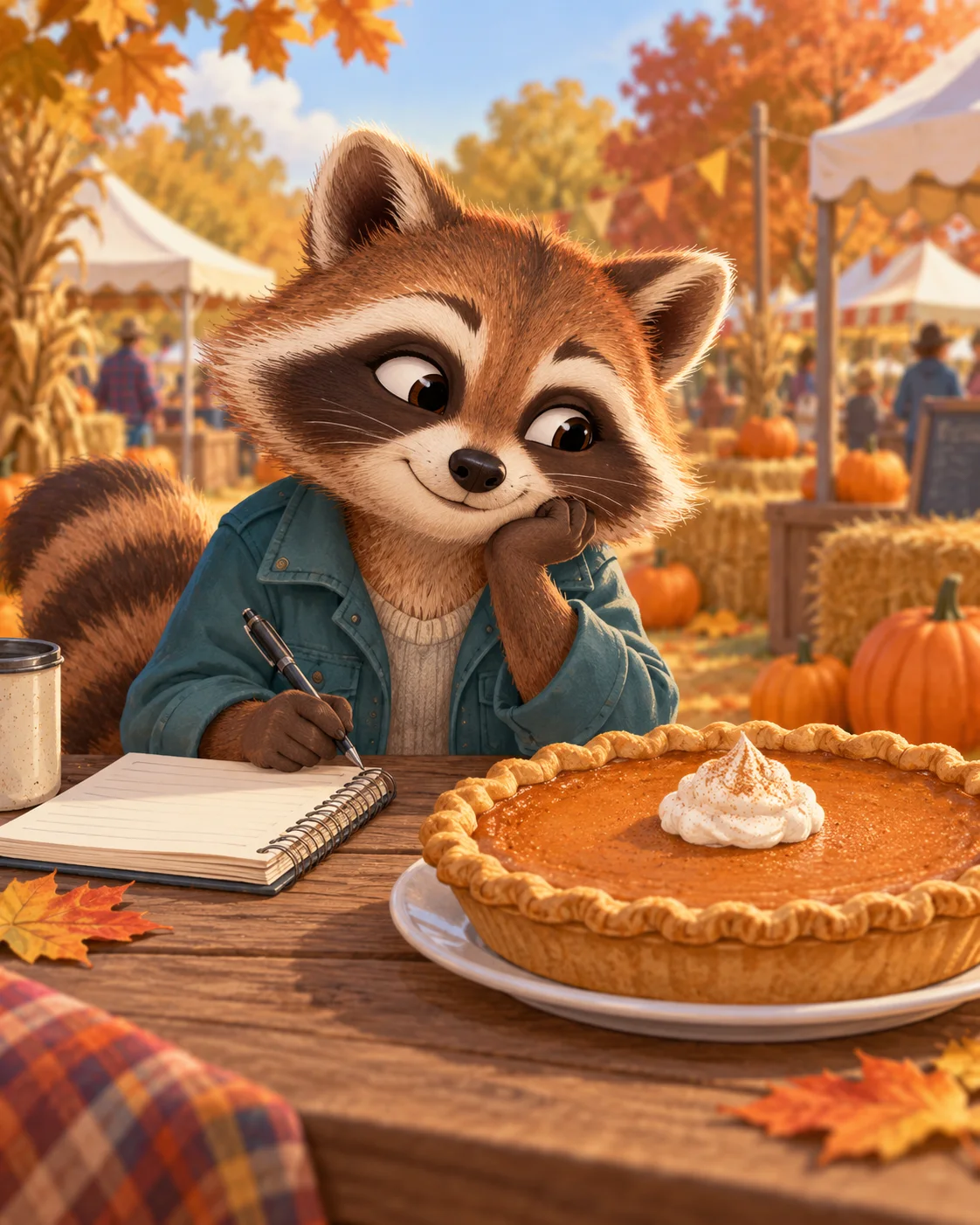
Editorial illustration: Rita Raccoon files a field note beside the contest’s featured dessert.
Rita’s briefing: watch the clock, then the podium
The contest’s entry limit gives this story its brisk first act: the first 20 arrivals form the field. The published schedule supplies the second: a 3 p.m. start and prizes for three winners. Rita’s consumer-and-oddities desk will be watching the contest as a study in timing, table manners and the public life of pumpkin pie.
For Orange, the festival turns a familiar fall dessert into a community event with a clear bracket and a bright autumn setting. For Rita, it is a rare assignment where the notebook and the pie both deserve a place at the table.
Reporting note: This preview follows the festival’s published schedule for Oct. 3, 2026; contest attendance and results await confirmation.
Galway has handed its streets to cartoonists for six days, and the official schedule reads like a sketchbook that discovered a social calendar. The 10th Galway Cartoon Festival runs October 1–6 with exhibitions, live drawing, workshops, an island trip and an evening club devoted to the demanding professional discipline of drawing, celebrating and relaxing.
The anniversary theme is Having a Laugh. Ireland’s only festival devoted to cartoonists and satire has spread its 2026 program across Galway City and Inis Oírr, according to Galway Tourism’s event listing. Many events are free, giving visitors several days to test an important cultural theory: every city map improves when somebody adds a speech bubble.
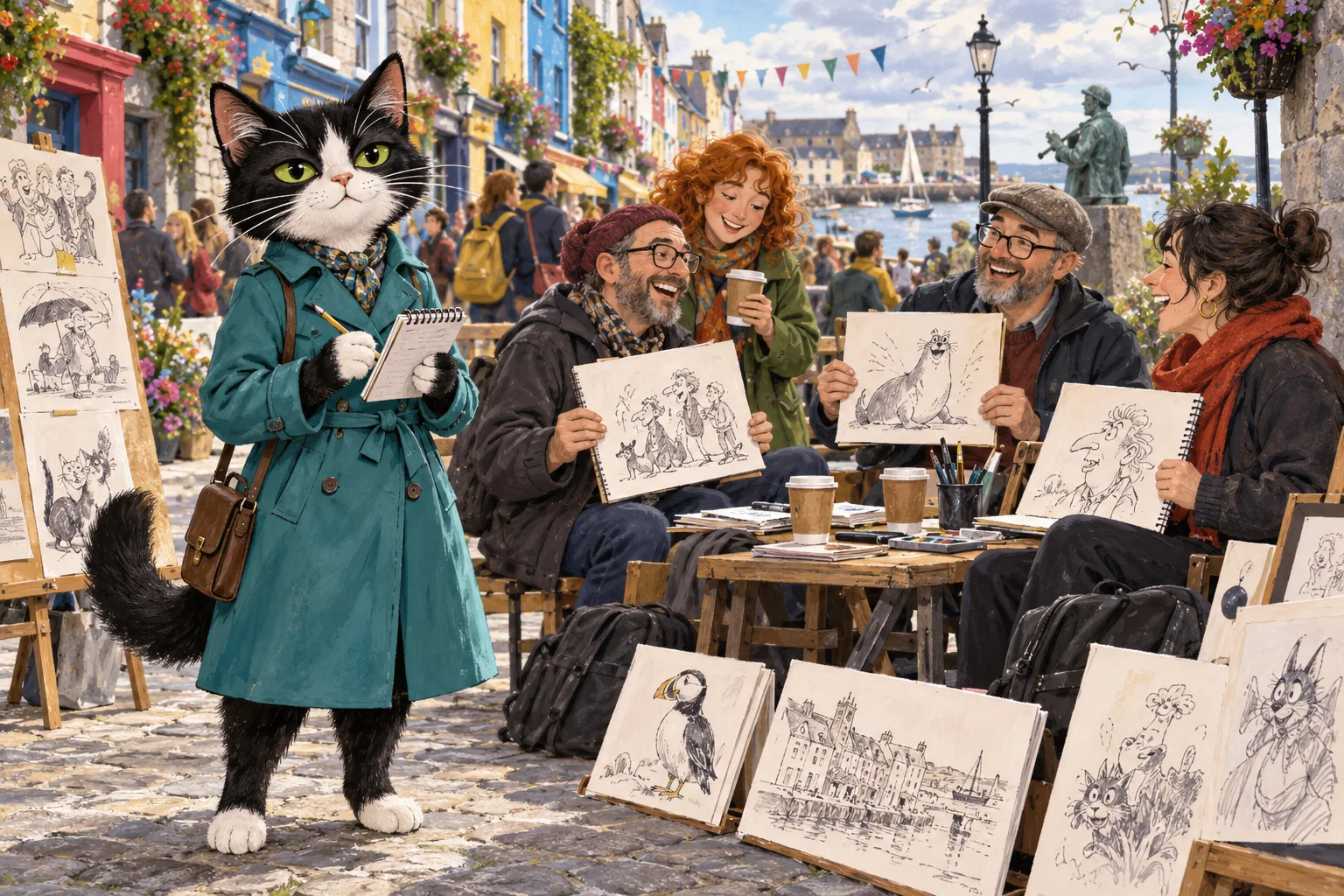
Cleo Claws’ culture desk: Galway has arranged caffeine, pencils and plausible deniability in a remarkably efficient sequence. This is civic planning with whiskers.
Friday begins with coffee for “recovering artists”
At 10 a.m. on Friday, October 2, the festival invites “recovering artists” to Plámás for Coffee with Drawing and the launch of Tarraing É i nGaeilge, its Irish-language cartoon exhibition. The formula is elegant: meet other artists, acquire caffeine and see what the pencil decides to do.
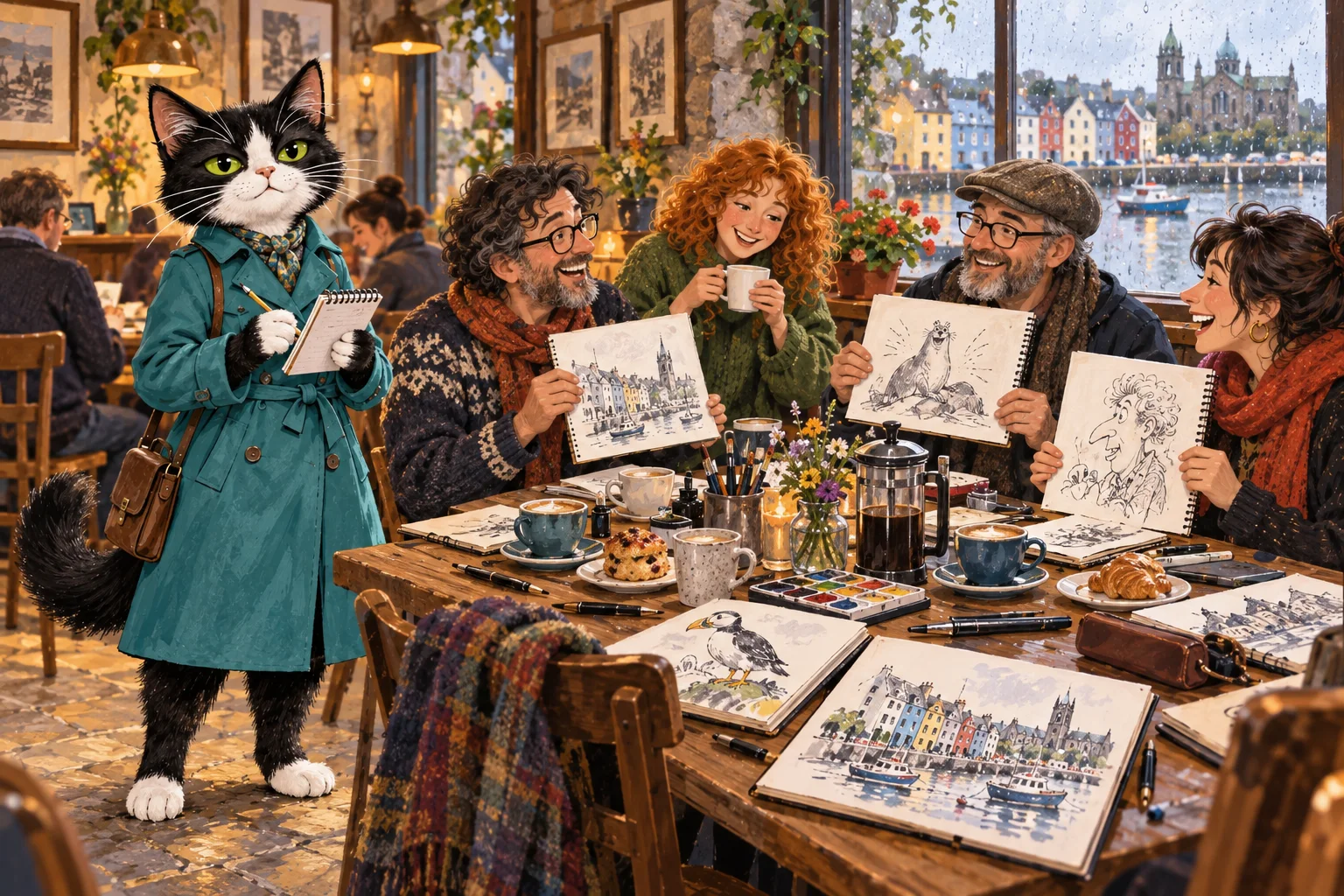
Editorial illustration: Cleo Claws covers a coffee-and-drawing morning in Galway.
The day keeps moving. A 1 p.m. retrospective at Galway City Museum looks back across the festival’s first decade. At 5 p.m., the Town Hall Theatre opens the main Having a Laugh exhibition. The organizers say the show contains 70 works selected from roughly 2,500 submissions by cartoonists around the world.
Friday evening brings Martin Rowson’s live performance at 7 p.m., followed by the Festival Club at the Mechanics’ Institute from 8:30 p.m. The club occupies an actual clubhouse dating to 1837, a fact that gives casual sketching the architectural gravitas it has always deserved.
Saturday turns a cartoonist into a treasure hunt
Saturday starts with coffee and drawing at 10 a.m. Then, at 11 a.m., the program expands to “All Around the Town” for Where’s Joey? Festivalgoers follow clues to locate cartoonist and storyboard artist Joey Mason, with a prize waiting for the successful search party.
The organizers describe Mason as elusive. Cleo’s working assessment is more precise: a professional artist has become a roaming public puzzle, and Galway has accepted the assignment.
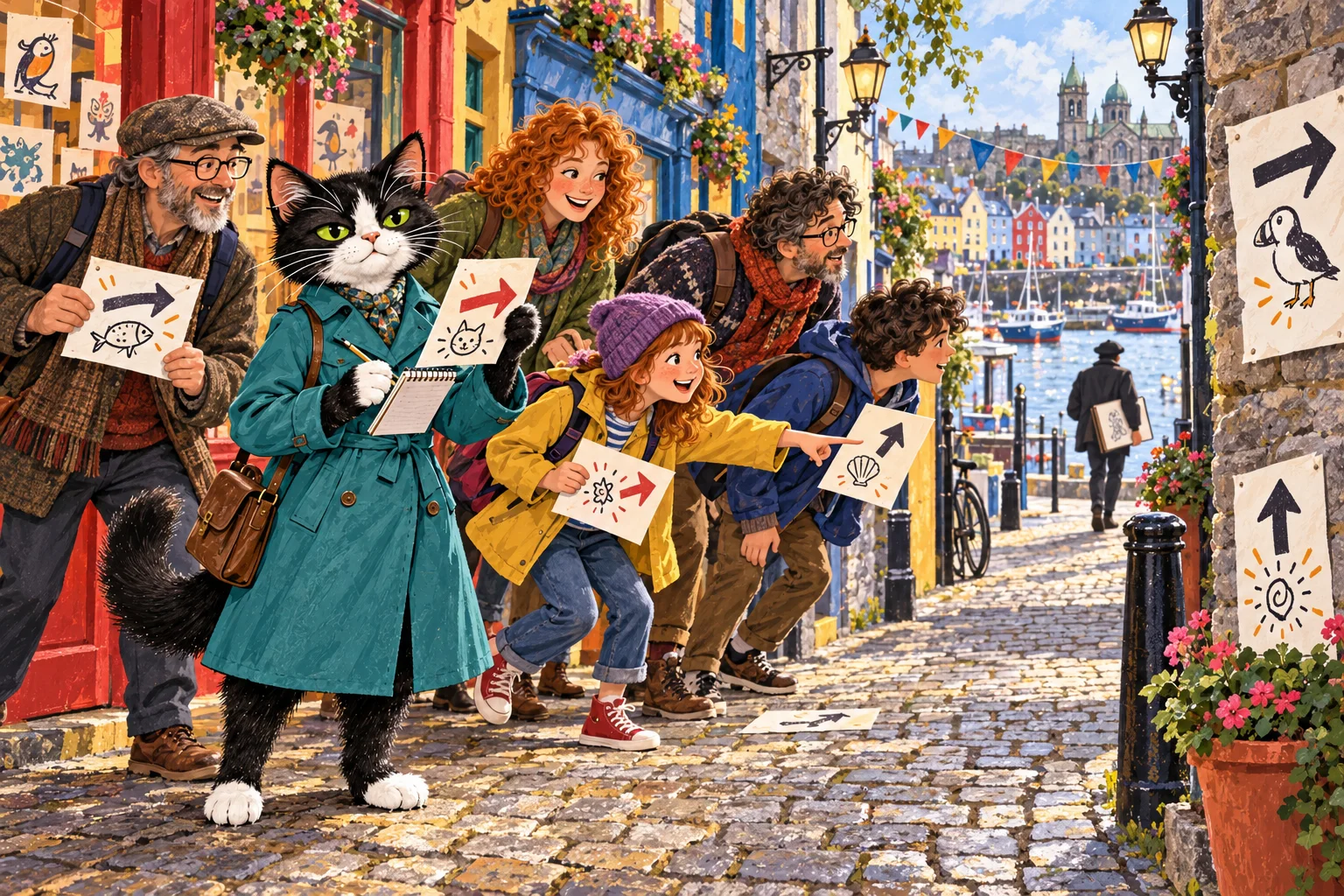
Editorial illustration: a townwide trail of doodled clues sends Cleo and festivalgoers in search of an elusive artist.
The Saturday schedule adds another ambitious group project at the Small Crane Extravaganza. Street performer and cartoonist Glenn Marshall plans to recreate the Wooden Horse of Troy with help from visitors. Later talks, screenings and discussions range from political satire to women in cartooning before the Festival Club resumes its evening shift.
Sunday lets children correct a professional
On Sunday morning, a ferry carries the festival to Inis Oírr for drawing sessions and Irish-language events. The organizers even invite sketching aboard the boat when the waves cooperate.
The island program reaches a perfect comic reversal at 4 p.m. with Glenn Marshall Can’t Draw. Children will teach the established cartoonist how to draw “properly,” turning the usual workshop arrangement upside down for an all-ages session. The official timetable also includes a 3 p.m. lunch, explained with the concise reminder that artists sometimes forget to eat.
Monday supplies a second Where’s Joey? hunt on Inis Oírr. The island version comes with a geographical advantage: the organizers observe that their elusive artist can only have wandered so far.
A festival built for participation
The funniest thread in Galway’s anniversary week is also its warmest. Visitors can paste drawings onto a Freedom Wall, join open sketching sessions, search for an artist, help assemble a wooden horse and let children run the drawing lesson. The event treats cartooning as a public activity that belongs in cafés, bookshops, streets, pubs, theaters and ferries.
That makes the 10th anniversary feel bigger than a retrospective. Galway is celebrating the people who make cartoons and inviting everyone else to pick up a pencil, follow an arrow and see where the joke leads.
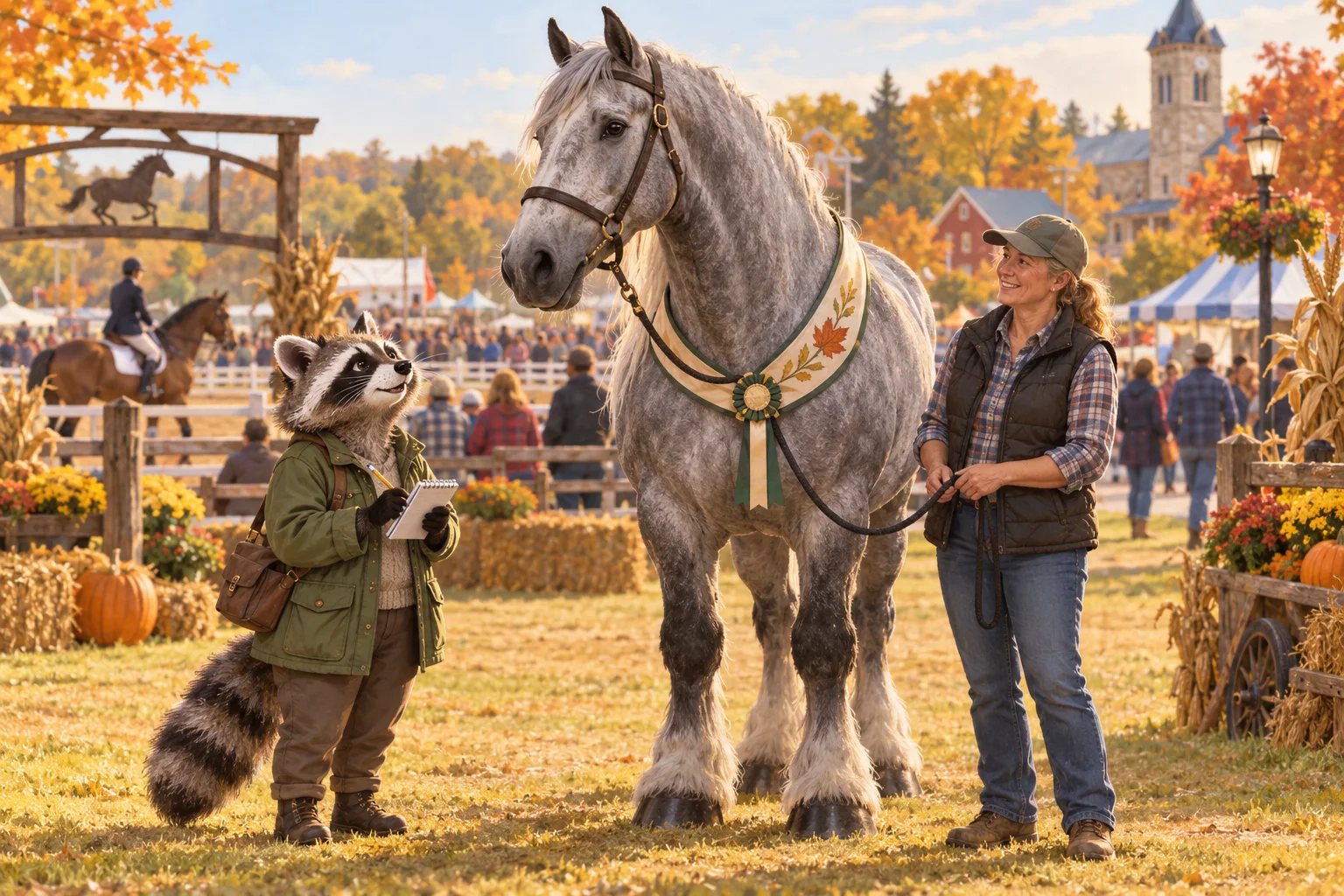
When the Fergus Fall Fair appointed its first mascot, the new colleague arrived with a grey coat, a calm expression and about one tonne of professional presence. Pearl, a 16-year-old Percheron mare, made her debut as the face of the 189th fair in Fergus, Ontario, alongside her owner, Sarah.
By the time the fair closed on Sept. 20, Pearl had joined a weekend that drew about 23,000 visitors and set an attendance record for the fifth year in a row, according to post-event reporting from CityNews Kitchener. For a first mascot assignment, that is a sizeable welcome party—and Pearl was already dressed for the occasion.
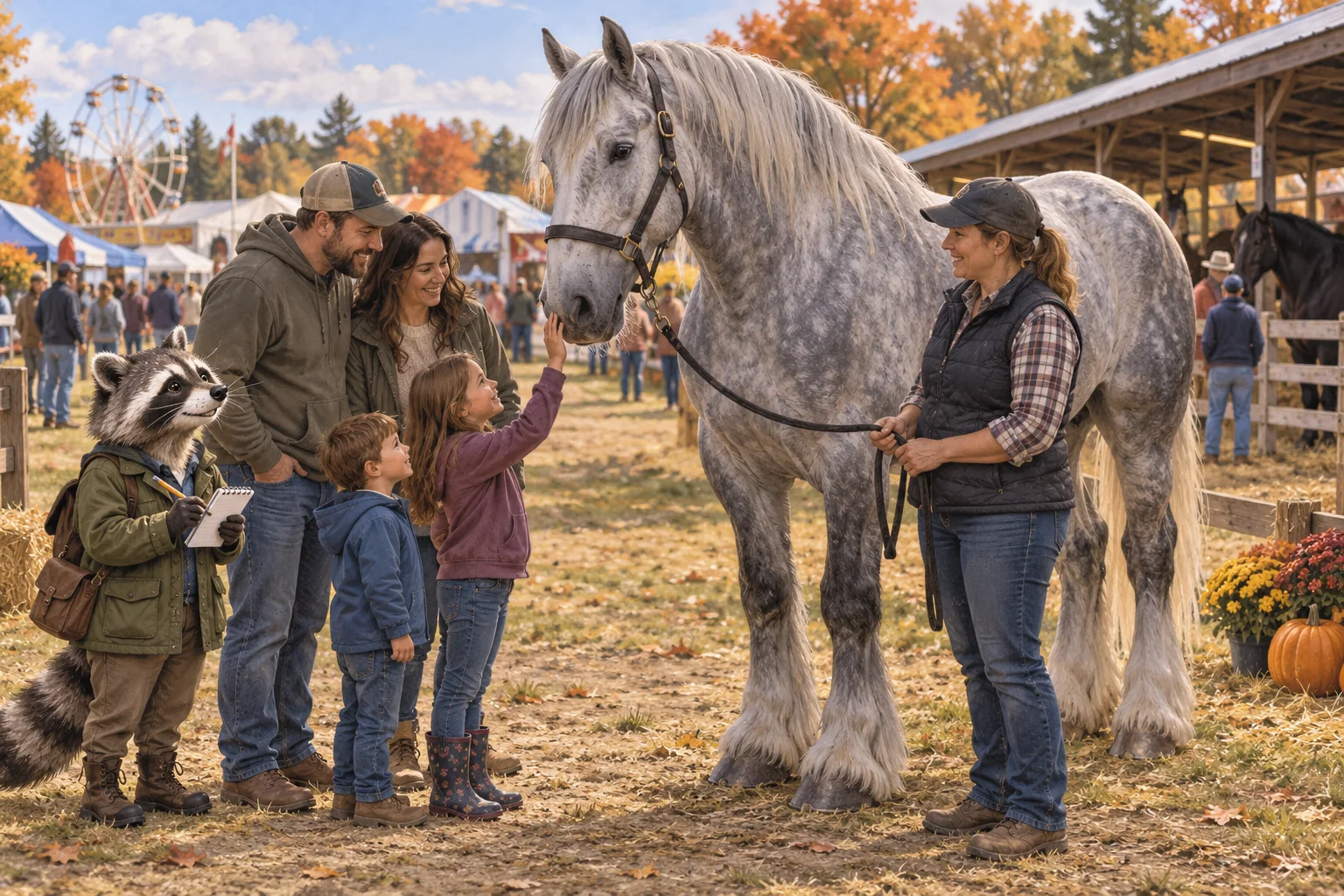
Editorial illustration: Rita Raccoon takes notes as Pearl meets visitors at the fair.
A first mascot with a long parade résumé
The fair’s official introduction describes Pearl as more than six feet tall and about one tonne. Sarah and Pearl already spend time together riding around their farm, greeting people at community parades and appearing at local horse shows. The new mascot role gave that familiar partnership a home gate and a full weekend of meet-and-greets.
Pearl also entered the Heavy Horse Show with Sarah on the fair’s final day. CityNews Kitchener reported that the fair’s first mascot quickly became a popular attraction during the three-day event. Organizers also counted more than 4,000 entries from exhibitors, so Pearl joined a busy program of agriculture, competitions, entertainment and family activities.
Rita’s field note
“Mascot” can mean a feathered costume, a foam head, or a Percheron who can make the meet-and-greet area feel like the main event. Pearl brought the full horse-show silhouette, while Sarah brought the years of partnership that made the role feel natural. Together, they gave the fair a new tradition with a very impressive mane.
For Rita Raccoon, the assignment earns a neat verdict: the Fergus Fall Fair found a mascot who can greet a crowd, compete in the heavy-horse ring and make a one-tonne entrance look like excellent community manners.