Category: Animals And Oddities

  • The Amphibians Have the 7 p.m. Slot at Acadia, and They’re Not Taking Questions

    The Amphibians Have the 7 p.m. Slot at Acadia, and They’re Not Taking Questions

    By Buster Barkley, lead reporter

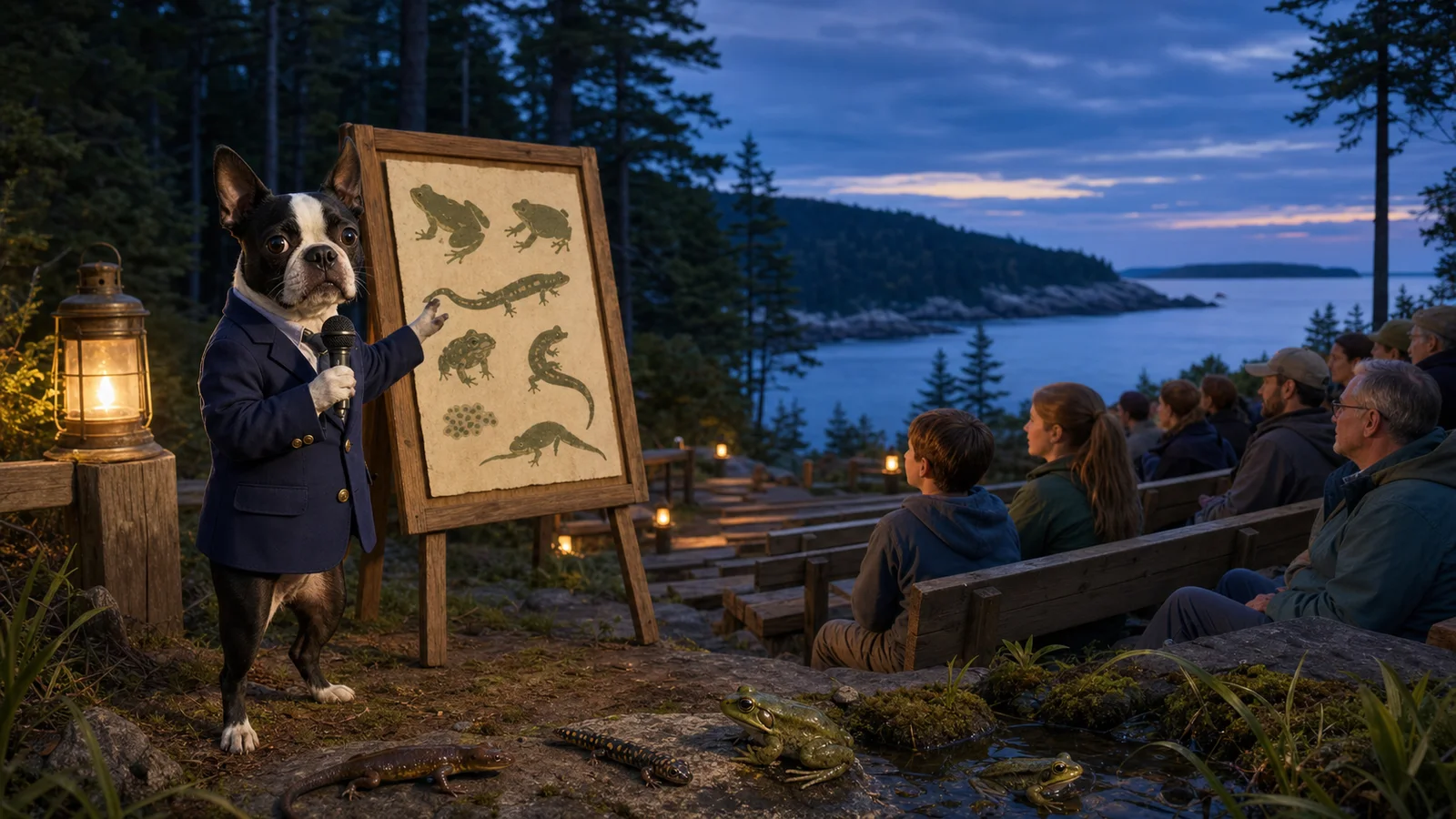
    Acadia National Park has scheduled an amphibian program for 7 p.m. Tuesday, which is a surprisingly formal way to announce that frogs, salamanders, and their damp little colleagues have the evening slot.

    The National Park Service lists “Amphibians of Acadia” as a free ranger program at the Seawall Campground Amphitheater. The listing says it begins at 7 p.m. on July 28 and runs for 44–60 minutes. That is long enough for a proper introduction, a few field notes, and—if the audience is lucky—a lesson in why the guests never need a tie.

    The official assignment

    The park’s event listing is admirably direct: visitors are invited to join a ranger to learn about Acadia’s amphibians. It identifies the program as an evening campground event, at the Seawall Campground Amphitheater, and says admission is free. The NPS nature guide separately notes that Acadia’s amphibian-and-reptile page covers frogs, snakes, turtles, and salamanders in the park.

    In short, the schedule is real. The newsroom angle is that the park’s smallest residents have apparently secured a prime-time educational engagement while the rest of us are still deciding whether bug spray counts as eveningwear.
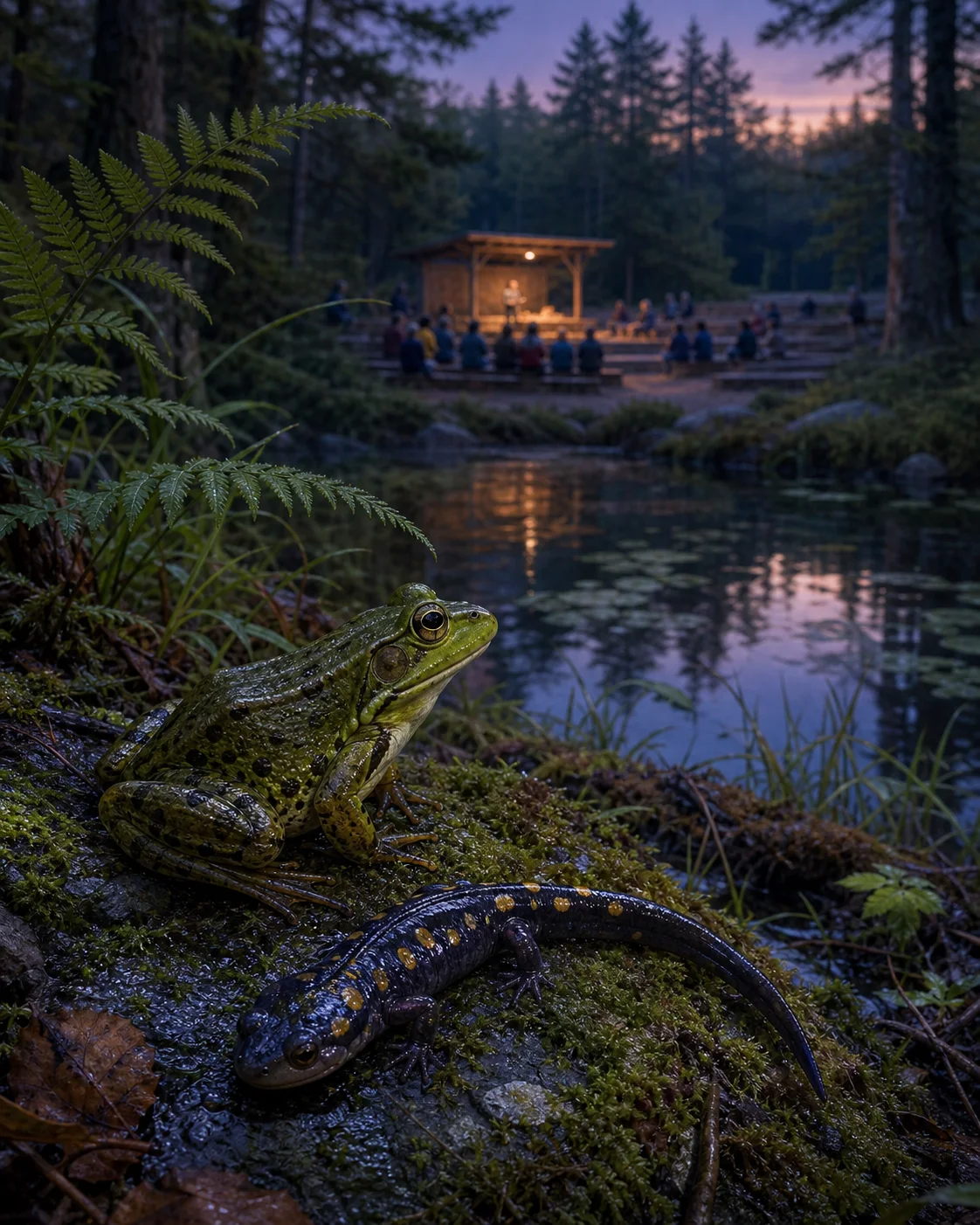
    Editorial illustration of a frog and spotted salamander beside a twilight pond near a campground amphitheater.
    Editorial illustration

    What visitors can count on

    • A ranger-led program about amphibians at Acadia National Park.
    • 7 p.m. on Tuesday, July 28, at Seawall Campground Amphitheater.
    • A listed length of 44–60 minutes and no admission fee.

    What visitors should not count on is a formal press conference from any frog. They tend to let the ranger handle the speaking, which is probably wise: amphibians have already mastered the difficult art of looking fully prepared while doing almost nothing at all.

    Buster’s field note

    This is the kind of small, local program that makes a park visit feel less like checking off scenery and more like joining the place for an evening. Bring the usual campground common sense, follow park guidance, and let the ranger do the identifying. The amphibians already have enough on their plates without being asked for autographs.

    Sources: National Park Service event listing; Acadia National Park nature guide.
  • The Birthday Alarm Was on Mute: Fort Stewart’s Bulldog Mascot Got Briefly Forgotten

    The Birthday Alarm Was on Mute: Fort Stewart’s Bulldog Mascot Got Briefly Forgotten

    Editorial illustration by Hilarious News. Buster Barkley did not attend the event and is not a source.

    There are many ways to mark a birthday: cake, a card, perhaps one tasteful banner. And then there is the method apparently demonstrated at Fort Stewart: hold a major Independence Day celebration on the same day as the birthday, and somehow leave the birthday bulldog off the guest list.

    A U.S. Army video published through DVIDS says Rocky, the official bulldog mascot of the 3rd Infantry Division, turned three while Fort Stewart held its 250th Independence Day celebration. The video’s description says the installation forgot the birthday. Rocky’s calendar-management team, we assume, has been asked to review the incident.

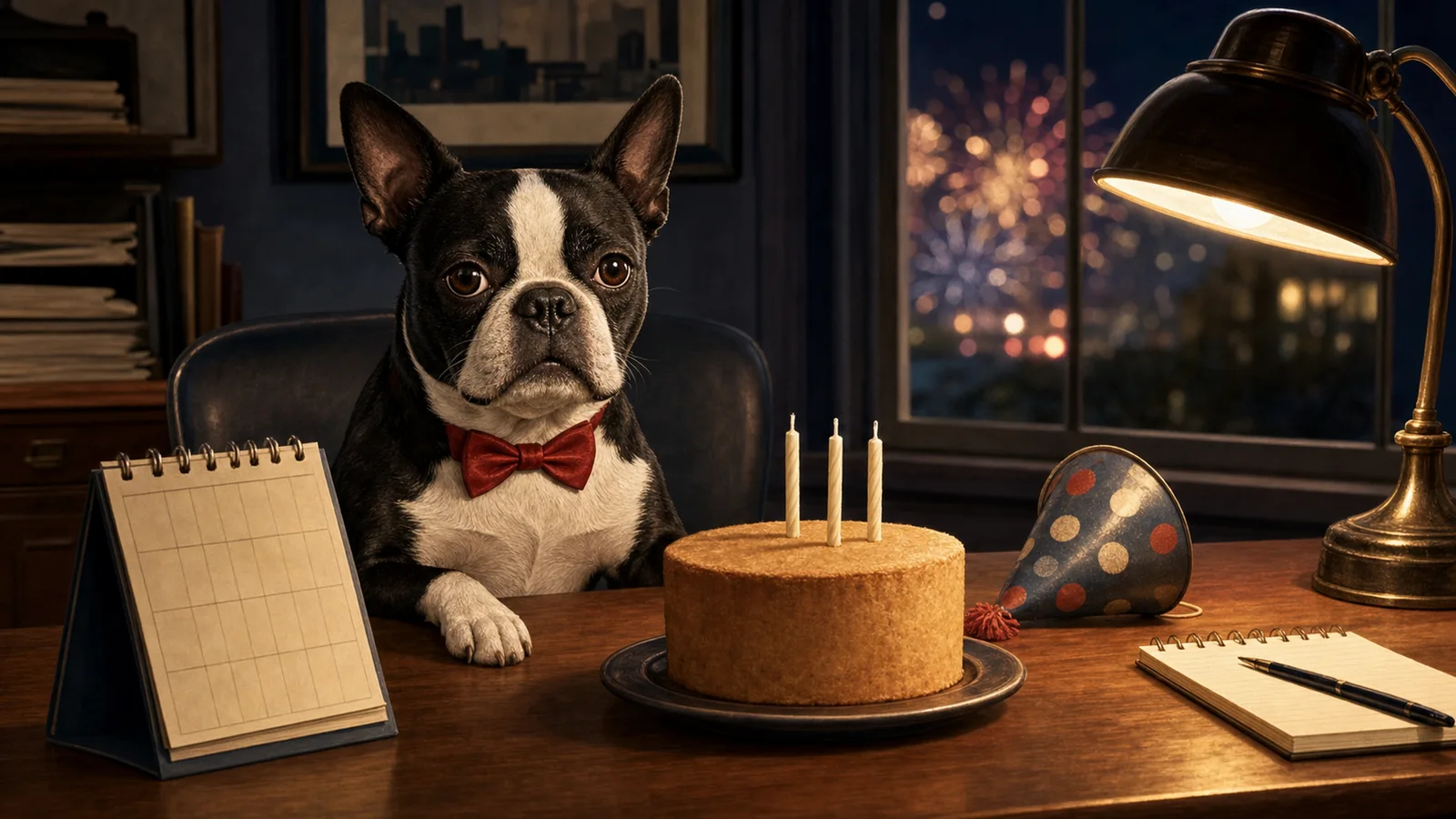
    Editorial illustration of Buster Barkley, a Boston terrier news host, beside a small three-candle birthday cake at a newsroom desk.
    Editorial illustration: Buster Barkley takes the missed-party memo personally.

    A mascot with a long paper trail

    Rocky is more than a conveniently photogenic dog. Fort Stewart identifies Rocky the Bulldog as the symbol of the 3rd Infantry Division. The Army page says the original Rocky character was created by Walt Disney in 1965, after the division sought a symbol for its “Dogface Soldier” identity. A separate Army video from 2025 describes the living Rocky as the division’s mascot.

    That makes the missed birthday less a case of one dog being overlooked and more a case of a unit’s most compact public-relations department being temporarily outmaneuvered by the calendar.

    What the video actually establishes

    The DVIDS page identifies the production as a 3rd Infantry Division video by Staff Sgt. Anthony Herrera. Its description places Rocky at Fort Stewart, Georgia, says his third birthday coincided with the installation’s 250th Independence Day celebration, and says the birthday was forgotten. The page lists a July 1 capture date and a July 8 posting date.

    It does not describe a formal make-good party, so we will not manufacture one. Nor are we assigning blame to any individual. The only defensible conclusion is the funniest one already in the official description: amid a celebration big enough for a national anniversary, the bulldog with the birthday briefly lost the scheduling battle.

    Editorial illustration of Buster Barkley writing a belated birthday note beside a small cupcake with three candles.
    Buster Barkley drafts the sort of belated note that should probably include treats.

    Buster Barkley’s dry conclusion

    “A calendar is not an enemy,” Buster reports from the desk. “It is merely a witness with excellent recall.”

    Rocky’s story is a small, cheerful reminder that mascots can carry real institutional history while still being, crucially, dogs who deserve to be told when cake is involved. The next celebration has one clear operational lesson: before the fireworks, check the bulldog’s birthday.

    Sources

  • DNA Says the Alcatraz Coyote Took the Two-Mile Route to Prison

    DNA Says the Alcatraz Coyote Took the Two-Mile Route to Prison

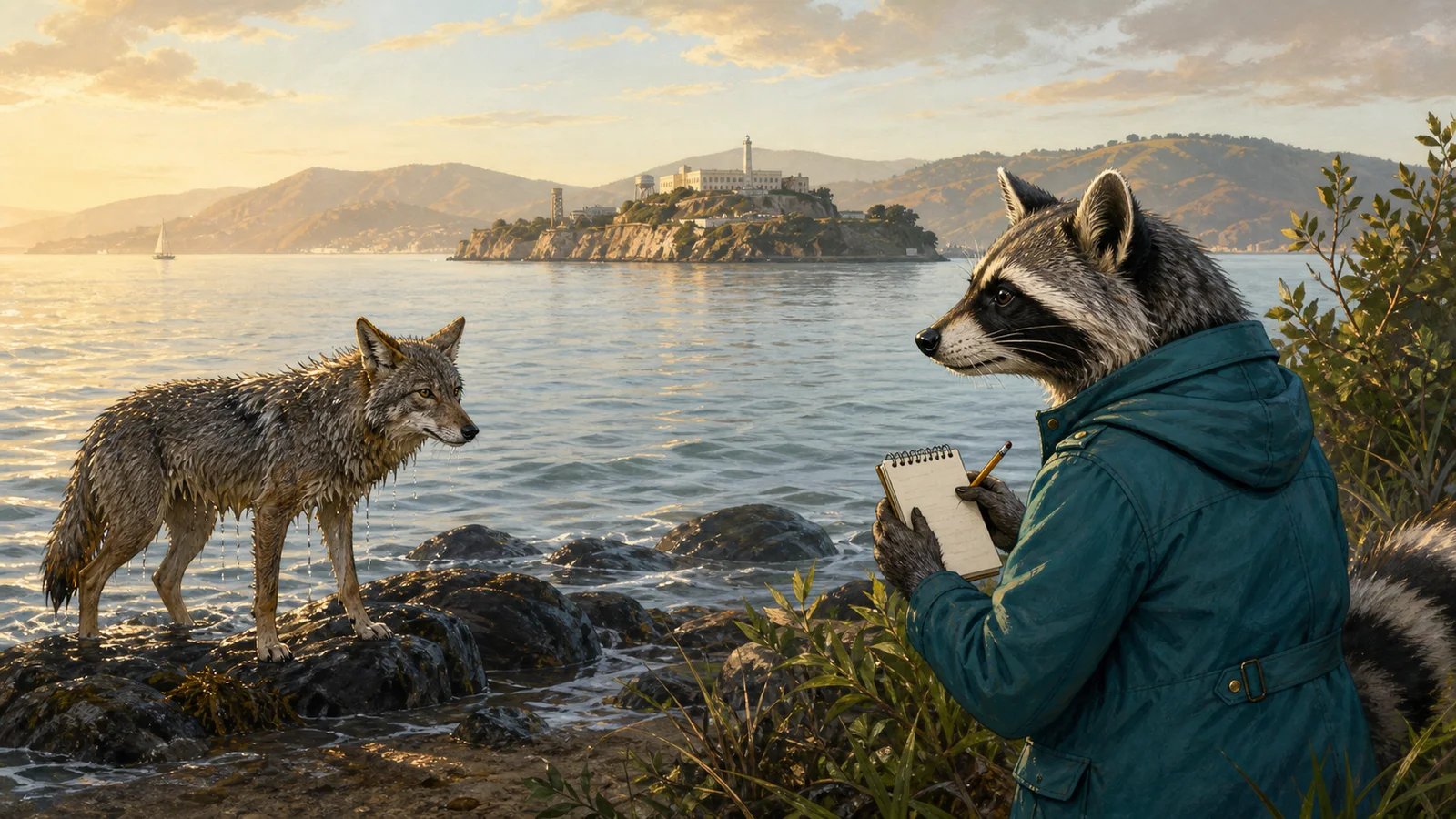
    SAN FRANCISCO — Alcatraz spent decades cultivating a reputation as the island nobody could swim away from. A male coyote has now complicated the branding by swimming the other direction — and, according to DNA evidence, taking the long route.

    The National Park Service announced on May 4 that genetic analysis traced the animal to the coyote population on Angel Island State Park. That means his journey to Alcatraz was about two miles across San Francisco Bay, not the shorter crossing from San Francisco that researchers initially suspected.

    The evidence was less glamorous than the crossing

    Park biologists collected tracks and scat after the coyote appeared on Alcatraz. The scat went to the University of California, Davis, Veterinary Genetics Laboratory, where researchers matched the DNA to a coyote previously sampled from the Angel Island population.

    That result surprised the park team. Angel Island is farther from Alcatraz than the San Francisco shoreline, and the bay’s cold water and strong currents make the swim more than a casual dog paddle. The National Park Service described coyotes as resilient and adaptable; this one supplied a particularly soggy demonstration.

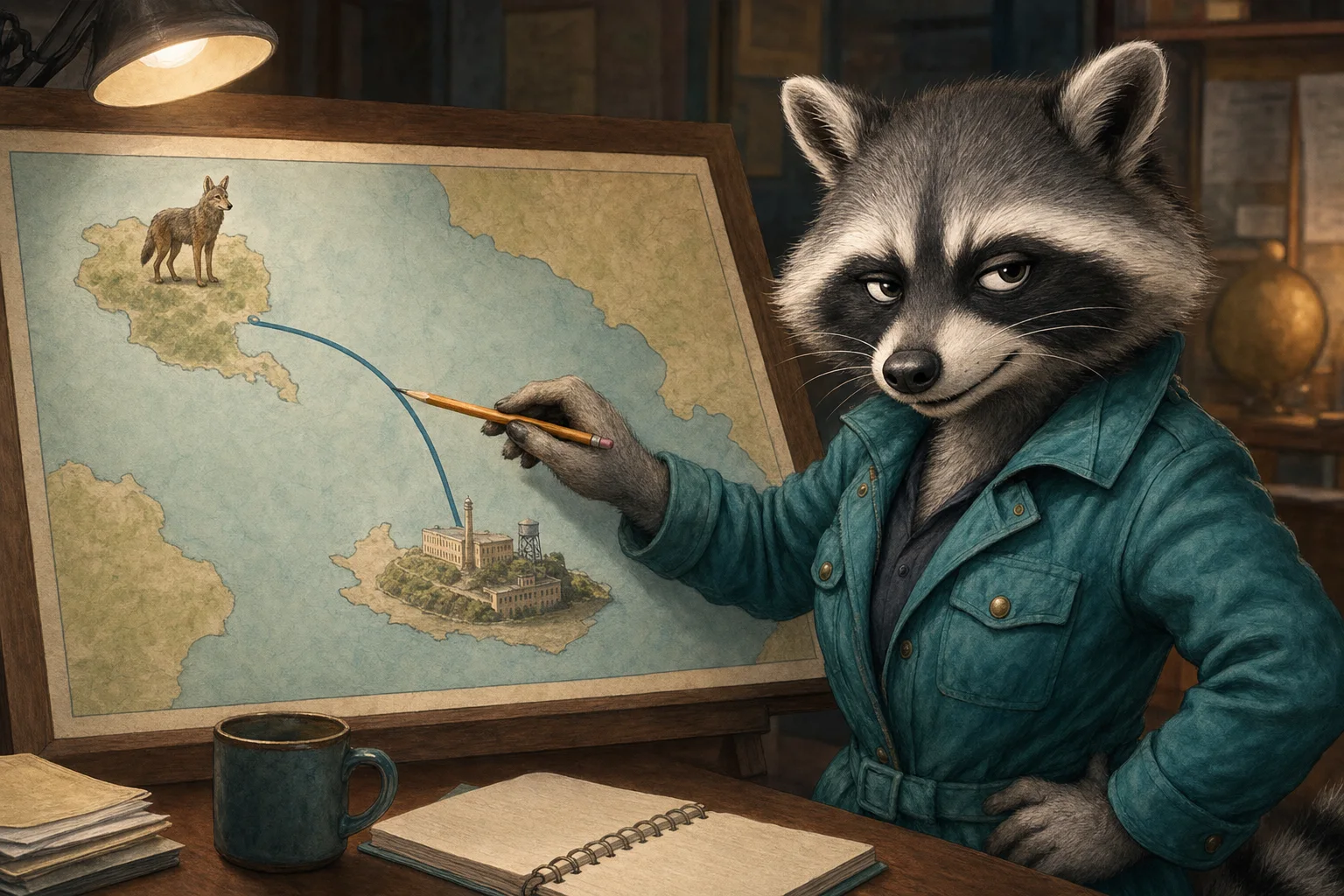
    Illustration of Rita Raccoon tracing the coyote's island-to-island route on a newsroom map
    Rita Raccoon reviews the two-island route. Illustration created for Hilarious News; it is not a reconstruction of the animal’s exact path.

    A mystery with one solid answer

    The coyote was seen reaching Alcatraz in January 2026. Later evidence showed that he had moved around the island, but the Park Service said in May that his whereabouts were unknown. Officials found no evidence that he remained there.

    That uncertainty matters. Alcatraz is an important nesting site for seabirds, and park staff had been prepared to capture and relocate the coyote if necessary. The animal’s disappearance from cameras and observations meant researchers could solve the origin story without claiming to know the ending.

    Why coyotes make trips like this

    Coyotes can swim, though a crossing of this length in San Francisco Bay is unusual. Wildlife experts told the Associated Press that a lone coyote may travel to seek territory or a mate. No researcher has established this animal’s motive, so the safe conclusion is simply that he left Angel Island, entered the bay, and reached Alcatraz under his own power.

    The National Park Service also emphasized that the feat fits the species. Coyotes have adapted to cities, parks, deserts and coastlines. This individual merely added “historic federal prison island” to an already flexible housing portfolio.

    For visitors, the usual wildlife rules still apply: admire coyotes from a distance, do not feed or approach them, and leave fieldwork to trained staff. Athletic achievement does not turn a wild animal into a tour guide.

    The verdict from the oddities desk

    The funniest part of the story is also the best-supported one. Researchers assumed the coyote had taken the shorter swim. DNA showed that he had come from farther away. Alcatraz’s newest maritime legend was not an escapee, not a stowaway and not a city coyote looking for a dramatic backdrop. He was an island coyote who chose a second island and apparently declined every conventional form of transportation.

    Rita Raccoon covers animals, consumer mysteries and any receipt that raises more questions than it answers.

    Sources