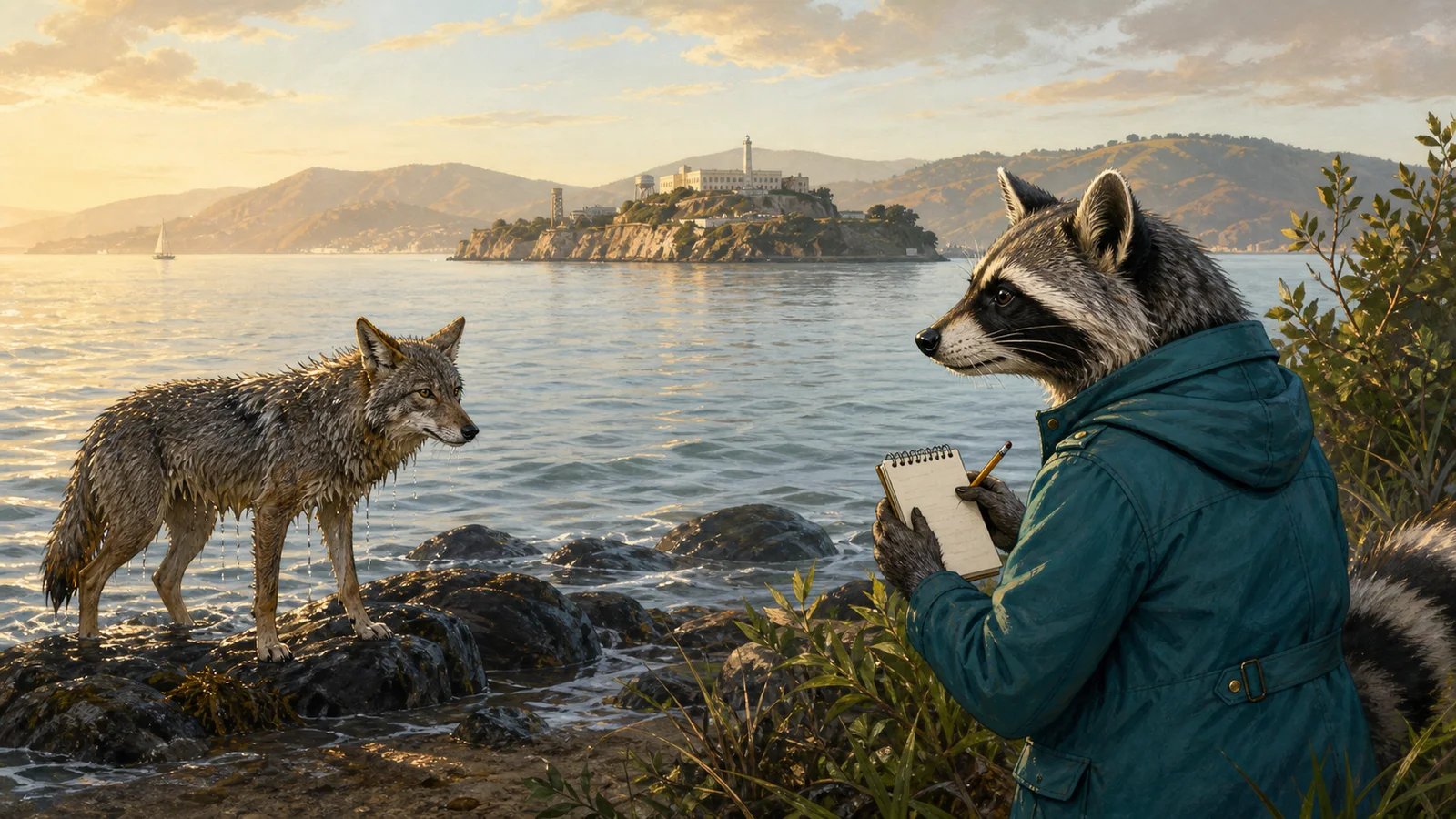
SAN FRANCISCO — Alcatraz spent decades cultivating a reputation as the island nobody could swim away from. A male coyote has now complicated the branding by swimming the other direction — and, according to DNA evidence, taking the long route.
The National Park Service announced on May 4 that genetic analysis traced the animal to the coyote population on Angel Island State Park. That means his journey to Alcatraz was about two miles across San Francisco Bay, not the shorter crossing from San Francisco that researchers initially suspected.
The evidence was less glamorous than the crossing
Park biologists collected tracks and scat after the coyote appeared on Alcatraz. The scat went to the University of California, Davis, Veterinary Genetics Laboratory, where researchers matched the DNA to a coyote previously sampled from the Angel Island population.
That result surprised the park team. Angel Island is farther from Alcatraz than the San Francisco shoreline, and the bay’s cold water and strong currents make the swim more than a casual dog paddle. The National Park Service described coyotes as resilient and adaptable; this one supplied a particularly soggy demonstration.

A mystery with one solid answer
The coyote was seen reaching Alcatraz in January 2026. Later evidence showed that he had moved around the island, but the Park Service said in May that his whereabouts were unknown. Officials found no evidence that he remained there.
That uncertainty matters. Alcatraz is an important nesting site for seabirds, and park staff had been prepared to capture and relocate the coyote if necessary. The animal’s disappearance from cameras and observations meant researchers could solve the origin story without claiming to know the ending.
Why coyotes make trips like this
Coyotes can swim, though a crossing of this length in San Francisco Bay is unusual. Wildlife experts told the Associated Press that a lone coyote may travel to seek territory or a mate. No researcher has established this animal’s motive, so the safe conclusion is simply that he left Angel Island, entered the bay, and reached Alcatraz under his own power.
The National Park Service also emphasized that the feat fits the species. Coyotes have adapted to cities, parks, deserts and coastlines. This individual merely added “historic federal prison island” to an already flexible housing portfolio.
For visitors, the usual wildlife rules still apply: admire coyotes from a distance, do not feed or approach them, and leave fieldwork to trained staff. Athletic achievement does not turn a wild animal into a tour guide.
The verdict from the oddities desk
The funniest part of the story is also the best-supported one. Researchers assumed the coyote had taken the shorter swim. DNA showed that he had come from farther away. Alcatraz’s newest maritime legend was not an escapee, not a stowaway and not a city coyote looking for a dramatic backdrop. He was an island coyote who chose a second island and apparently declined every conventional form of transportation.
Rita Raccoon covers animals, consumer mysteries and any receipt that raises more questions than it answers.
Sources
- National Park Service: “Alcatraz Coyote Wasn’t a City Boy After All” (primary source, May 4, 2026)
- UC Davis: DNA evidence identifies the coyote’s Angel Island origin (May 5, 2026)
- Associated Press: male coyote swam two miles to Alcatraz (May 5, 2026)
Leave a Reply