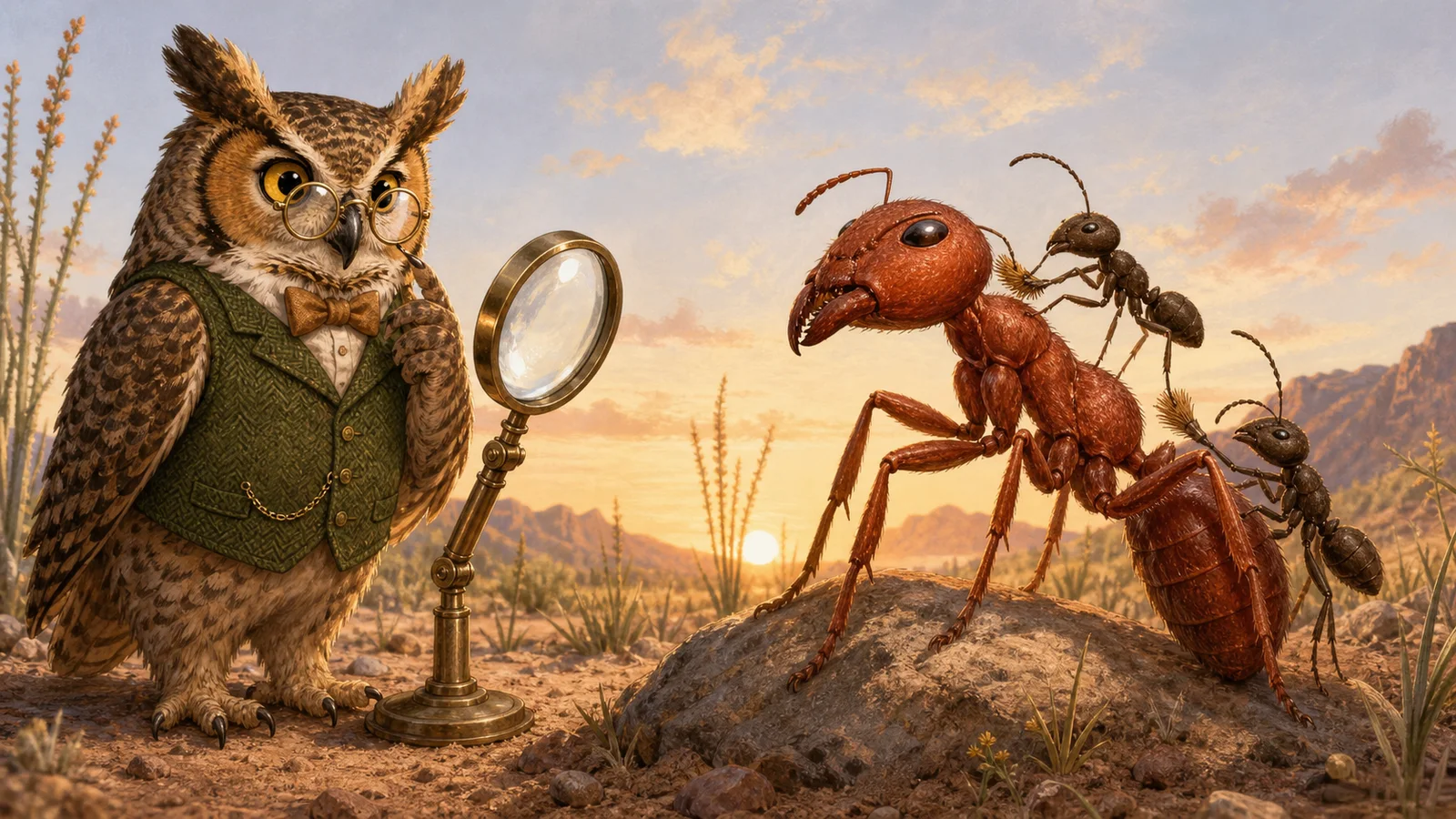
Professor Hoot, Science Desk — In southeastern Arizona, a group of ants appears to have opened a cleaning station for other ants. There is no appointment book, no cucumber water and, so far, no evidence that anyone has tried to sell a premium mandible package.
The actual finding is stranger and better than the joke. Entomologist Mark Moffett, a research associate at the Smithsonian’s National Museum of Natural History, documented tiny cone ants from an undescribed species in the genus Dorymyrmex climbing onto much larger red harvester ants, Pogonomyrmex barbatus, and grooming them. The observation was described in the peer-reviewed journal Ecology and Evolution in April 2026.
The desert’s smallest service counter
Moffett noticed the behavior near a research station in Arizona’s Chiricahua Mountains. Harvester-ant workers were moving out to collect seeds when a few seemed to freeze near the nests of the smaller ants. A closer look revealed cone ants on their bodies.
Over several days, Moffett watched at least 90 harvester ants receive attention. A harvester would approach a cone-ant nest, stand stiffly high on her legs and hold her serrated mandibles open. Usually within a minute, a cone ant emerged, climbed aboard and began inspecting the larger ant.
The Smithsonian says the sessions ranged from less than 15 seconds to more than five minutes. As many as five cone ants could work on one harvester, licking and nibbling its body with tongue-like mouthparts — including the area between those open jaws. The larger ant tolerated the work without biting.
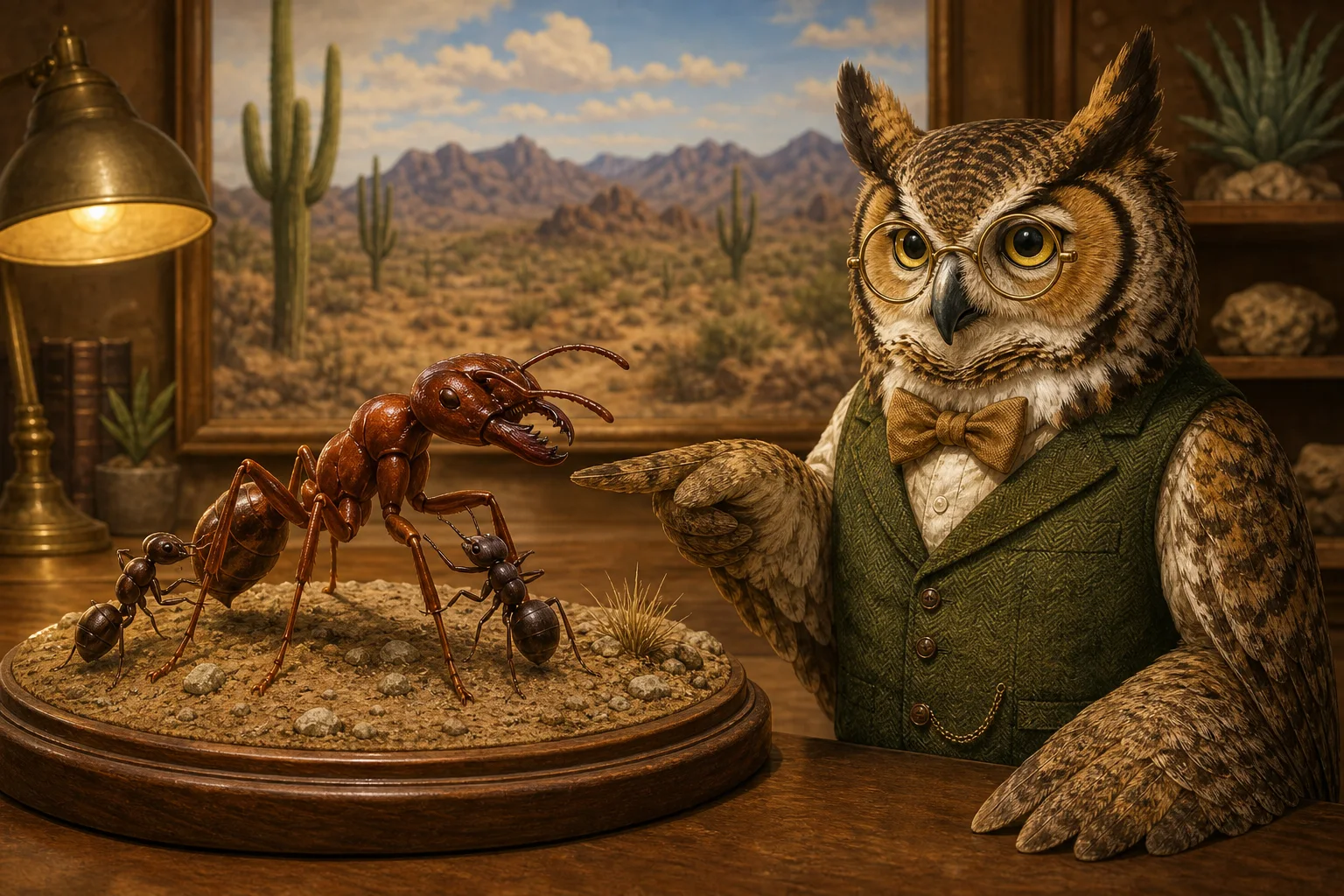
Departure was less graceful. When a harvester had apparently had enough, she bucked the smaller ants off so forcefully that she often ended up on her back before hurrying away. Every worker involved was female, which means this may be the most efficiently staffed spa in Arizona.
“The protocol is precise: arrive, hold still, permit inspection, then conclude the appointment with an unscheduled backward somersault.”
Professor Hoot, Hilarious News science host
A first, with the benefits still under study
The behavior resembles marine cleaning stations, where small fish or shrimp remove material from much larger animals. Moffett’s paper presents it as the first known case of one ant species cleaning a much larger ant species.
What each species gets from the arrangement remains unresolved. One possibility is that the cone ants consume tiny, energy-rich particles left on the harvesters, perhaps flakes from the seeds the larger ants collect. Moffett also suggested that the smaller ants may reach places that a harvester’s nestmates cannot, potentially removing debris, spores or parasites. Future work would need to test whether the sessions reduce infections or change either species’ microbiome.
There is one particularly interesting clue: the cone ants attended living harvesters but did not clean frozen specimens placed near their nests. That suggests the interaction is more specific than a simple interest in ant-shaped objects.
Nature’s latest workplace comedy therefore ends with an honest scientific answer: the grooming is real, the choreography is documented, and the payment system is still under investigation.
Professor Hoot’s final desk note: “Please resist calling it a manicure. Ants do not have hands, and precision in terminology is the first defense against chaos.”
Leave a Reply