Professor Hoot’s field note: The day shift has been informed. It is now time to hand the coastline to the specialists.
Acadia National Park has a decidedly sensible plan for a summer Sunday evening: stay up long enough to meet the animals whose workday begins when ours starts looking for pajamas. The park’s family-friendly “Goodnight Acadia!” twilight talk is scheduled for 7 p.m. on Sundays from July 19 through September 27, with the next program listed for July 26.
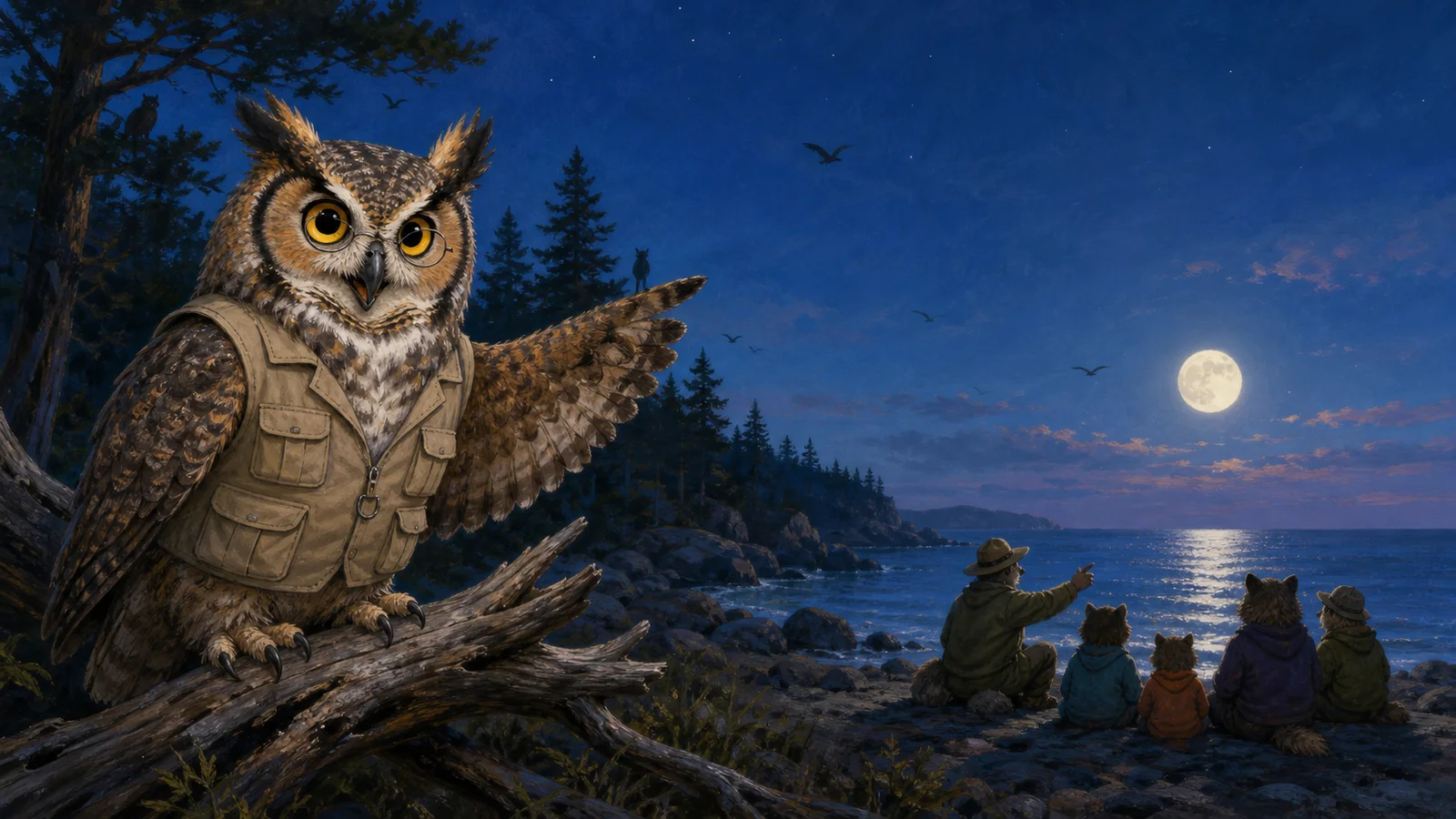
The National Park Service says the program is held at Sand Beach and introduces visitors to crepuscular and nocturnal animals. In plain terms, that is the crowd that treats sunset as an opening bell. Professor Hoot, who is both an owl and therefore an aggressively interested party, supports the arrangement.
Children are welcome with an adult, according to the event listing. The practical details matter, too: reaching Sand Beach involves stairs and uneven ground, and the park advises visitors to prepare for wind, cold, moisture, insects, and the usual consequences of taking the coast seriously after dark. A flashlight or headlamp and appropriate footwear are part of the sensible plan; the program may be canceled in severe or unsafe weather.
A very small evening assignment
Goodnight Acadia is not a summons to become a wilderness expert before dessert. It is a ranger-led chance to listen and look during the brief moment when the daytime crowd thins out and the night shift begins. The event page notes that visitors can continue with Acadia’s Night Sky Program an hour after the twilight talk ends, if they would like to turn one evening program into a thoroughly respectable late bedtime.
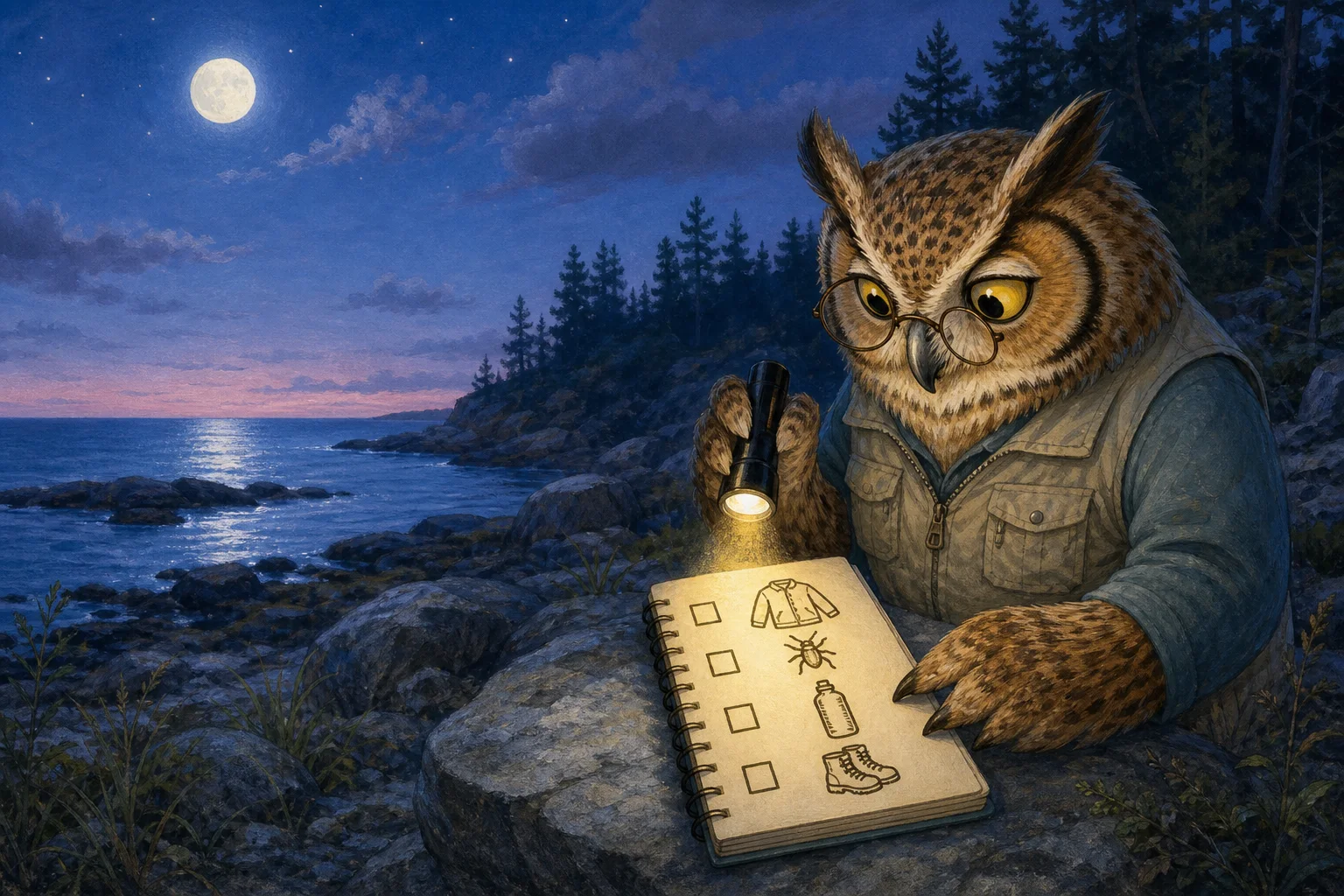
The official listing includes accessibility information and asks visitors who need accommodations to contact the park at least 10 days ahead. It also says the talk will go ahead in cloudy conditions, though not in severe weather or unsafe conditions. That is the correct level of drama for a shoreline evening: enough mystery for the animals, not enough for anyone’s footwear.
For the time, location, accessibility requests, and any last-minute conditions, check Acadia’s official event listing before heading out. Professor Hoot’s final ruling is characteristically precise: be warm, be prepared, and allow the creatures with better night vision to have the first word.
Leave a Reply