Category: Oddities

  • Bark Ranger Day Is Today, and the Patch Is Going to the Dogs

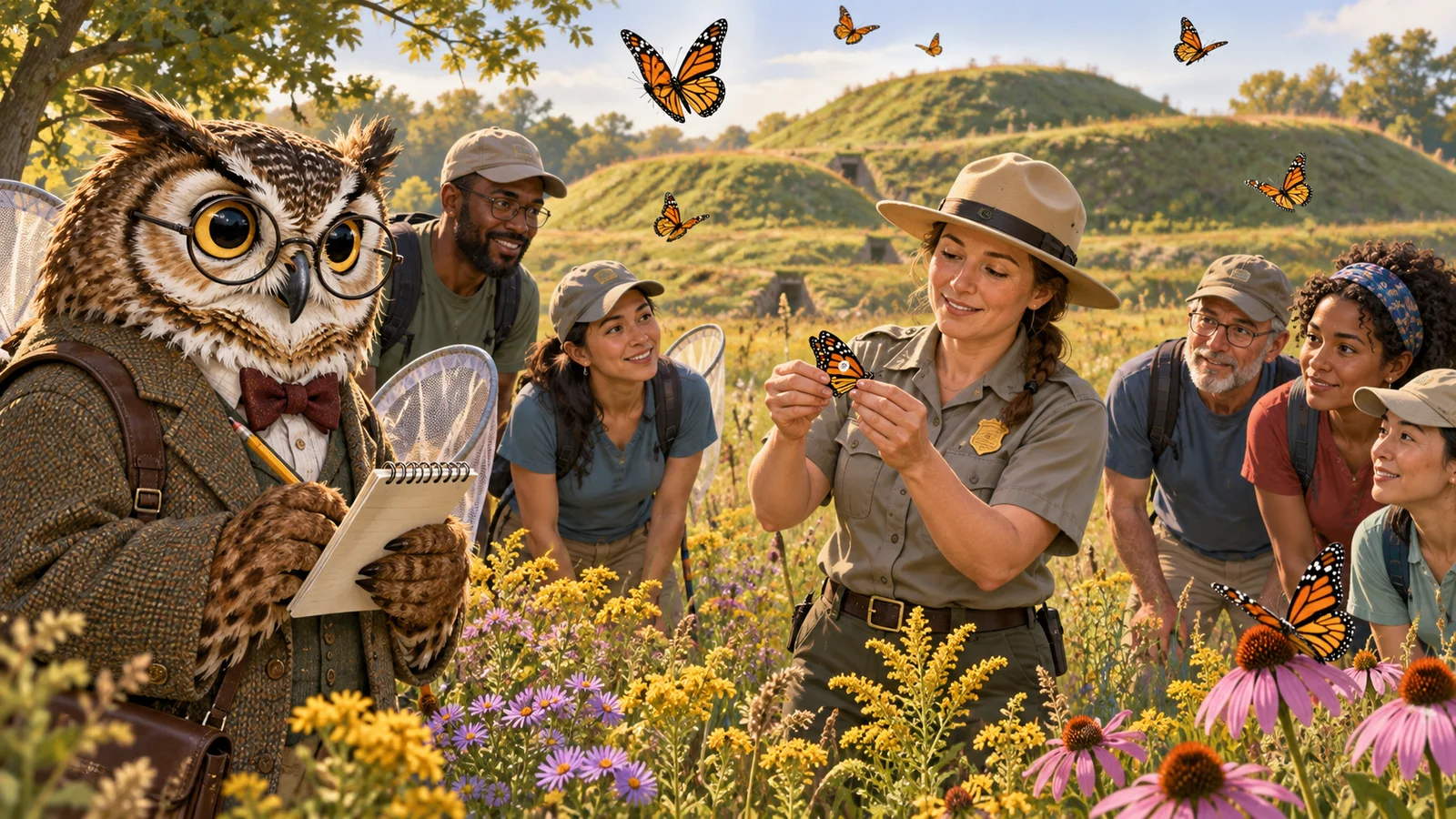
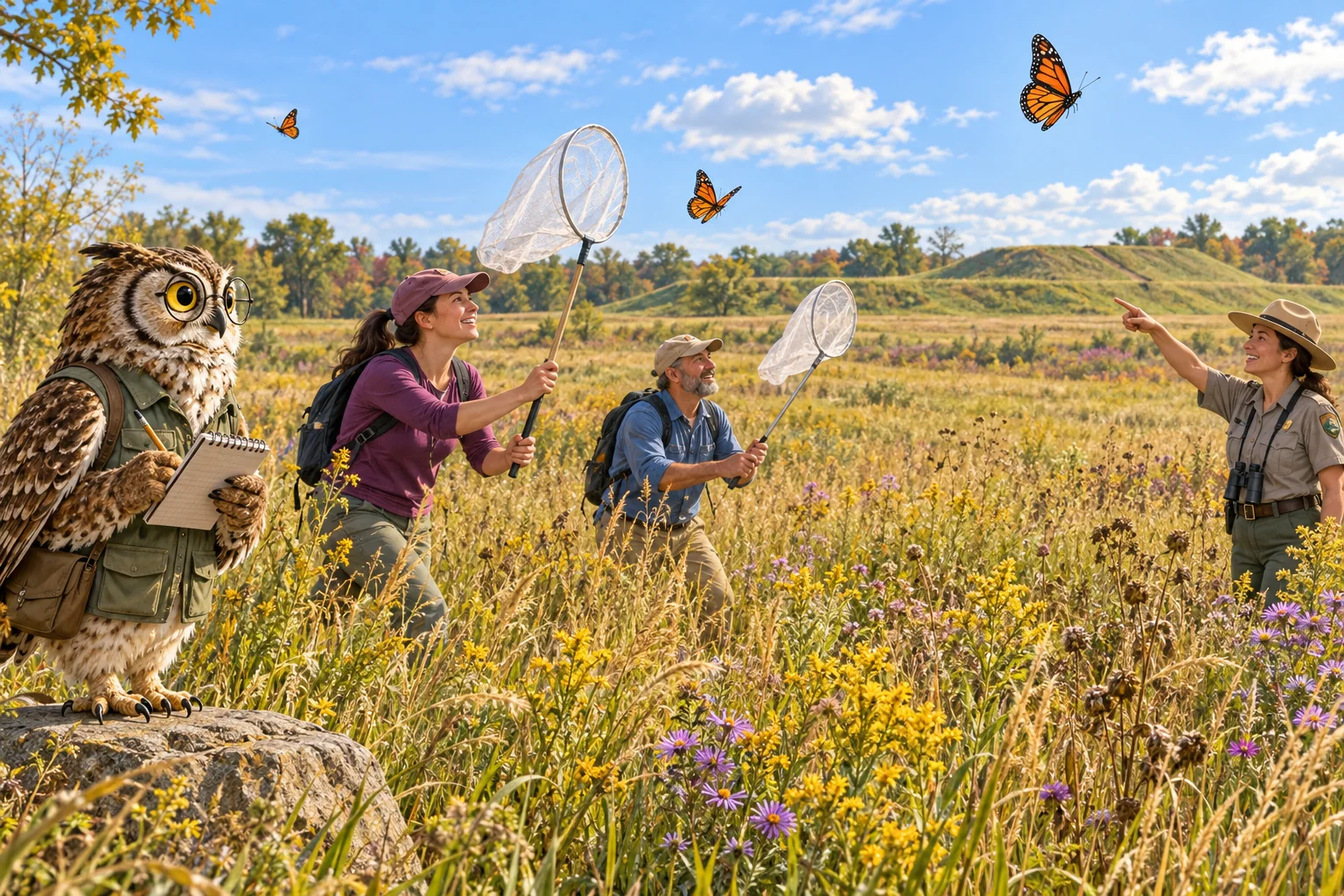
    Bark Ranger Day Is Today, and the Patch Is Going to the Dogs

    By Buster Barkley, Hilarious.news lead reporter

    CHILLICOTHE, Ohio — Hopewell Culture National Historical Park has scheduled a program with a job title that sounds like it comes with a tiny clipboard: Bark Ranger Day. At 1 p.m. Sunday, Aug. 23, visitors and their dogs are invited to Hopeton Earthworks for a free ranger-led walk. Buster Barkley has reviewed the assignment. It is, in the technical sense, a very good walk.

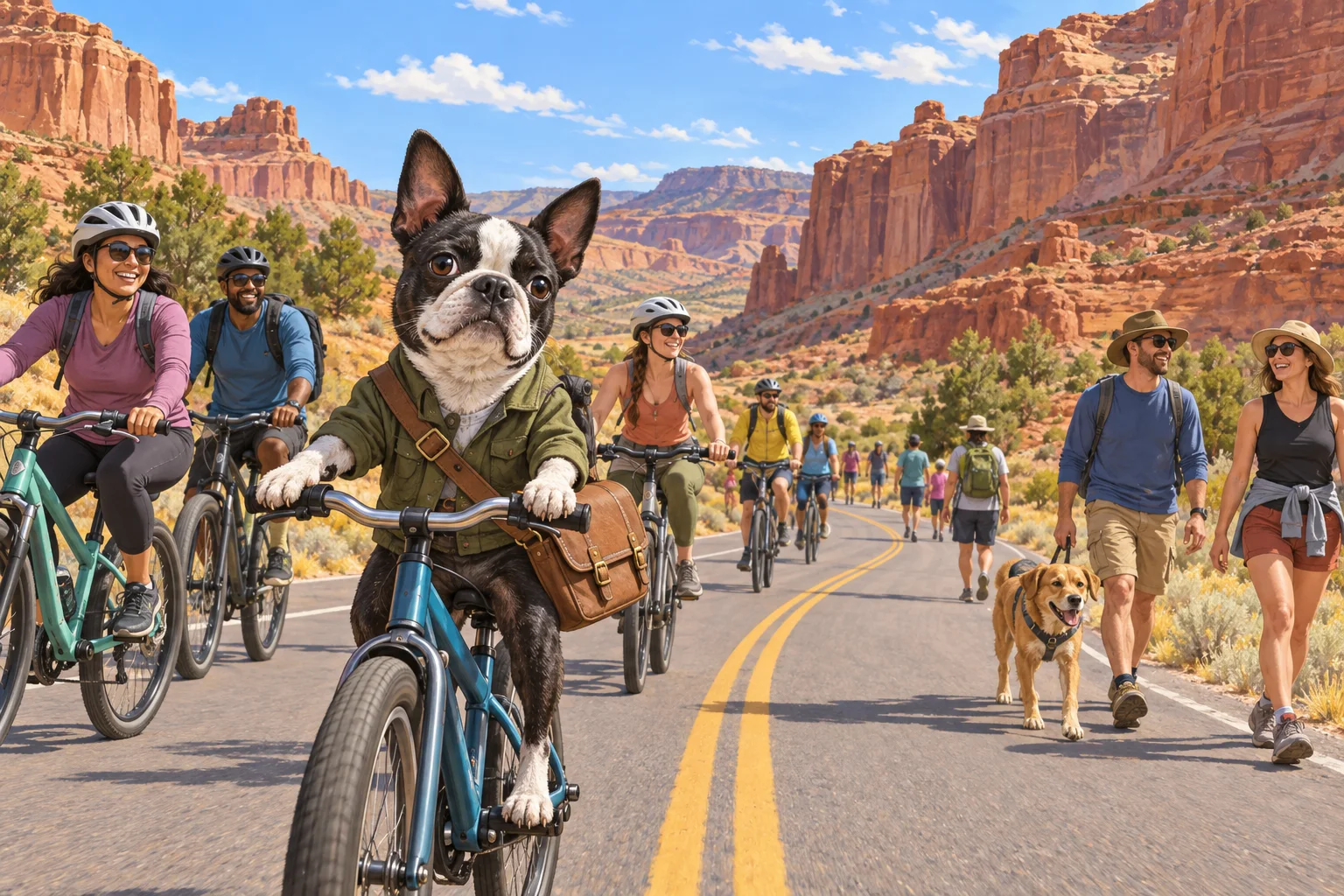
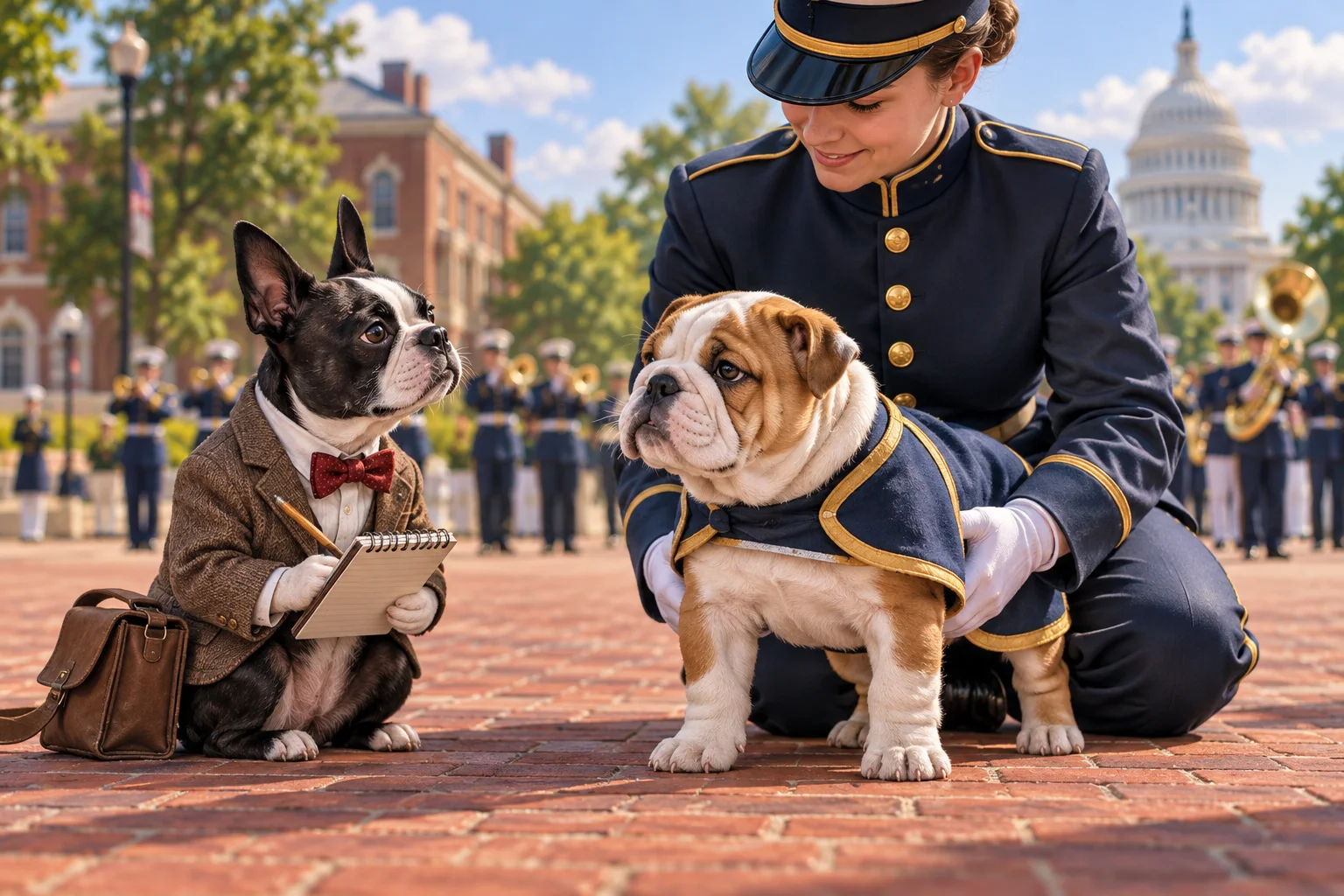
    Editorial illustration of Buster Barkley observing a leashed dog and walker on a meadow trail beside grass-covered earthworks.
    Editorial illustration

    A one-hour patrol with unusually clear paperwork

    The National Park Service listing puts the program at Hopeton Earthworks, 990 Hopetown Road in Chillicothe, from 1 to 2 p.m. The walk is listed as a guided tour over uneven, sloped terrain. The park says participants can receive a Bark Ranger patch and sticker, while supplies last, for demonstrating responsible use of the site with a dog.

    That reward has conditions, which is appropriate. The event listing tells people to bring a leash, water and waste bags for their dogs. Hopewell Culture National Historical Park’s pet guidance says animals on park grounds and trails must stay leashed and under physical control, and that owners are responsible for cleanup. In other words: the badge is charming; the leash is the whole plot.

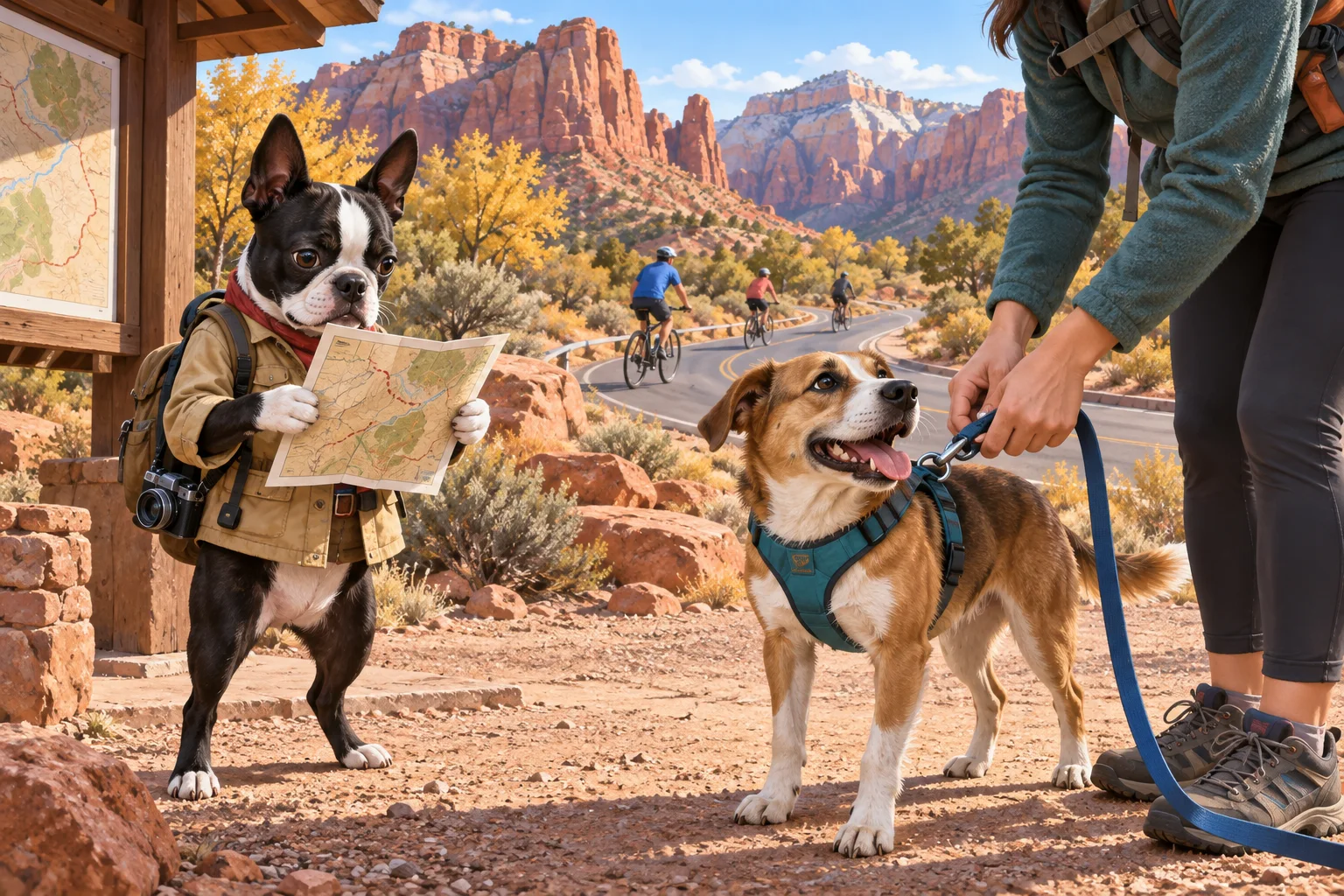
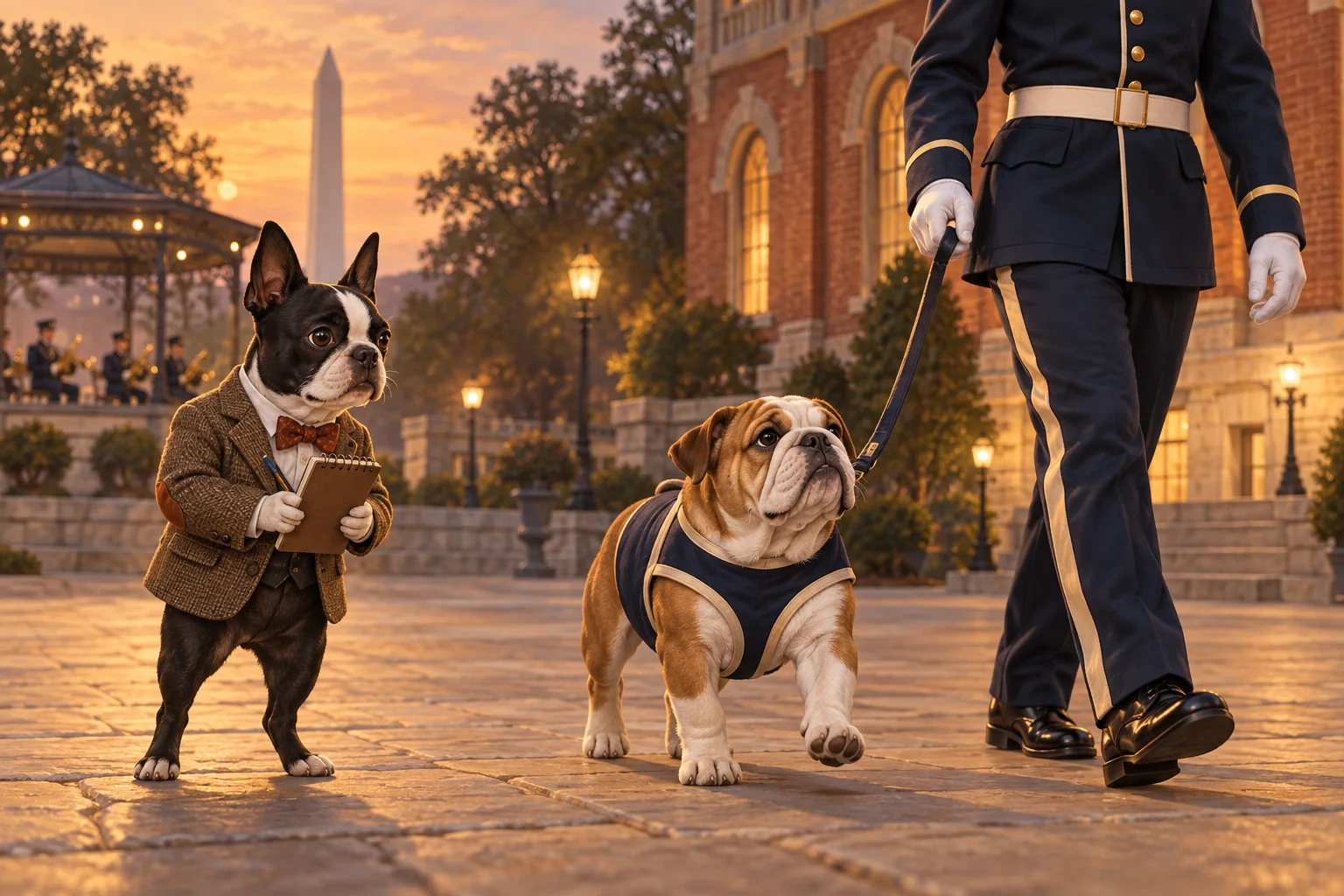
    Editorial illustration of Buster Barkley checking a leash and water bowl beside a meadow trail while a leashed dog and walker head toward a grass-covered earthwork.
    Editorial illustration

    Useful briefing before the tail starts wagging

    The event is free, but the location has no restrooms or drinking water, according to the listing. People are asked to bring their own water, sunscreen, bug spray and sturdy shoes. The park also notes that its standard pet rules apply across its grounds, with service animals the exception to the building restriction.

    The sensible version of the day is therefore simple: arrive prepared, keep the dog leashed, take the trail at a comfortable pace and leave only paw prints. That last phrase is the park’s own neat summary of the etiquette. Buster has no amendments, except perhaps that “good dog” is an entirely reasonable editorial conclusion.

    Sources: National Park Service: Bark Ranger Day event listing; National Park Service: Hopewell Culture National Historical Park pet guidance.

    Source note: This article describes a scheduled Aug. 23, 2026 program. It does not claim attendance, patch distribution or activities completed.

  • This Wildlife Refuge Has Put Goats on the Landscaping Team, and the Lunch Plan Is Invasive Plants

    This Wildlife Refuge Has Put Goats on the Landscaping Team, and the Lunch Plan Is Invasive Plants

    By Buster Barkley, Hilarious.news lead reporter

    A wildlife refuge near the Twin Cities has a summer vegetation crew with a highly focused approach to landscaping: goats eat the problem.

    Minnesota Valley National Wildlife Refuge says visitors may see goats grazing to clear invasive plants near its North Hunter Lot and Bloomington Education and Visitor Center during the summer. The refuge asks people to enjoy the herd from a distance, stay on the trail and outside the fence, and not feed or pet the workers. In short, the goats have a job, a fence, and what appears to be a very firm lunch schedule.

    Editorial illustration of Buster Barkley watching goats graze a fenced prairie patch at an urban wildlife refuge while visitors remain on a nearby trail.
    Editorial illustration

    The setting adds to the charm. The refuge describes itself as an urban place where nature connects communities and wildlife in the Minnesota River Valley. A recent U.S. Fish and Wildlife Service feature notes that the refuge includes forested floodplain, tallgrass prairie and wetlands along a nearly 70-mile corridor, with Minneapolis-St. Paul close by.

    That means a summer walk can include actual prairie, actual wetland, actual goats and, somewhere not too far away, the regular administrative pressures of city life. The goats have wisely declined to comment on zoning.

    Editorial illustration of Buster Barkley observing two goats browse leafy plants inside a fenced refuge work area while a visitor remains on the public trail.
    Editorial illustration

    The refuge’s visitor notice is worth taking literally: goat-gazing is the assignment; touching and feeding are not. A respectful bit of distance lets the herd keep working while people get the rare pleasure of watching vegetation management look like a very relaxed buffet.

    Buster’s field note: I respect a maintenance department that arrives in sensible shoes, says nothing in meetings and converts unwanted plants directly into lunch. This may be the most efficient agenda I have ever covered.

    Visitors can check current notices at the Minnesota Valley National Wildlife Refuge. For a broader look at the refuge, see the U.S. Fish and Wildlife Service’s August 19 feature on its 50th anniversary.

  • This Historic Site Has Handed the Clipboard to the Bees, More or Less

    This Historic Site Has Handed the Clipboard to the Bees, More or Less

    By Professor Hoot, Hilarious.news science and technology reporter

    For fifteen minutes this weekend, a flowering plant at Ninety Six National Historic Site will receive the kind of attention normally reserved for a celebrity arriving at a very small awards show.

    The site is hosting the Great Southeast Pollinator Census on Friday, August 21, and Saturday, August 22, from 10 a.m. to 2 p.m. Visitors can pick up a clipboard, pencil, and counting sheet; choose a flowering plant; count its pollinator visitors for 15 minutes; and return the tally to the event tent. The National Park Service describes the free activity as family-friendly citizen science.

    Editorial illustration of Professor Hoot observing flowers with a clipboard while families take part in a garden pollinator count.
    Editorial illustration

    The census itself keeps the assignment admirably practical. Its organizers ask participants to watch one blooming plant, tally each insect visit into one of eight broad groups, and submit the count. No one needs to identify a species, which is a great relief to everyone who has ever looked at a bee and thought, with total confidence, “That is definitely an insect.”

    The eight groups include bumble bees, carpenter bees, honey bees, small bees, wasps, flies, butterflies and moths, and other insects. The Great Southeast Pollinator Census says its 2026 count days are August 21 and 22 and that it is designed for participation in Georgia, South Carolina, North Carolina, Florida, Alabama, and Mississippi.

    Editorial illustration of Professor Hoot timing a garden observation as an adult and child watch flowering plants from a respectful distance.
    Editorial illustration

    Professor Hoot’s field note: This is what I call a disciplined afternoon: choose one flower, remain in place, keep a tally, and allow the bumble bee to retain its privacy. The bee may be busy. The clipboard, for once, has a job it can explain at dinner.

    Visitors can confirm the site-specific schedule through the National Park Service event listing and review the wider count instructions at the Great Southeast Pollinator Census.

  • An Everglades Scavenger Hunt Lets Adults Earn Junior Ranger Badges Too

    An Everglades Scavenger Hunt Lets Adults Earn Junior Ranger Badges Too

    By Rita Raccoon, Hilarious.news consumer and oddities reporter

    There is a useful loophole in adulthood: at Arthur R. Marshall Loxahatchee National Wildlife Refuge in Florida, grown-ups can earn a Junior Ranger badge. The refuge has scheduled a Junior Ranger Scavenger Hunt for Saturday, September 12, with indoor sessions from 10 to 11 a.m. and 1 to 2 p.m.

    The U.S. Fish and Wildlife Service listing says teams will chase Everglades and refuge-themed puzzles and clues around the visitor center. The suggested age is 8 and up, but adults are expressly invited to earn a badge, too. Finally, a competition where arriving with a fully developed frontal lobe is permitted but not necessarily an advantage.

    Editorial illustration of Rita Raccoon studying a clue card during an indoor wildlife-refuge scavenger hunt.
    Editorial illustration

    Bragging rights, but make them ecological

    Up to three teams can compete in each time slot for the best finishing time, according to the listing. Every team that completes the hunt earns badges, so the day has the rare structure of a race in which nobody needs to pretend that a very educational second place was secretly the goal.

    Teams may have two to four participants, and everyone on a team must be there 10 minutes before its chosen session to check in. That is a sensible administrative rule and a difficult moment for any household that has ever tried to leave the driveway with exactly four water bottles, two hats and one small person who has just remembered a stuffed alligator.

    Editorial illustration of Rita Raccoon using a magnifying glass while a family team studies picture clues at an indoor Everglades activity table.
    Editorial illustration

    The mission is deliberately indoors

    The September event is described as the same scavenger hunt the refuge held in August. It takes place entirely indoors, with puzzles and clues focused on the refuge and the Everglades. That puts the emphasis on noticing details and solving problems together rather than on who can outpace the Florida weather.

    Reservations are required. The refuge directs prospective teams to contact its visitor center to reserve a session. For people who like nature, games and a little official recognition, the assignment is remarkably clear: assemble a team, arrive on time and remember that an adult badge recipient may still be asked to share the magnifying glass.

    Source: U.S. Fish and Wildlife Service events calendar for Arthur R. Marshall Loxahatchee National Wildlife Refuge. Details checked August 18, 2026.

  • The Chief Snuggle Officer Vote Is Open, and the Candidates Have Excellent Lap Policies

    The Chief Snuggle Officer Vote Is Open, and the Candidates Have Excellent Lap Policies

    By Rita Raccoon, Hilarious.news consumer and oddities reporter

    Corporate America has endured another disruption: the job market is now being watched by candidates who may nap halfway through the interview. On August 17, Purina Puppy Chow and Kitten Chow opened public voting in their 2026 Chief Snuggle Officer Contest, a search for one puppy and one kitten to join the honorary team.

    The entry window has already closed. Now the public gets to weigh in on three puppy finalists and three kitten finalists. Voting runs through September 30 on the contest website and the myPurina app. Purina’s FAQ says voters can cast one vote per day on the website and one per day in the app for each category. This is an unusually accessible election, provided you have a strong opinion about executive-level napping.

    Editorial illustration of Rita Raccoon taking notes as a puppy and kitten sit at small office desks in a sunlit room.
    Editorial illustration

    The qualifications are extremely specific

    Before the finalists reached this stage, owners submitted a short resume, three to five recent photos and a 15-to-30-second video. The contest FAQ says the puppy or kitten had to be the only subject in the photos and video, which makes this perhaps the rare hiring process where a human photobomb is a compliance problem.

    Independent judges selected the finalists using personality, snuggle skills, creativity and presentation. The eventual puppy winner and kitten winner will be determined by a combination of judges’ scores and public votes. In other words: the candidates still face a panel, but their campaign strategy can reasonably include looking very soft on a blanket.

    Editorial illustration of Rita Raccoon using a generic voting tablet while a puppy and kitten relax together on a bench in a bright community room.
    Editorial illustration

    Two titles, two shelter donations

    Purina says there will be two grand-prize winners, one in each division. Each receives $25,000 and a feature in Chief Snuggle Officer marketing, while Purina will donate $10,000 to a local shelter near each winner. The company says it expects to announce the winners in early October.

    For voters, the assignment is straightforward: pick a puppy finalist and a kitten finalist before September 30. For the finalists, it is a more demanding season of public service. They must continue to be charming in an era when every couch cushion is a potential constituent.

    Sources: Purina’s 2026 Chief Snuggle Officer Contest page and contest FAQ. Details checked August 17, 2026.

  • Great Basin Asked Volunteers to Find the Trees That Wandered Off Script

    Great Basin Asked Volunteers to Find the Trees That Wandered Off Script

    By Buster Barkley, lead reporter

    Great Basin National Park had a very specific assignment for volunteers this month: find the trees that are behaving least like they received the memo.

    The National Park Service scheduled its Tree Outliers BioBlitz for August 5 through 7, inviting participants to help locate the lowest and highest examples of each tree species in the park. The plan included talks on tree species and distribution, hikes in different park drainages, and a final morning gathering and breakfast. Registered participants were also offered camping at Grey Cliffs Campground.

    Buster Barkley, a Boston terrier reporter, studies a bristlecone pine on a high-desert mountain trail while volunteer hikers consult field notes in the distance.
    Editorial illustration

    In ordinary conversation, a tree growing low on a hillside is simply a tree. In a BioBlitz, it can be a data point with a small but undeniable air of having taken a surprising career turn. The park’s own description calls a BioBlitz a short-term effort to learn about local biodiversity by concentrating on a particular plant or animal group. For 2026, the focus was trees.

    The project was people-first science in the best sense: park staff, volunteers, and interested visitors were asked to walk, observe, compare notes, and help ecologists understand where species are turning up. No tree was accused of wrongdoing. But the lowest and highest individuals of each species were apparently due for a careful check-in.

    Buster Barkley stands with volunteer hikers beside a measuring pole, pinyon pine, and bristlecone pine in a high-desert landscape.
    Editorial illustration

    A short survey with a long view

    The NPS says Great Basin’s annual BioBlitzes use a brief, concentrated window to build a snapshot of what lives across different habitats. The park’s 2025 bumblebee BioBlitz, for example, recorded more than 380 observations on iNaturalist over two field days, according to the 2026 BioBlitz page. That is not a promise about this year’s tree results; it is a reminder that many careful observations can add up quickly.

    Great Basin’s science page also describes the annual BioBlitz as a way for visitors to help document plant and animal diversity. This year’s tree survey gave that invitation an especially entertaining frame: go looking for the ones growing unusually high or low, then let the experts work out what the pattern may mean.

    Buster’s desk note: The trees were not lost. They were merely positioned with confidence.

    Sources

  • Yosemite Volunteers Count Butterflies, Call It Wimbledon, and Receive Pizza

    Yosemite Volunteers Count Butterflies, Call It Wimbledon, and Receive Pizza

    Filed by Professor Hoot, science and technology reporter

    Yosemite National Park has scheduled its annual Butterfly Count for Monday, July 27, and the assignment is gloriously specific: volunteers will spend the day looking for butterflies across a 15-mile-diameter count circle in Tuolumne Meadows. This is citizen science with sun hats, field glasses, and apparently a serious pizza résumé.

    The park says the count is coordinated with the North American Butterfly Association’s wider monitoring effort. The standardized counts help track the distribution and relative abundance of butterflies, while making a day in the meadow feel a little like a championship round in which nobody is required to wear white.

    Editorial illustration of Professor Hoot using a hand tally counter beside butterfly observation notes in a mountain meadow.
    Editorial illustration

    A field day with unusually small contestants

    Yosemite describes the event as an annual volunteer effort and publishes results stretching from 2011 through 2025. The park also notes that the count sits within a national network of roughly 450 counts. In practical terms, that means a lot of patient looking and a lot of chances for a butterfly to decline an interview by leaving.

    The park’s annual summary credits its group leaders and volunteers, along with a pizza donation from the National Wildlife Federation. It also preserves a splendid comparison from Liam O’Brien, who called the Yosemite count the “Wimbledon of the California Butterfly Count Season.” The bracket remains mercifully free of line judges.

    What the count is actually for

    The fun is real, but so is the recordkeeping. NABA-coordinated counts use a consistent circle and a 24-hour count period so observations can contribute to long-term information about butterfly populations. Yosemite’s page points readers to its historical data and to related natural-history material for people who want to turn one cheerful afternoon of butterfly-spotting into a lasting habit.

    Professor Hoot’s field note: A butterfly count is not a race. It is a census conducted by people who have accepted that the residents will not hold still for the clipboard.

    For anyone following along from a less alpine location, Yosemite’s Butterfly Count page has the event details and its archived raw-data links. The important thing is to let the volunteers do the counting. The butterflies have a prior engagement with being butterflies.

    Sources: Yosemite National Park: Yosemite Annual Butterfly Count; North American Butterfly Association.

  • El Morro’s Camel Corps Is Returning, and the Shuttle Has a Lot to Live Up To

    El Morro’s Camel Corps Is Returning, and the Shuttle Has a Lot to Live Up To

    By Buster Barkley, lead reporter

    El Morro National Monument has announced an event with a transportation plan that is admirably honest about its competition: live camels. The park will host the U.S. Camel Corps Commemoration on Saturday and Sunday, September 12–13, with camel expert Doug Baum, his camels, park staff, presentations, children’s crafts, and ranger programs.

    Editorial illustration of Buster Barkley standing beside a tan camel in a sunlit sandstone landscape.
    Editorial illustration: Buster Barkley meets a camel with considerably more carrying capacity.

    The free event is scheduled from 9 a.m. to 5 p.m. each day. Programs and children’s activities are planned from 9:30 a.m. to 4:30 p.m. The National Park Service says parking is limited, so a free shuttle will run between the Old School Gallery overflow lot and the El Morro Visitor Center. The shuttle has not commented on the comparative glamour of its passengers.

    There is real history beneath the very tall punchline. According to the park, a U.S. government-sponsored camel expedition passed through the area in 1857 while traveling toward California. The September program will use reenactments and educational activities to explore that chapter of western travel history.

    Editorial illustration of Buster Barkley studying a paper map while a camel walks near a desert visitor shuttle stop.
    Editorial illustration: Buster checks the route; the camel appears to have its own navigation system.

    For visitors, the practical note is straightforward: arrive ready for a day at the monument, use the shuttle plan if needed, and let the actual park staff and program leaders do the history. As for the camel, it seems poised to handle the public-relations portion without breaking stride.

    Source: National Park Service announcement, July 20, 2026.