Category: Oddities

  • Appomattox Is Hosting a Base Ball Game, and the Mitt Has Been Excused

    Appomattox Is Hosting a Base Ball Game, and the Mitt Has Been Excused

    APPOMATTOX COURT HOUSE, Va. — The National Park Service has scheduled a baseball game where the first equipment rule is a bare-handed catch.

    Appomattox Court House National Historical Park will invite visitors to play Civil War-era “base ball” on Saturday, Sept. 5. The park’s listing says the game will follow 1860s rules, with period-correct bats and balls and bare hands handling the catches.

    Buster Barkley watches families play a Civil War-era base ball game on a grassy field
    Editorial illustration: Buster Barkley reviews the park’s historical game plan.

    The glove gets a respectful day off

    Modern baseball treats the glove as basic kit. This weekend’s historical game treats it as a tempting anachronism. Visitors are welcome to join in, the park says, with games planned for 10 a.m. and 2 p.m., weather permitting.

    That makes the event unusually approachable: a league résumé, a custom mitt and the mysterious equipment bag in the garage can all stay home. Visitors can show up ready to learn a game in the way players did in the Civil War era. The park will provide the bats and balls.

    Camp chairs encouraged; comfort comes first

    The event is free. Appomattox Court House National Historical Park encourages period-appropriate clothing and camp chairs, which gives the afternoon a useful balance of historical atmosphere and modern back support. The listing welcomes all visitors to physically join the game; spectators can settle in while the participants discover that “catch” is more demanding when your hand has no leather assistant.

    Buster Barkley takes notes as families prepare wooden bats and a ball for a historical game
    Editorial illustration: Buster takes notes as players prepare for a family-friendly historical game.

    The park’s broader special-events page describes the Sept. 5 program as a day of Civil War base ball following era rules. The afternoon’s real prize is a better sense of how a familiar pastime looked before gloves joined the uniform, with every bare-handed catch adding a little history.

    Buster’s field note: A sport that supplies its own bats and balls and invites bare-handed catches has achieved a rare level of administrative clarity. The assignment is simple: play the old game, enjoy the park, and let your bare hand handle the history.

    Source note: This article previews the program scheduled for Sept. 5, 2026, with attendance and results to follow the event.

    Sources: National Park Service event listing; Appomattox Court House National Historical Park special-events page.

  • Bird and Brew Is Taking Coffee on a Refuge Shuttle, and Rita Has Notes

    Bird and Brew Is Taking Coffee on a Refuge Shuttle, and Rita Has Notes

    By Rita Raccoon, consumer and oddities correspondent

    Rita Raccoon takes notes beside birders, binoculars and a warm travel mug at a sunny coastal wetland
    Editorial illustration

    There are many ways to begin a Saturday morning. Chula Vista has proposed one with binoculars, a warm beverage and a short ride toward the birds.

    “Bird and Brew: Sip, Stroll, Spot” is scheduled for Saturday, Sept. 26, from 9 to 11 a.m. The free outing is for ages 13 and up and is organized by the City of Chula Vista Parks and Recreation Department with the San Diego National Wildlife Refuge Complex, according to the U.S. Fish and Wildlife Service event listing.

    The itinerary is admirably straightforward

    Participants meet at Sweetwater Park, 845 E Street, in Chula Vista. From there, the group will take a free shuttle into San Diego Bay National Wildlife Refuge for a morning of birding and a walk. The refuge listing recommends walking shoes and a sense of curiosity. Rita endorses both, especially the shoes: wetlands are famously unimpressed by decorative footwear.

    Rita Raccoon checks a birding list while people observe shorebirds from a coastal wetland boardwalk
    Editorial illustration

    The event is pitched as a chance to unwind outdoors while combining nature watching with a favorite warm drink. That is a useful division of labor. The beverage handles morale; the binoculars handle the tiny moving objects.

    A shuttle, a shoreline and several excellent excuses to look up

    San Diego Bay National Wildlife Refuge is the destination, but the outing is also a small community invitation: show up, walk together, and notice the wildlife sharing the coast. The Service lists birding as the recreation activity and describes the audience as teens and adults.

    Rita’s field note: the official assignment is sip, stroll and spot. Someone may still decide that spotting a bird before the first sip counts as a personal record, leaving plenty of room for conversation and the occasional serious binocular adjustment.

    Rita Raccoon waits with binoculars and a notebook as birders carrying travel mugs board a coastal refuge shuttle
    Editorial illustration

    Reservations and event details should be confirmed with the organizers before heading out. The U.S. Fish and Wildlife Service lists [email protected] for more information, and the City of Chula Vista also includes Bird and Brew on its September calendar.

    Rita’s final ruling: a morning walk that comes with a shuttle, a shoreline and a warm drink has a strong case for being the most civilized kind of fieldwork. The birds may remain difficult to schedule. That is part of their charm.

    Details checked Sept. 1, 2026. This article covers the scheduled event; attendance and outcomes will depend on the day.

  • Mammoth Cave’s Bat Day Has Face Painting, Night Research and One Very Firm Six-Foot Rule

    Mammoth Cave’s Bat Day Has Face Painting, Night Research and One Very Firm Six-Foot Rule

    Hilarious.news | Culture desk

    Mammoth Cave’s Bat Day Has Face Painting, Night Research and One Very Firm Six-Foot Rule

    Cleo Claws reviews a free September 5 festival where the humans get the amphitheater and the bats get the data table.

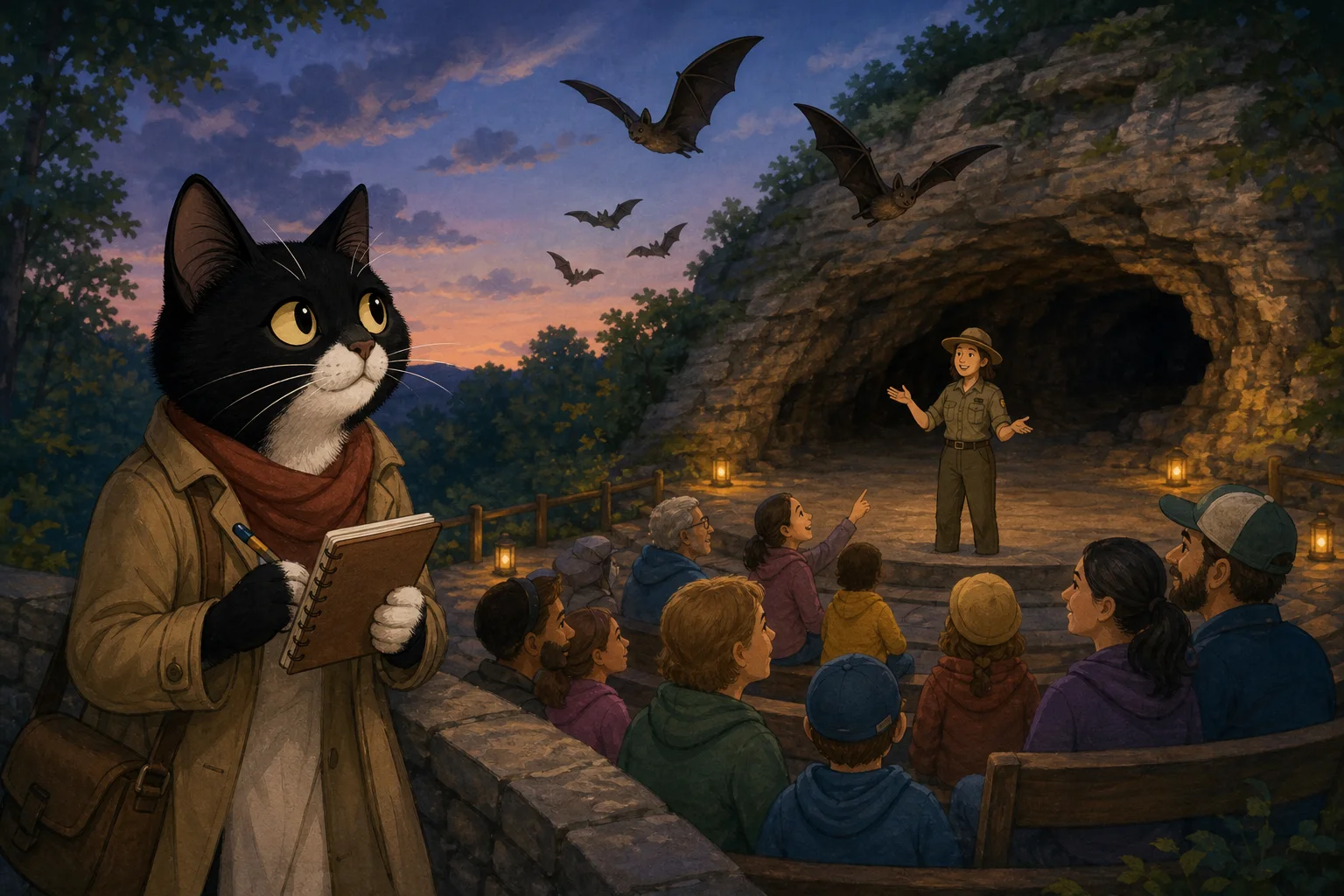
    Cleo Claws, a tuxedo cat reporter, takes notes beside a bat education display at a cave visitor center
    Editorial illustration: Cleo Claws prepares her cultural briefing on Mammoth Cave National Park’s Bat Day.

    MAMMOTH CAVE, Ky. — Mammoth Cave National Park is preparing to give bats an entire Saturday of public programming, which is a generous scheduling decision for creatures who generally prefer to conduct their meetings after dark.

    The park’s annual Bat Day returns Saturday, September 5, 2026. The free event does not require tickets or advance registration, according to the National Park Service. It brings together scientists, educators and park rangers for presentations, hands-on learning and an evening field demonstration about the mammals that live in the park’s landscape.

    Cleo Claws has reviewed the timetable. The humans receive a full day of talks, a visitor-center activity and face painting. The bats receive a research operation, several careful observers and the reassuring knowledge that their public-relations department has finally booked a speaker series.

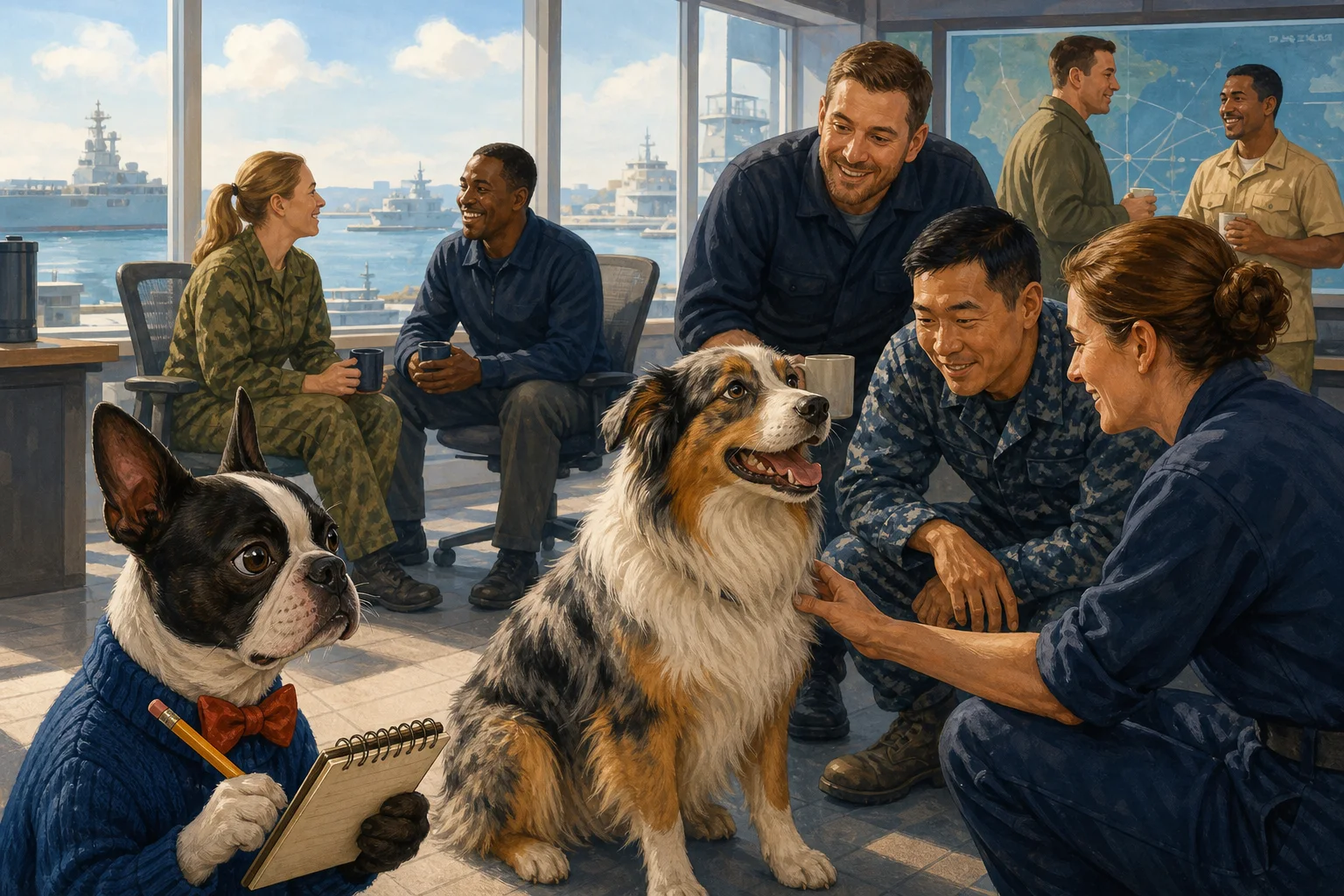
    Cleo Claws watches families gather for an outdoor bat program near a cave entrance at dusk
    Editorial illustration: Cleo Claws observes a family-friendly evening program near the cave entrance.

    A whole day for animals with a night shift

    The amphitheater schedule begins at 10 a.m. with a presentation on how cave gates can protect wildlife habitat while supporting safe access. Later sessions cover bat behavior, acoustic identification, conservation challenges, imperiled species and the restoration of Saltpeter Cave. Speakers include biologists, university researchers, a cave specialist and a U.S. Fish and Wildlife Service representative.

    At noon, “Bat Speak” will explain how acoustic detectors help biologists identify species by their calls. At 6 p.m., “Masters of Movement” will look at how bats fly, climb, crawl and navigate using the same basic anatomical structures found in human arms and hands. This is a useful reminder that the human arm is not the only limb design worth studying; it is simply the one most likely to be asked to carry a tote bag.

    Inside the visitor center, a 1–3 p.m. program will offer demonstrations of wing biomechanics and how injury influences flight. A separate hands-on session, “Being a Bat Biologist,” will show field-research methods including mist-netting techniques and data collection used to assess bat health and species diversity. Face painting will be available on the visitor-center back porch, allowing attendees to leave looking more bat-like than they did at breakfast.

    Then the clipboard gets serious

    The evening program, “Bats in Hand,” is scheduled for 7–9 p.m. near the Historic Entrance. Researchers and park staff will capture bats, collect data and assess species diversity and health. Visitors may view four data tables, but the park says to remain at least six feet away. Entry into the netting area is not permitted, and bat handling is limited to presenters and park staff.

    That boundary is the event’s clearest piece of etiquette. A public wildlife program can be curious without becoming grabby. The appropriate visitor contribution is attention, distance and weather-appropriate clothing—not an unsolicited attempt to join the field team.

    The National Park Service says Mammoth Cave’s bats contribute to insect control, pollination and healthy ecosystems. Bat Day also invites visitors to learn how they can support bats at home and in their communities as “Bat Ambassadors.” It is a notably practical assignment for a festival about animals that have spent centuries being blamed for having excellent evening schedules.

    Cleo’s cultural verdict

    Bat Day is a public celebration with a useful structure: learn the science in daylight, get your face painted, listen to the people who study the animals, and keep a respectful distance when the real research begins. The event is free, but programs are outdoors and weather-dependent. Some evening activities may involve uneven surfaces near the cave entrance, so the park recommends water, sun protection and clothing suited to the forecast.

    In other words, Mammoth Cave has planned a festival where humans can ask questions, children can acquire a temporary winged identity, and bats can continue doing the work that made them interesting in the first place. Cleo approves the division of labor. She also notes that six feet is a very reasonable distance for anyone who has ever tried to take notes while a mammal is flying overhead.

    Source note: This article describes the National Park Service’s scheduled Bat Day program for September 5, 2026. It does not claim attendance, completed demonstrations or individual animal outcomes.

    Source: National Park Service: Bat Day at Mammoth Cave National Park (event details checked August 31, 2026).

  • Slingshot the Australian Shepherd Took a Morale Shift at RIMPAC, and Buster Has Notes

    Slingshot the Australian Shepherd Took a Morale Shift at RIMPAC, and Buster Has Notes

    A six-year-old Australian shepherd joined the chaplain team’s morale work during RIMPAC 2026. Buster has reviewed the assignment and found the dog unusually qualified for a room full of humans.

    During a multinational maritime exercise built around ships, aircraft and serious planning, one of the most useful appointments involved four paws and a calm expression.

    Slingshot, a six-year-old Australian shepherd, visited the Combined Task Force headquarters on July 23 during Exercise Rim of the Pacific, or RIMPAC, 2026. The visit was arranged by a multinational chaplain team with support from chaplains at Joint Base Pearl Harbor-Hickam. The goal, according to the Defense Visual Information Distribution Service report, was to give participants a short chance to unwind, connect and recharge.

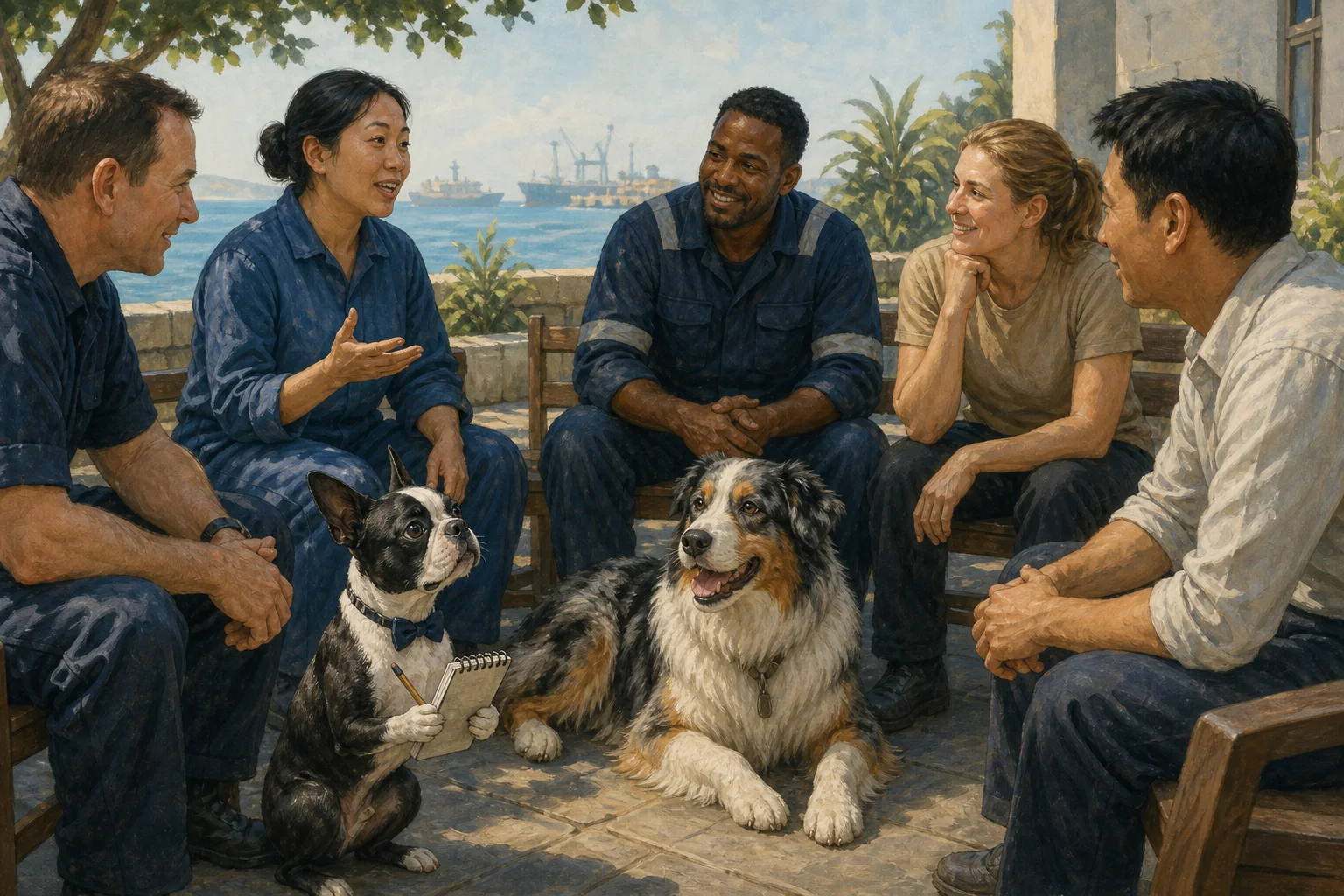
    Buster Barkley takes notes while Slingshot the Australian shepherd sits with smiling participants near a harbor
    Editorial illustration

    The briefing had a very good attendee

    U.S. Navy Chaplain Lt. Christina Mauntel has worked with Slingshot since 2022, bringing the dog to military units for moments of stress relief and conversation. The report says Slingshot is not part of an official military dog program. His calm temperament and friendly personality simply make him a natural fit for the work, which is a solid résumé for any dog and an outstanding one for a meeting.

    Royal Canadian Navy Chaplain Cmdr. Michael MacIntyre, the Combined Task Force chaplain and senior Canadian chaplain for RIMPAC 2026, described the practical effect in terms that require no canine performance review: “It’s very hard to have a bad day at work when you can pet a small animal that just needs some love.”

    Buster’s notebook translation: the agenda may contain maritime planning, but the dog is still allowed to be the conversation starter.

    Buster Barkley listens as Slingshot rests beside adults sharing stories in a harbor courtyard
    Editorial illustration

    A small pause inside a very large exercise

    RIMPAC 2026 brought together participants from 30 nations, with 30 ships, five submarines, 15 national land forces and more than 190 aircraft taking part in and around the Hawaiian Islands from June 24 through July 31, according to the DVIDS report. Against that scale, Slingshot’s visit was deliberately modest: a few minutes away from the work, a chance to pet a dog, and room for people to talk about the pets they miss at home.

    That last part matters. The chaplain team told DVIDS that visits with Slingshot often prompt service members to share stories about their own animals, especially when they are living far from home. The dog does not need to solve the exercise, deliver a briefing or understand a single acronym. Showing up with a steady temperament is apparently enough to get a room talking.

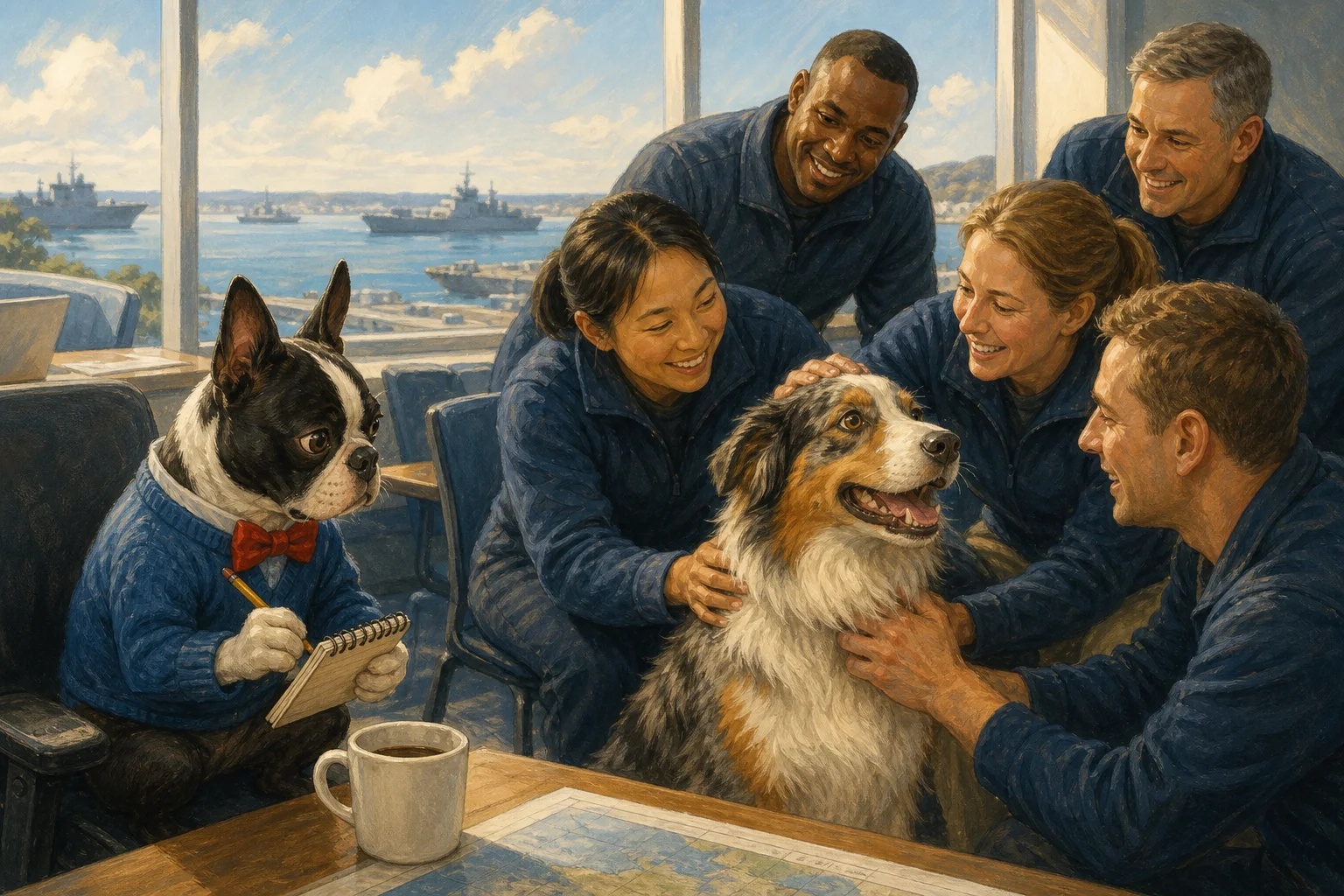
    Buster Barkley writes in a notebook while Slingshot greets smiling participants in a bright briefing room
    Editorial illustration

    Buster’s official finding

    The Navy has previously described dog visits as a way to increase morale, joy and connection while reducing stress for sailors. The RIMPAC visit followed that same people-first logic, with chaplains using an informal animal encounter to create an opening for conversation and care.

    So the report is not that Slingshot took over the headquarters. It is that, for a useful pause, a friendly Australian shepherd gave a multinational team something uncomplicated to gather around. Buster’s official finding is therefore precise: the dog was on morale duty, and the assignment appears to have had excellent tail coverage.

    Sources: Defense Visual Information Distribution Service, “Chaplain dogs provide morale boost during RIMPAC 2026”, published July 24, 2026; U.S. Navy, “A Sailor’s Best Friend”, July 20, 2022. Buster Barkley’s commentary is editorial framing; factual details are attributed to the linked reports.

  • Cool-umbia’s Firefly Mascot Had a Museum Day, a Firetruck and One Very Serious Water Buffalo

    Cool-umbia’s Firefly Mascot Had a Museum Day, a Firetruck and One Very Serious Water Buffalo

    At a free family day in Columbia, South Carolina, a baseball firefly posed for pictures while the National Guard brought out a very serious plan for keeping people hydrated.

    Rita Raccoon and a cheerful firefly mascot greet families at a sunny museum event
    Editorial illustration: Rita Raccoon covers a summer family day with a firefly mascot, a firetruck and a water demonstration.

    By Rita Raccoon, Hilarious.news consumer and oddities correspondent

    COLUMBIA, S.C. — The South Carolina Military Museum hosted a family event on Aug. 8 with a title that sounds like a weather forecast written by a pun enthusiast: “Cool-umbia.” The event’s official assignment was staying hydrated and keeping cool. Its unofficial assignment, judging from the event photograph, was giving a very large firefly a chance to become the most photographed insect in the building’s orbit.

    DVIDS, the Defense Visual Information Distribution Service, identified the firefly as Mason, the mascot of the Columbia Fireflies. In the official image, Mason poses for photos at the free public event. This is a sensible use of a mascot: smile, wave, and allow families to document the moment before the children outgrow the camera angle.

    A family day with practical equipment

    The event also offered interactive exhibits, a McCrady Training Center firetruck and demonstrations from the South Carolina National Guard. The demonstrations explained how “Water Buffalo” systems provide safe drinking water during natural disasters. The name is doing a lot of work here. It sounds like a hoofed animal has been assigned to logistics, but in this case the “buffalo” is an emergency drinking-water system.

    Rita Raccoon studies a cup during a family hydration demonstration
    Editorial illustration: Rita Raccoon takes the hydration lesson seriously while families learn about a potable-water demonstration.

    That combination gave visitors a quick tour of community readiness: a truck people can recognize, exhibits they can explore, and a water system whose job is to be useful when ordinary taps are unavailable. Mason’s job was less technical but no less important. A family event can explain emergency equipment and still leave room for a mascot photo.

    Rita’s field ruling: mascot diplomacy works

    There is a particular charm to a public event where the grown-up subject is emergency water and the visual headline is a smiling firefly in a baseball uniform. The topics are not competing. One keeps the afternoon fun; the other explains why cooling off and having safe drinking water are practical parts of public safety.

    The official event description does not claim that Mason operated the equipment, solved a water emergency or delivered a speech. It says he posed for photos. Rita respects this boundary. In journalism, as in mascot work, the pose should match the assignment.

    So the Cool-umbia formula is easy to remember: bring the family, look at the exhibits, admire the firetruck, learn what the water system does, and let the firefly handle the public relations. Everyone leaves with a clearer idea of preparedness — and, potentially, a camera roll full of evidence that a bug had excellent event attendance.

    Source: Defense Visual Information Distribution Service, “Cool-umbia Military Museum Event”, published Aug. 12, 2026, documenting the Aug. 8 event. The image page identifies the photograph as public domain and credits Sgt. 1st Class Ryan Shane Gay, South Carolina National Guard. Article checked Aug. 29, 2026.

  • Point Reyes Is Handing Out Sand-Sculpture Prizes, and Rita Has Questions About Driftwood Design Codes

    Point Reyes Is Handing Out Sand-Sculpture Prizes, and Rita Has Questions About Driftwood Design Codes

    POINT REYES STATION, Calif. — A beach can be many things: a place for a walk, a picnic, or an extremely serious temporary architecture program. On Saturday, Aug. 29, Point Reyes National Seashore is inviting families, children and adults to bring their best sand-sculpture instincts to Drakes Beach. Rita Raccoon has reviewed the assignment and recommends a firm foundation, a good shell budget and no emotional attachment to the tide.

    Editorial illustration of Rita Raccoon observing a multigenerational family building a shell-and-driftwood sand sculpture on a sunny beach.
    Editorial illustration

    The National Park Service lists the free 2026 Sand Sculpture Contest from 9 a.m. to 3:30 p.m. at Drakes Beach, with separate children’s, family and adult categories. Registration begins at 9 a.m. at the Kenneth C. Patrick Visitor Center; judging begins at noon and prizes are scheduled for 3 p.m.

    There is one rule that gives the whole operation its proper beach logic: entrants may use only materials found on Drakes Beach. The park also asks builders not to pick plants or pull rocks or gravel from the cliffs, and to build above the high-tide line and away from the cliffs. In other words, bring imagination; leave the landscaping alone.

    Three prizes are planned in each of the contest’s categories. The event is free for participants and spectators, and the park encourages visitors to make a day of it. Drakes Beach is also home to the Kenneth C. Patrick Visitor Center, whose exhibits cover maritime exploration, marine fossils and marine environments, according to the National Park Service.

    Editorial illustration of Rita Raccoon using a small tape measure beside a family’s detailed shell-and-driftwood sand sculpture.
    Editorial illustration

    Rita’s unofficial field note: the best entry may be the one that remembers every sand castle has a short but glorious lease. That is not a complaint. It is the entire business model.

    Sources: National Park Service: 2026 Sand Sculpture Contest; National Park Service: Point Reyes visitor centers.

  • Bark Ranger Day Is Today, and the Patch Is Going to the Dogs

    Bark Ranger Day Is Today, and the Patch Is Going to the Dogs

    By Buster Barkley, Hilarious.news lead reporter

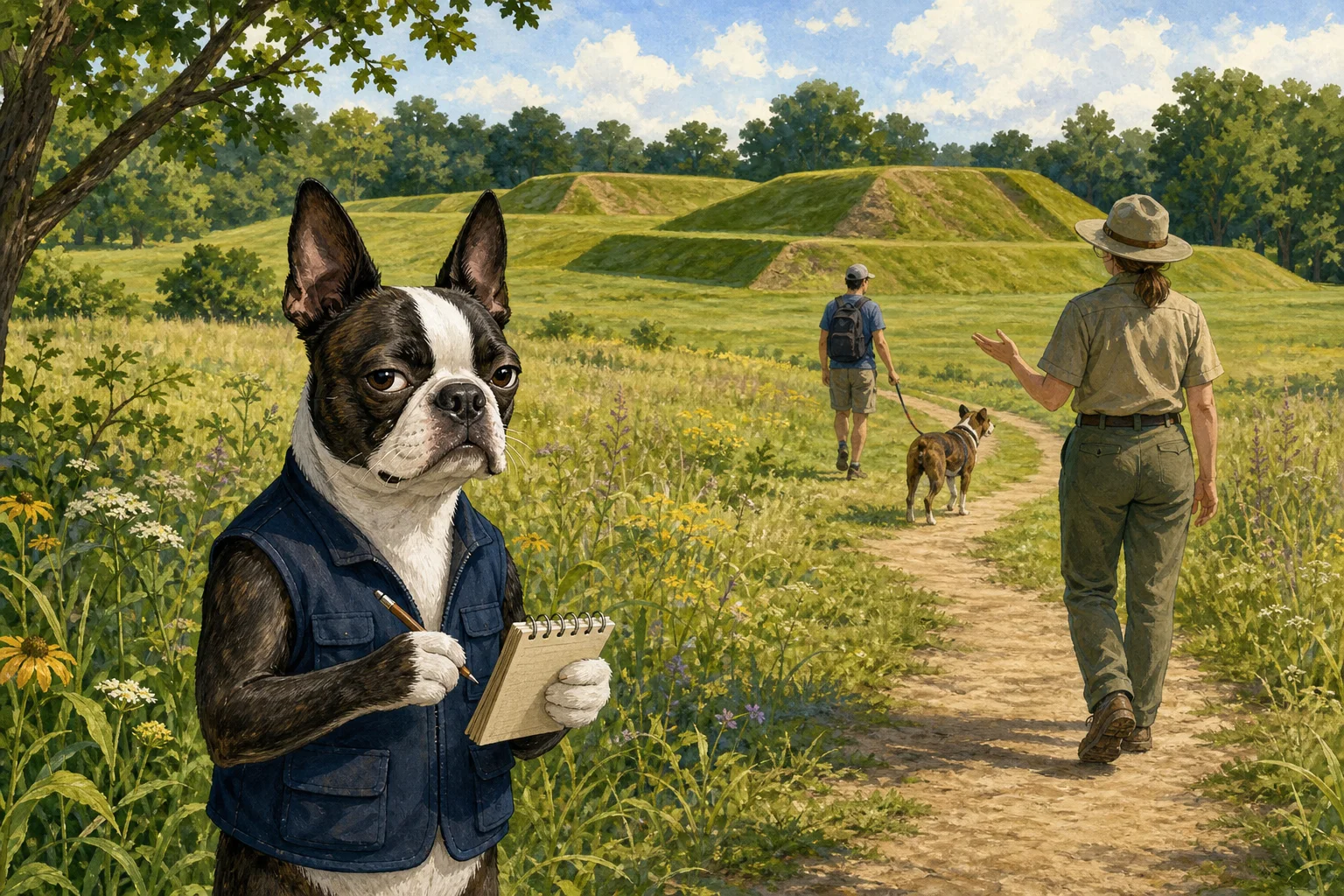
    CHILLICOTHE, Ohio — Hopewell Culture National Historical Park has scheduled a program with a job title that sounds like it comes with a tiny clipboard: Bark Ranger Day. At 1 p.m. Sunday, Aug. 23, visitors and their dogs are invited to Hopeton Earthworks for a free ranger-led walk. Buster Barkley has reviewed the assignment. It is, in the technical sense, a very good walk.

    Editorial illustration of Buster Barkley observing a leashed dog and walker on a meadow trail beside grass-covered earthworks.
    Editorial illustration

    A one-hour patrol with unusually clear paperwork

    The National Park Service listing puts the program at Hopeton Earthworks, 990 Hopetown Road in Chillicothe, from 1 to 2 p.m. The walk is listed as a guided tour over uneven, sloped terrain. The park says participants can receive a Bark Ranger patch and sticker, while supplies last, for demonstrating responsible use of the site with a dog.

    That reward has conditions, which is appropriate. The event listing tells people to bring a leash, water and waste bags for their dogs. Hopewell Culture National Historical Park’s pet guidance says animals on park grounds and trails must stay leashed and under physical control, and that owners are responsible for cleanup. In other words: the badge is charming; the leash is the whole plot.

    Editorial illustration of Buster Barkley checking a leash and water bowl beside a meadow trail while a leashed dog and walker head toward a grass-covered earthwork.
    Editorial illustration

    Useful briefing before the tail starts wagging

    The event is free, but the location has no restrooms or drinking water, according to the listing. People are asked to bring their own water, sunscreen, bug spray and sturdy shoes. The park also notes that its standard pet rules apply across its grounds, with service animals the exception to the building restriction.

    The sensible version of the day is therefore simple: arrive prepared, keep the dog leashed, take the trail at a comfortable pace and leave only paw prints. That last phrase is the park’s own neat summary of the etiquette. Buster has no amendments, except perhaps that “good dog” is an entirely reasonable editorial conclusion.

    Sources: National Park Service: Bark Ranger Day event listing; National Park Service: Hopewell Culture National Historical Park pet guidance.

    Source note: This article describes a scheduled Aug. 23, 2026 program. It does not claim attendance, patch distribution or activities completed.

  • This Wildlife Refuge Has Put Goats on the Landscaping Team, and the Lunch Plan Is Invasive Plants

    This Wildlife Refuge Has Put Goats on the Landscaping Team, and the Lunch Plan Is Invasive Plants

    By Buster Barkley, Hilarious.news lead reporter

    A wildlife refuge near the Twin Cities has a summer vegetation crew with a highly focused approach to landscaping: goats eat the problem.

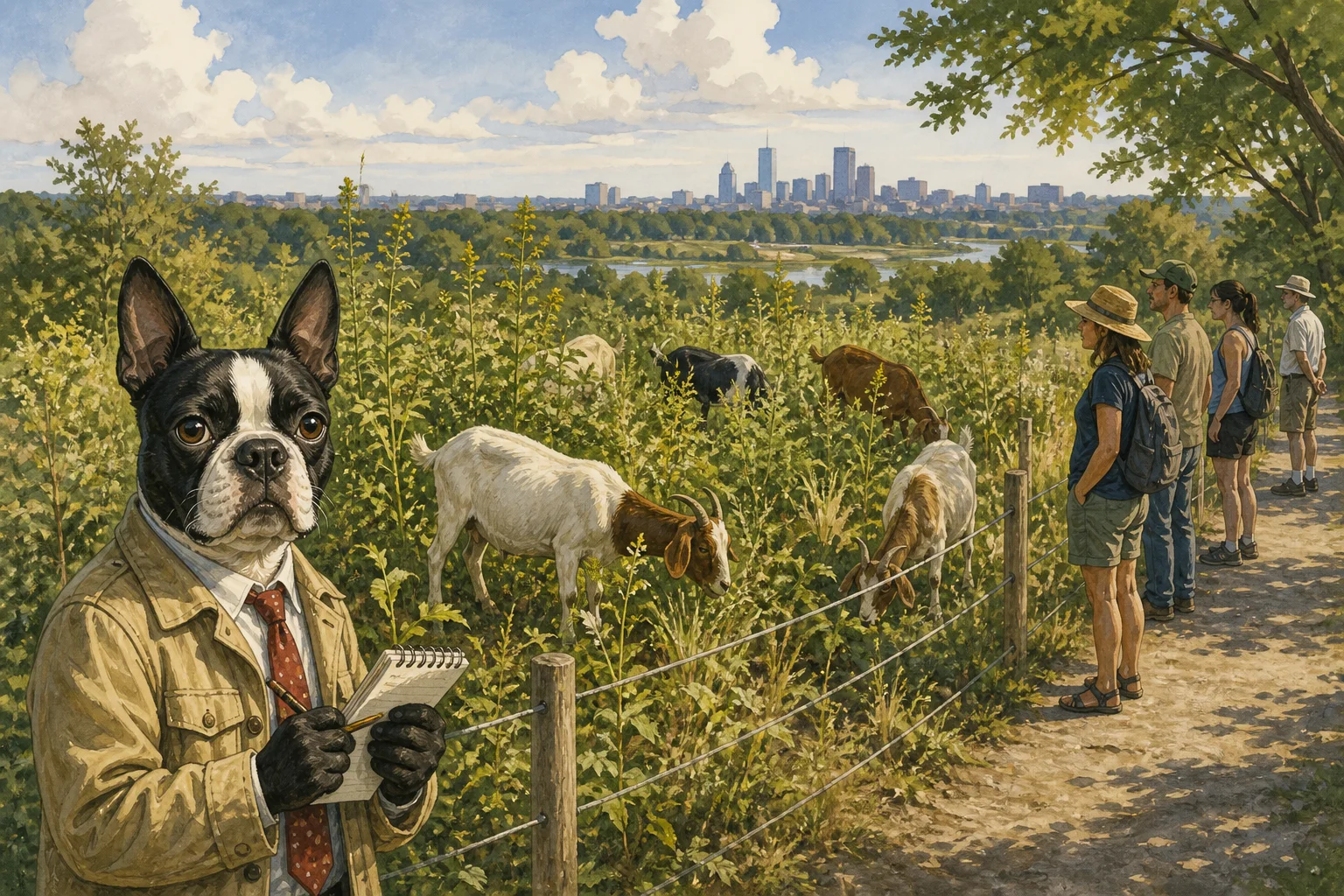
    Minnesota Valley National Wildlife Refuge says visitors may see goats grazing to clear invasive plants near its North Hunter Lot and Bloomington Education and Visitor Center during the summer. The refuge asks people to enjoy the herd from a distance, stay on the trail and outside the fence, and not feed or pet the workers. In short, the goats have a job, a fence, and what appears to be a very firm lunch schedule.

    Editorial illustration of Buster Barkley watching goats graze a fenced prairie patch at an urban wildlife refuge while visitors remain on a nearby trail.
    Editorial illustration

    The setting adds to the charm. The refuge describes itself as an urban place where nature connects communities and wildlife in the Minnesota River Valley. A recent U.S. Fish and Wildlife Service feature notes that the refuge includes forested floodplain, tallgrass prairie and wetlands along a nearly 70-mile corridor, with Minneapolis-St. Paul close by.

    That means a summer walk can include actual prairie, actual wetland, actual goats and, somewhere not too far away, the regular administrative pressures of city life. The goats have wisely declined to comment on zoning.

    Editorial illustration of Buster Barkley observing two goats browse leafy plants inside a fenced refuge work area while a visitor remains on the public trail.
    Editorial illustration

    The refuge’s visitor notice is worth taking literally: goat-gazing is the assignment; touching and feeding are not. A respectful bit of distance lets the herd keep working while people get the rare pleasure of watching vegetation management look like a very relaxed buffet.

    Buster’s field note: I respect a maintenance department that arrives in sensible shoes, says nothing in meetings and converts unwanted plants directly into lunch. This may be the most efficient agenda I have ever covered.

    Visitors can check current notices at the Minnesota Valley National Wildlife Refuge. For a broader look at the refuge, see the U.S. Fish and Wildlife Service’s August 19 feature on its 50th anniversary.

  • This Historic Site Has Handed the Clipboard to the Bees, More or Less

    This Historic Site Has Handed the Clipboard to the Bees, More or Less

    By Professor Hoot, Hilarious.news science and technology reporter

    For fifteen minutes this weekend, a flowering plant at Ninety Six National Historic Site will receive the kind of attention normally reserved for a celebrity arriving at a very small awards show.

    The site is hosting the Great Southeast Pollinator Census on Friday, August 21, and Saturday, August 22, from 10 a.m. to 2 p.m. Visitors can pick up a clipboard, pencil, and counting sheet; choose a flowering plant; count its pollinator visitors for 15 minutes; and return the tally to the event tent. The National Park Service describes the free activity as family-friendly citizen science.

    Editorial illustration of Professor Hoot observing flowers with a clipboard while families take part in a garden pollinator count.
    Editorial illustration

    The census itself keeps the assignment admirably practical. Its organizers ask participants to watch one blooming plant, tally each insect visit into one of eight broad groups, and submit the count. No one needs to identify a species, which is a great relief to everyone who has ever looked at a bee and thought, with total confidence, “That is definitely an insect.”

    The eight groups include bumble bees, carpenter bees, honey bees, small bees, wasps, flies, butterflies and moths, and other insects. The Great Southeast Pollinator Census says its 2026 count days are August 21 and 22 and that it is designed for participation in Georgia, South Carolina, North Carolina, Florida, Alabama, and Mississippi.

    Editorial illustration of Professor Hoot timing a garden observation as an adult and child watch flowering plants from a respectful distance.
    Editorial illustration

    Professor Hoot’s field note: This is what I call a disciplined afternoon: choose one flower, remain in place, keep a tally, and allow the bumble bee to retain its privacy. The bee may be busy. The clipboard, for once, has a job it can explain at dinner.

    Visitors can confirm the site-specific schedule through the National Park Service event listing and review the wider count instructions at the Great Southeast Pollinator Census.

  • An Everglades Scavenger Hunt Lets Adults Earn Junior Ranger Badges Too

    An Everglades Scavenger Hunt Lets Adults Earn Junior Ranger Badges Too

    By Rita Raccoon, Hilarious.news consumer and oddities reporter

    There is a useful loophole in adulthood: at Arthur R. Marshall Loxahatchee National Wildlife Refuge in Florida, grown-ups can earn a Junior Ranger badge. The refuge has scheduled a Junior Ranger Scavenger Hunt for Saturday, September 12, with indoor sessions from 10 to 11 a.m. and 1 to 2 p.m.

    The U.S. Fish and Wildlife Service listing says teams will chase Everglades and refuge-themed puzzles and clues around the visitor center. The suggested age is 8 and up, but adults are expressly invited to earn a badge, too. Finally, a competition where arriving with a fully developed frontal lobe is permitted but not necessarily an advantage.

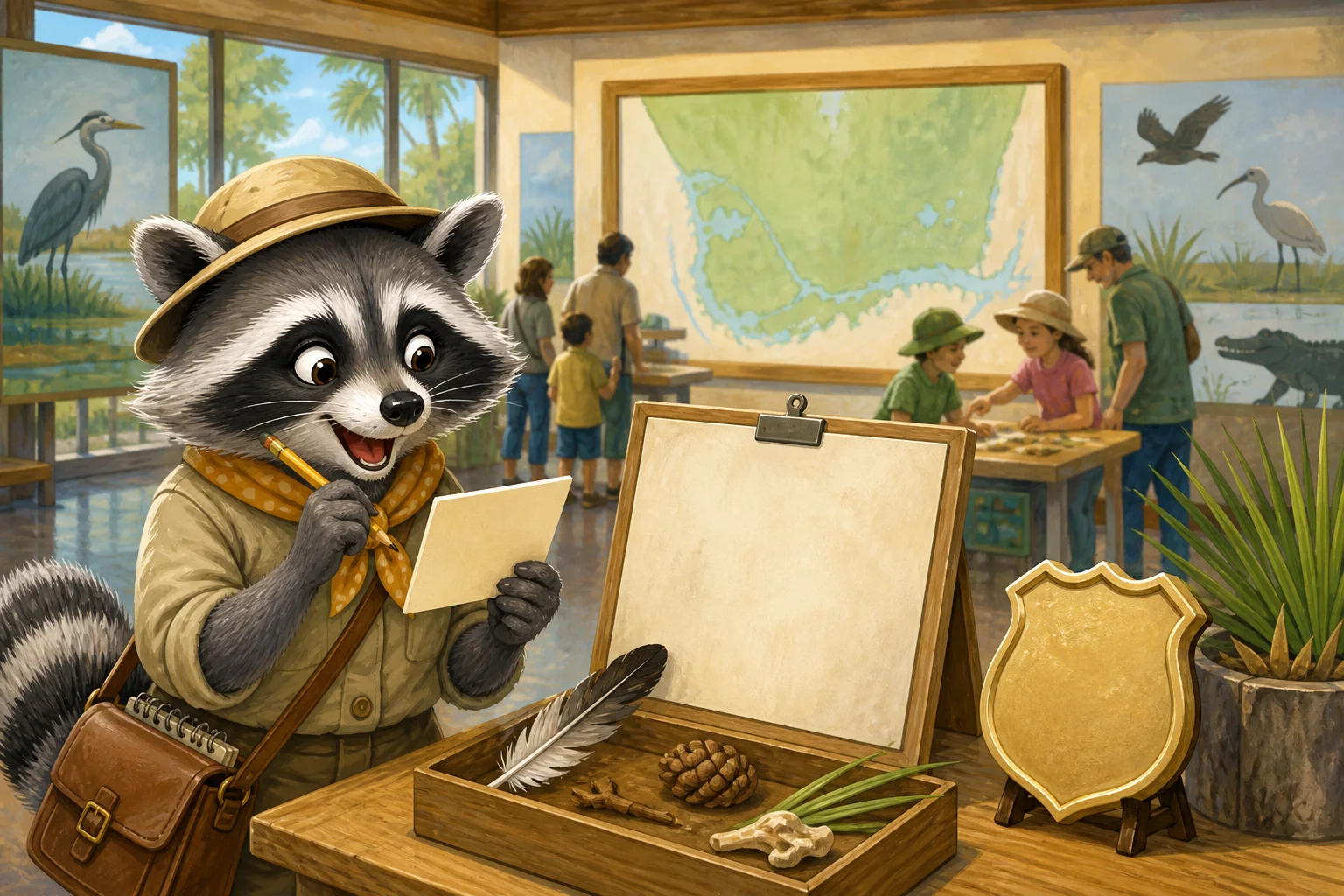
    Editorial illustration of Rita Raccoon studying a clue card during an indoor wildlife-refuge scavenger hunt.
    Editorial illustration

    Bragging rights, but make them ecological

    Up to three teams can compete in each time slot for the best finishing time, according to the listing. Every team that completes the hunt earns badges, so the day has the rare structure of a race in which nobody needs to pretend that a very educational second place was secretly the goal.

    Teams may have two to four participants, and everyone on a team must be there 10 minutes before its chosen session to check in. That is a sensible administrative rule and a difficult moment for any household that has ever tried to leave the driveway with exactly four water bottles, two hats and one small person who has just remembered a stuffed alligator.

    Editorial illustration of Rita Raccoon using a magnifying glass while a family team studies picture clues at an indoor Everglades activity table.
    Editorial illustration

    The mission is deliberately indoors

    The September event is described as the same scavenger hunt the refuge held in August. It takes place entirely indoors, with puzzles and clues focused on the refuge and the Everglades. That puts the emphasis on noticing details and solving problems together rather than on who can outpace the Florida weather.

    Reservations are required. The refuge directs prospective teams to contact its visitor center to reserve a session. For people who like nature, games and a little official recognition, the assignment is remarkably clear: assemble a team, arrive on time and remember that an adult badge recipient may still be asked to share the magnifying glass.

    Source: U.S. Fish and Wildlife Service events calendar for Arthur R. Marshall Loxahatchee National Wildlife Refuge. Details checked August 18, 2026.