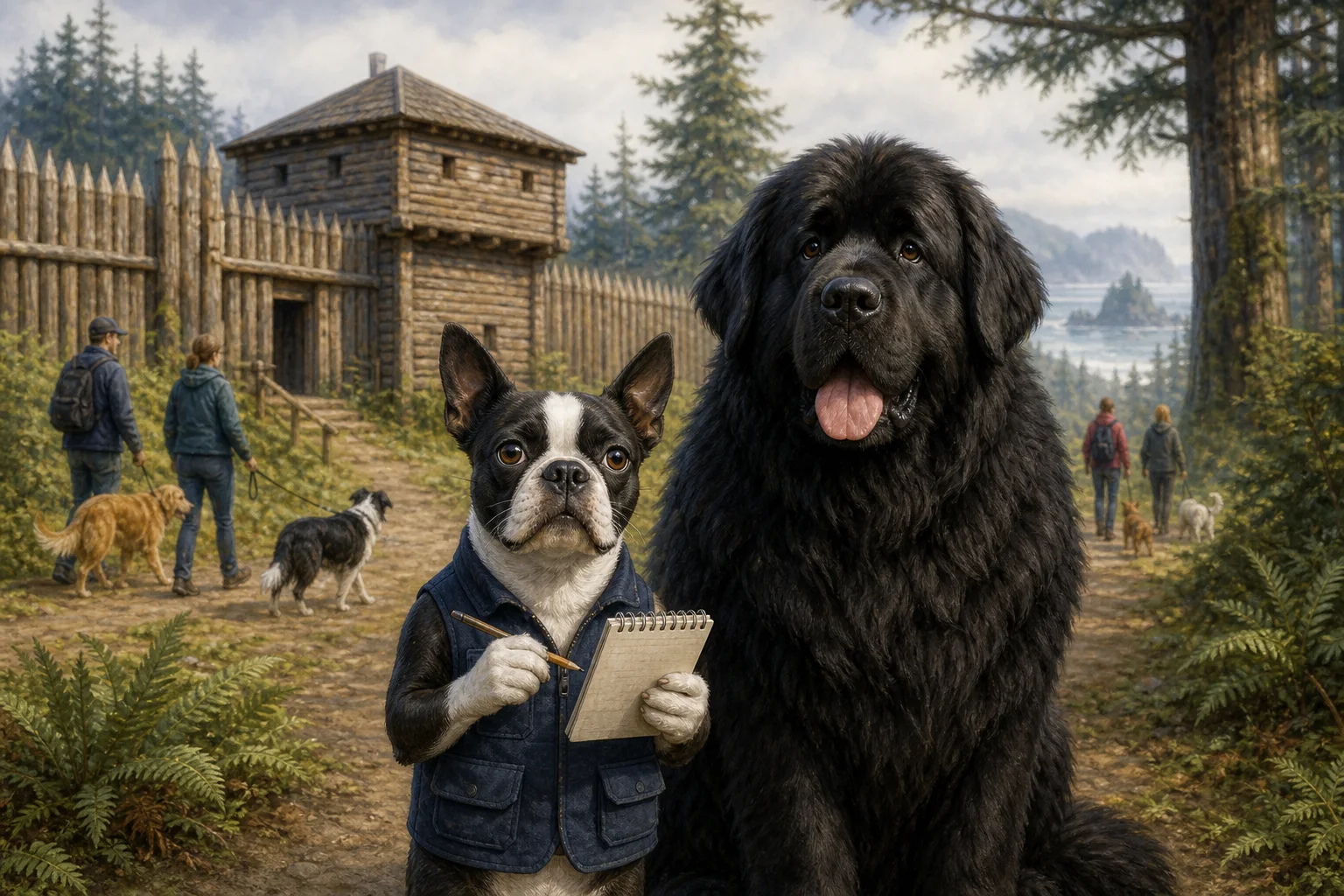
By Buster Barkley, lead reporter
Earlier this month, Lewis and Clark National Historical Park held a day for the one member of the Corps of Discovery who could not have signed the guest book even if he had wanted to: Seaman, Meriwether Lewis’s Newfoundland dog.
The park’s annual Seaman’s Day at Fort Clatsop invited visitors to learn about the expedition dog and meet visiting Newfoundland dogs and their people. The National Park Service says the Lewis and Clark Expedition’s 33 people wintered at Fort Clatsop in 1805–06; Seaman was its canine companion. A historical event with guest Newfoundlands is, by any reasonable reporting standard, an extremely good use of a calendar square.
A dog with a very serious résumé
According to the park’s event description, explorers’ journals described Seaman as a watchdog, hunter, retriever, companion and diplomat during the expedition. That is a formidable list for any colleague, especially one whose professional paperwork was presumably paw-print based.
The park’s frequently asked questions page likewise identifies Seaman as Lewis’s Newfoundland and notes that today’s dogs can follow in his pawprints in many areas of the park, provided they follow the park’s leash and access rules. That is fair: history belongs to everyone, but the visitor center carpet has a job to do.
Guest Newfoundlands, please report to the fort
For this year’s program, the park said it had invited guest Newfoundland dogs and their people to volunteer, giving visitors a chance to meet modern dogs of the same breed while learning about Seaman. The event listing asked visitors to limit bringing additional Newfoundland dogs for the safety of the canine participants and advised anyone bringing another dog to make sure that dog was comfortable around large dogs.
That is not a snub; it is sensible event planning. Newfoundlands are famously substantial, and a gathering of them deserves the same calm logistics normally reserved for a parade float, a marching band, or a particularly ambitious couch.
Why the story still works
Seaman’s Day connects a big national story to a small, wonderfully direct question: what was the expedition dog like? The NPS pages give visitors a practical route into that question—history programming, a visit to Fort Clatsop, and a chance to meet the breed that keeps the story tangible without pretending the modern dogs are historical evidence.
Buster’s field note is therefore brief: a park honored its famed expedition dog, welcomed some very large modern cousins, and asked everybody to keep the occasion safe and leashed. It is the kind of assignment that makes a reporter grateful for notebook paper, sturdy shoes and a respectful distance from an enthusiastic tail.
Leave a Reply