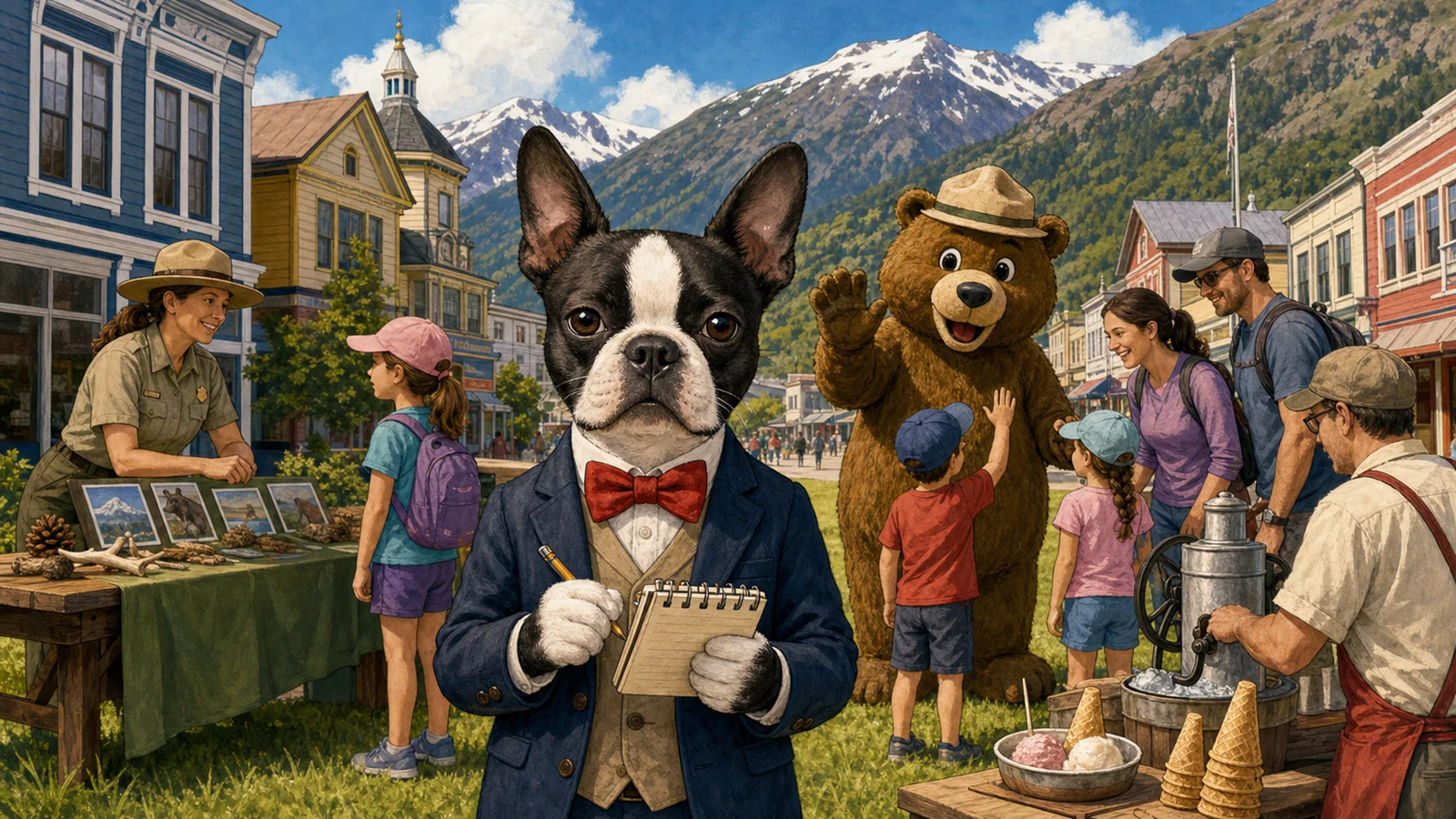
Some birthday parties come with cake. Fort Vancouver National Historic Site’s listing for Smokey Bear’s 82nd birthday celebration came with a more practical party favor: a reminder about fire safety.
Editorial illustration
The National Park Service listed the free event for Saturday, August 8, at 10 a.m. at the Fort Vancouver Visitor Center in Vancouver, Washington. The planned gathering brought together the U.S. Forest Service, Friends of Fort Vancouver, the National Park Service and the Red Cross for family activities and information on wildfire, campfire and home-fire safety.
That is a remarkably responsible way to mark a birthday. The event page says children could take part in activities, while tables from the participating organizations would offer safety education. Smokey Bear-themed items were also slated for sale through the Friends of Fort Vancouver bookstore.
The listing also revisited the real bear cub whose rescue after a New Mexico wildfire helped turn Smokey Bear into a national wildfire-prevention symbol. The official Smokey Bear history says the cub later lived at the National Zoo, received enough mail to be assigned ZIP Code 20252, and retired in 1975.
Buster’s dry dispatch: a birthday where everyone leaves with a better campfire plan is the kind of party detail worth copying. The dessert remains optional; the water bucket does not.
By Buster Barkley, who has reviewed the schedule and found it unusually strong on snacks, costumes, and bear-adjacent diplomacy.
Skagway’s Junior Ranger Day has a guest on the call sheet with a name that sounds like it was selected by a committee of delighted children: Nuggets the Bear.
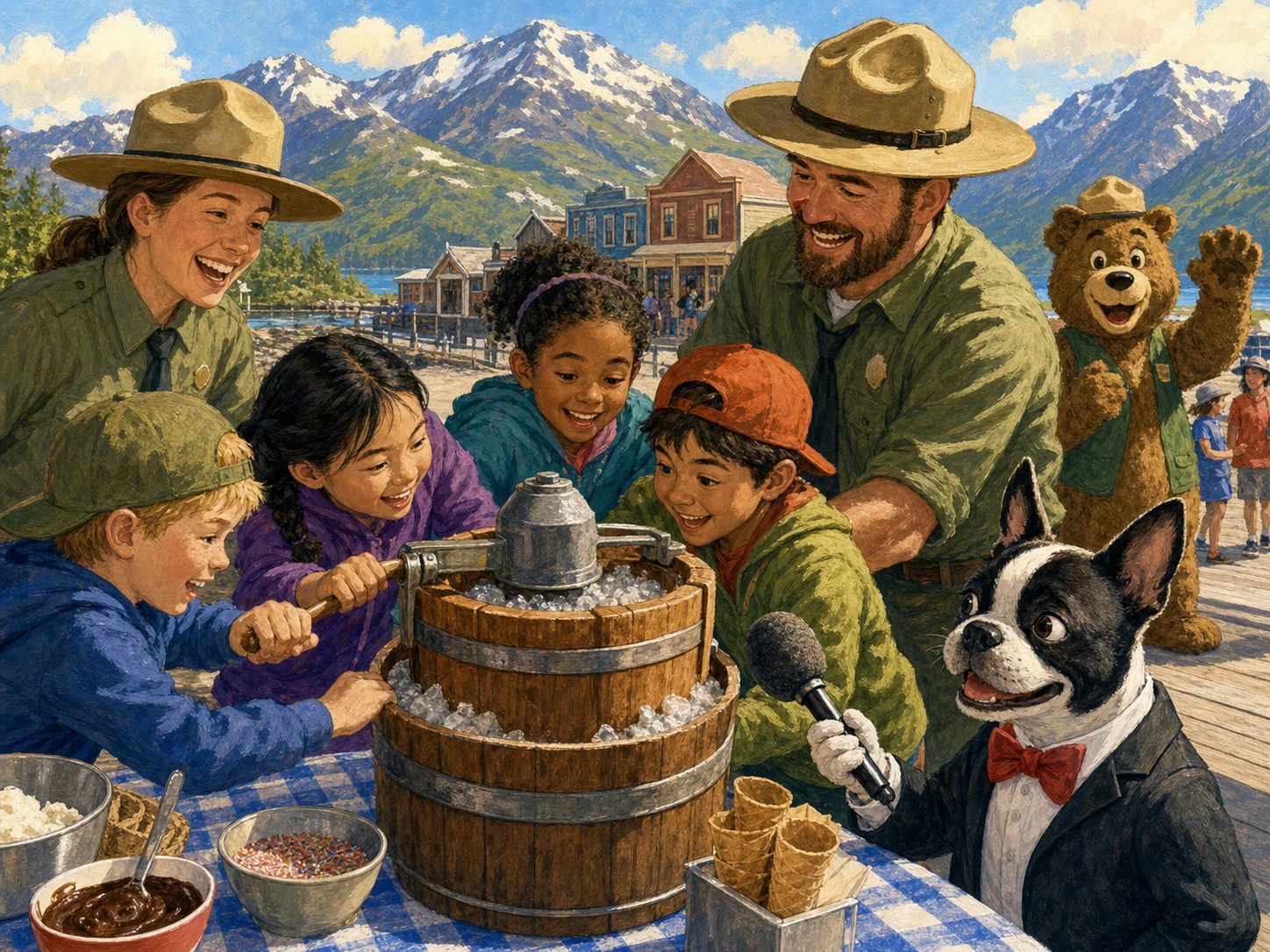
Klondike Gold Rush National Historical Park says its free July 30 event runs from 10 a.m. to 2 p.m. on the Moore House lawn at Fifth Avenue and Spring Street. The schedule includes a chance to meet Nuggets, a group Junior Ranger swearing-in from 1:45 to 2 p.m., performances by the Chilkat Dancers of Klukwan and Haines, live raptors with the American Bald Eagle Foundation, a musical performance, historical costumes, an obstacle course, and ice-cream making led by community organizations.
That is an ambitious amount of wholesome activity for one lawn. The event listing and the park’s July 23 announcement both say it is free and open to the public. The park also says visitors can stop by the Visitor Center for a detailed schedule.
Editorial illustration
The official order of business: explore, learn, celebrate
The day is built around earning a Junior Ranger badge, but its itinerary has the pleasingly overstuffed quality of a community fair: young visitors can meet park staff, try historic costumes, take on the obstacle course, and watch cultural and musical performances. The National Park Service announcement describes the event as a way for visitors of all ages to explore the park and earn a badge; it also notes that the Junior Ranger Activity Center in Skagway’s historic Pantheon building offers hands-on exhibits and Junior Ranger books year-round.
For Buster Barkley, the dispatch is simple: bring curiosity, sensible shoes, and a readiness to encounter a bear named Nuggets. The bear is a scheduled mascot appearance, not a wildlife encounter; the live-animal portion of the program is the raptor visit with the American Bald Eagle Foundation.
Filed by Professor Hoot, science and technology reporter
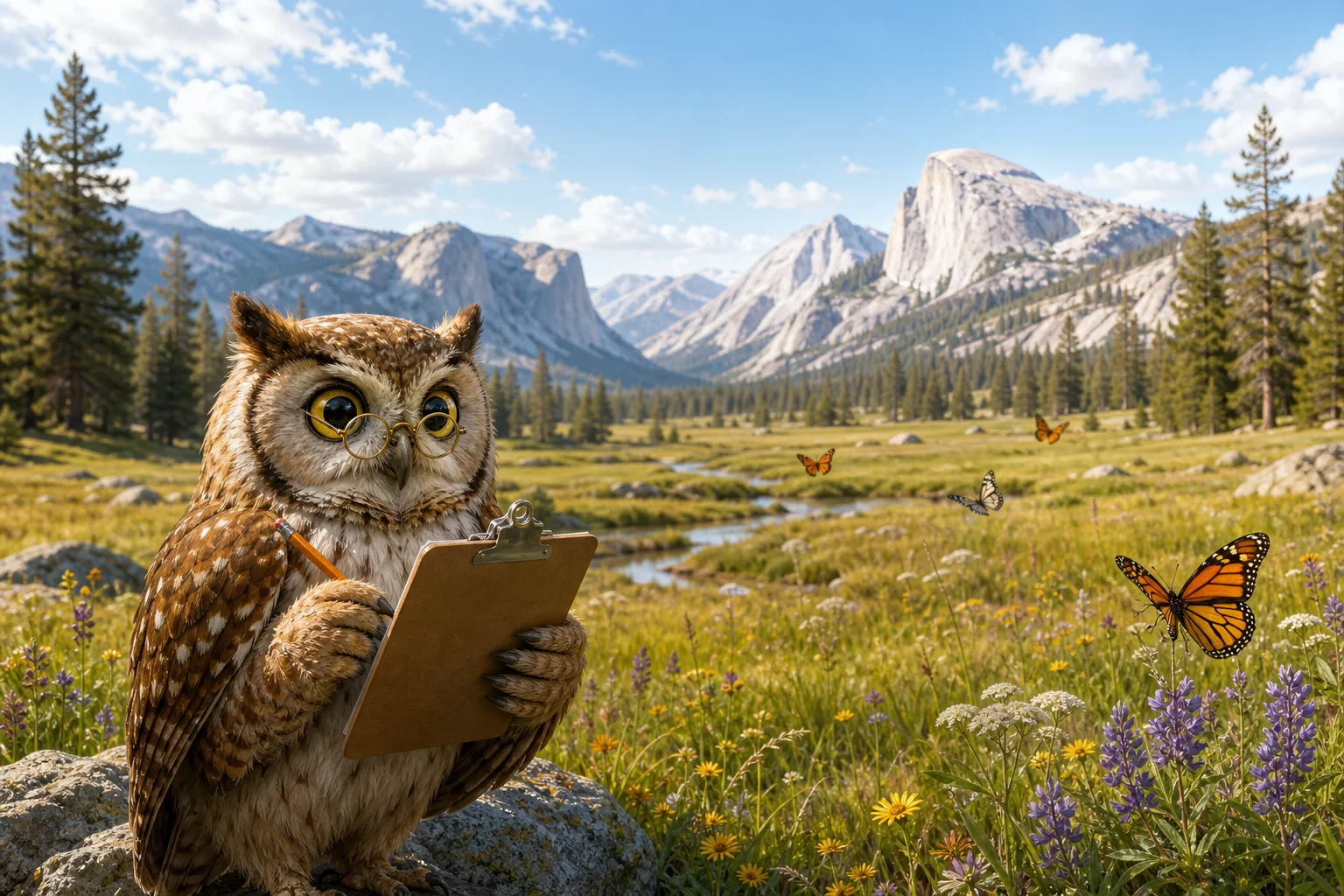
Yosemite National Park has scheduled its annual Butterfly Count for Monday, July 27, and the assignment is gloriously specific: volunteers will spend the day looking for butterflies across a 15-mile-diameter count circle in Tuolumne Meadows. This is citizen science with sun hats, field glasses, and apparently a serious pizza résumé.
The park says the count is coordinated with the North American Butterfly Association’s wider monitoring effort. The standardized counts help track the distribution and relative abundance of butterflies, while making a day in the meadow feel a little like a championship round in which nobody is required to wear white.
Editorial illustration
A field day with unusually small contestants
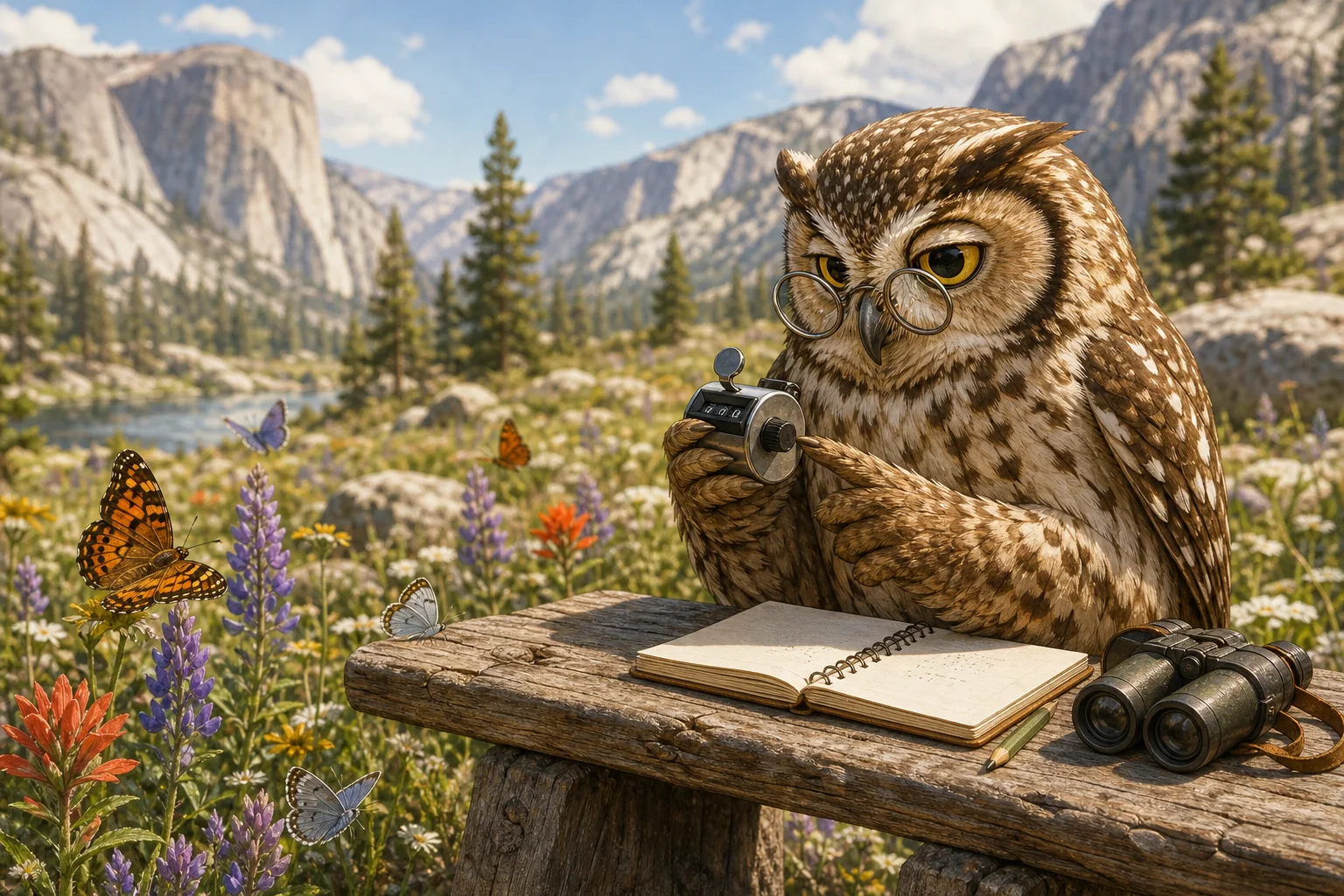
Yosemite describes the event as an annual volunteer effort and publishes results stretching from 2011 through 2025. The park also notes that the count sits within a national network of roughly 450 counts. In practical terms, that means a lot of patient looking and a lot of chances for a butterfly to decline an interview by leaving.
The park’s annual summary credits its group leaders and volunteers, along with a pizza donation from the National Wildlife Federation. It also preserves a splendid comparison from Liam O’Brien, who called the Yosemite count the “Wimbledon of the California Butterfly Count Season.” The bracket remains mercifully free of line judges.
What the count is actually for
The fun is real, but so is the recordkeeping. NABA-coordinated counts use a consistent circle and a 24-hour count period so observations can contribute to long-term information about butterfly populations. Yosemite’s page points readers to its historical data and to related natural-history material for people who want to turn one cheerful afternoon of butterfly-spotting into a lasting habit.
Professor Hoot’s field note: A butterfly count is not a race. It is a census conducted by people who have accepted that the residents will not hold still for the clipboard.
For anyone following along from a less alpine location, Yosemite’s Butterfly Count page has the event details and its archived raw-data links. The important thing is to let the volunteers do the counting. The butterflies have a prior engagement with being butterflies.
El Morro National Monument has announced an event with a transportation plan that is admirably honest about its competition: live camels. The park will host the U.S. Camel Corps Commemoration on Saturday and Sunday, September 12–13, with camel expert Doug Baum, his camels, park staff, presentations, children’s crafts, and ranger programs.
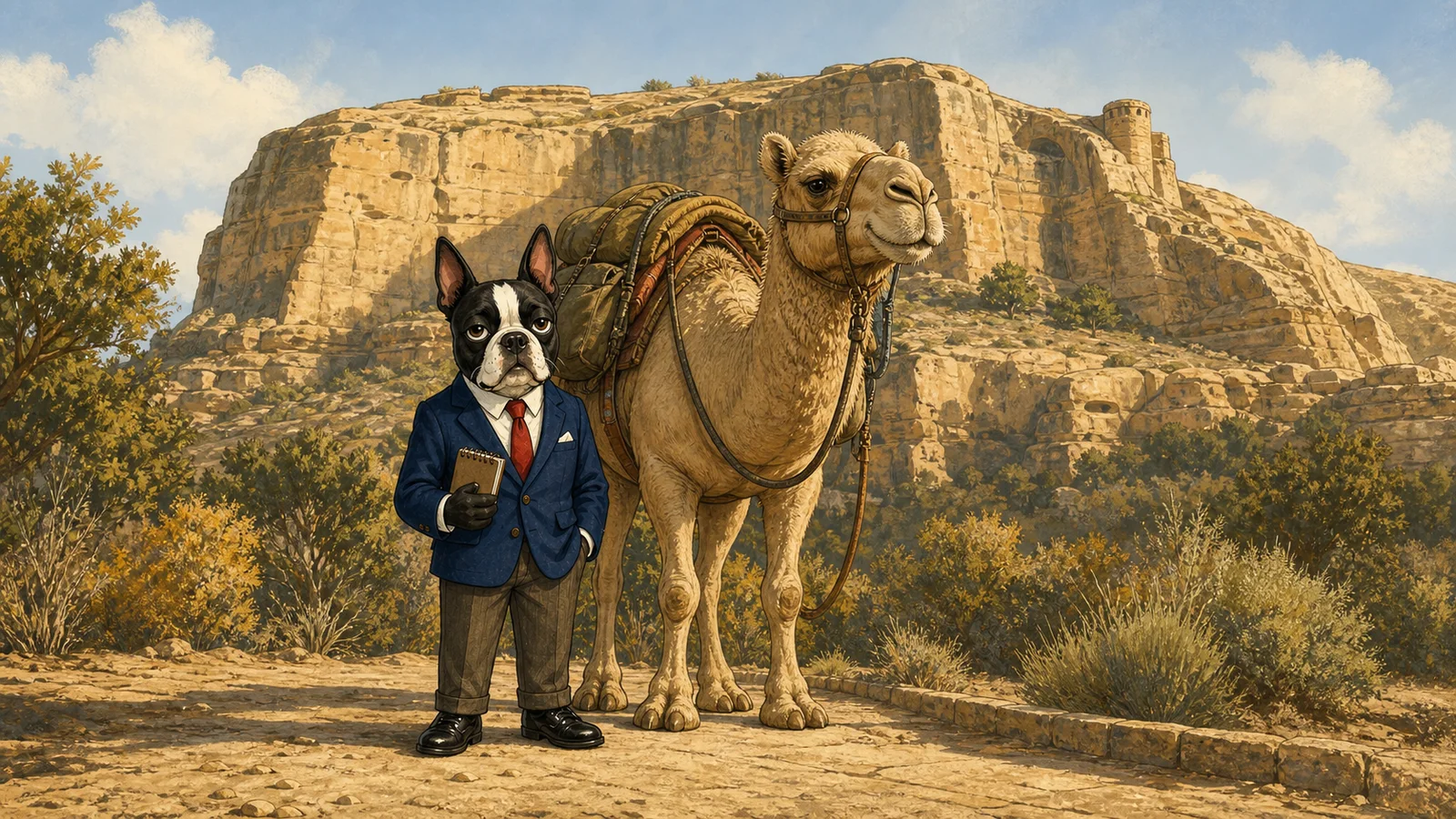
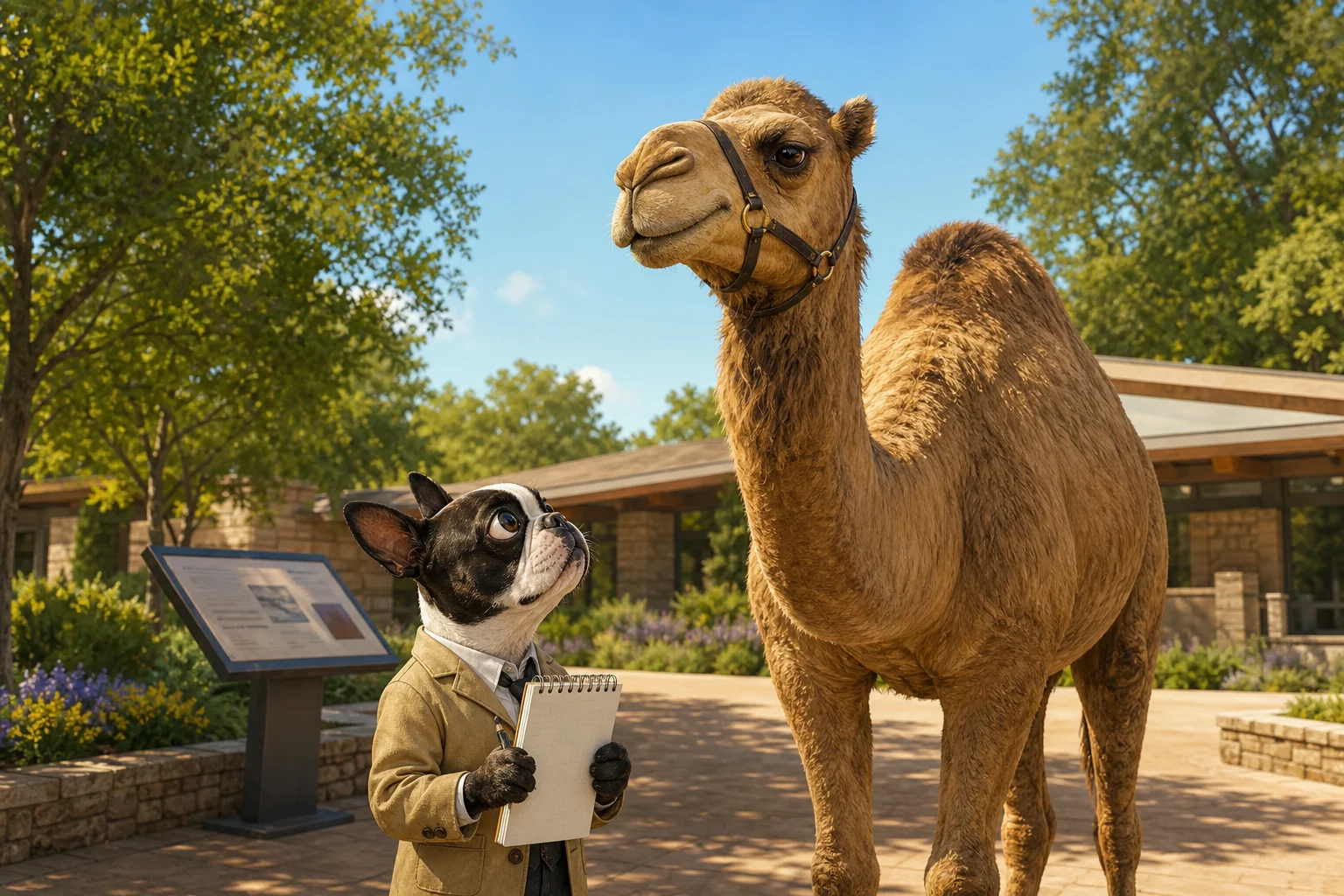
Editorial illustration: Buster Barkley meets a camel with considerably more carrying capacity.
The free event is scheduled from 9 a.m. to 5 p.m. each day. Programs and children’s activities are planned from 9:30 a.m. to 4:30 p.m. The National Park Service says parking is limited, so a free shuttle will run between the Old School Gallery overflow lot and the El Morro Visitor Center. The shuttle has not commented on the comparative glamour of its passengers.
There is real history beneath the very tall punchline. According to the park, a U.S. government-sponsored camel expedition passed through the area in 1857 while traveling toward California. The September program will use reenactments and educational activities to explore that chapter of western travel history.
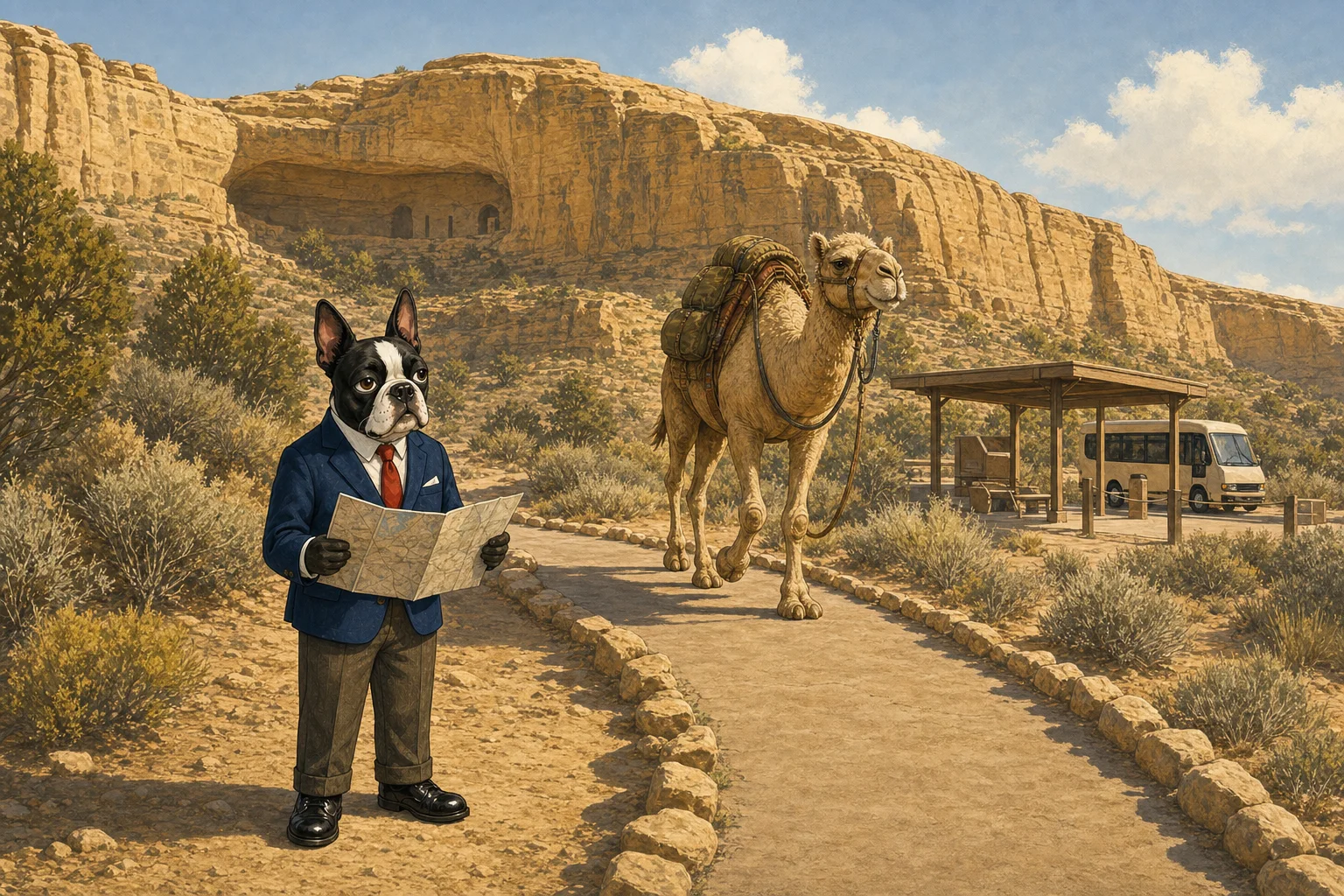
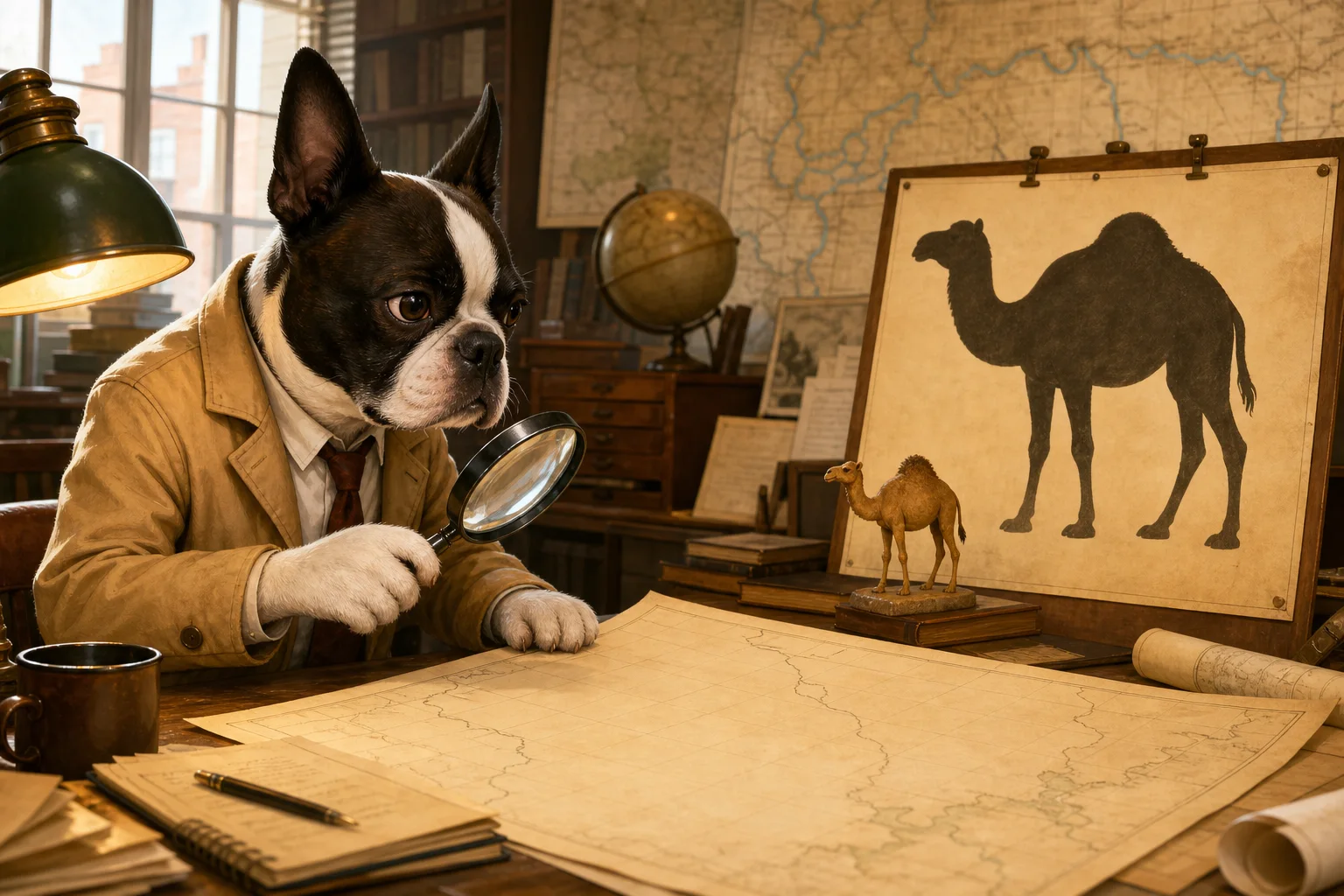
Editorial illustration: Buster checks the route; the camel appears to have its own navigation system.
For visitors, the practical note is straightforward: arrive ready for a day at the monument, use the shuttle plan if needed, and let the actual park staff and program leaders do the history. As for the camel, it seems poised to handle the public-relations portion without breaking stride.
Professor Hoot’s field note: The day shift has been informed. It is now time to hand the coastline to the specialists.
Acadia National Park has a decidedly sensible plan for a summer Sunday evening: stay up long enough to meet the animals whose workday begins when ours starts looking for pajamas. The park’s family-friendly “Goodnight Acadia!” twilight talk is scheduled for 7 p.m. on Sundays from July 19 through September 27, with the next program listed for July 26.
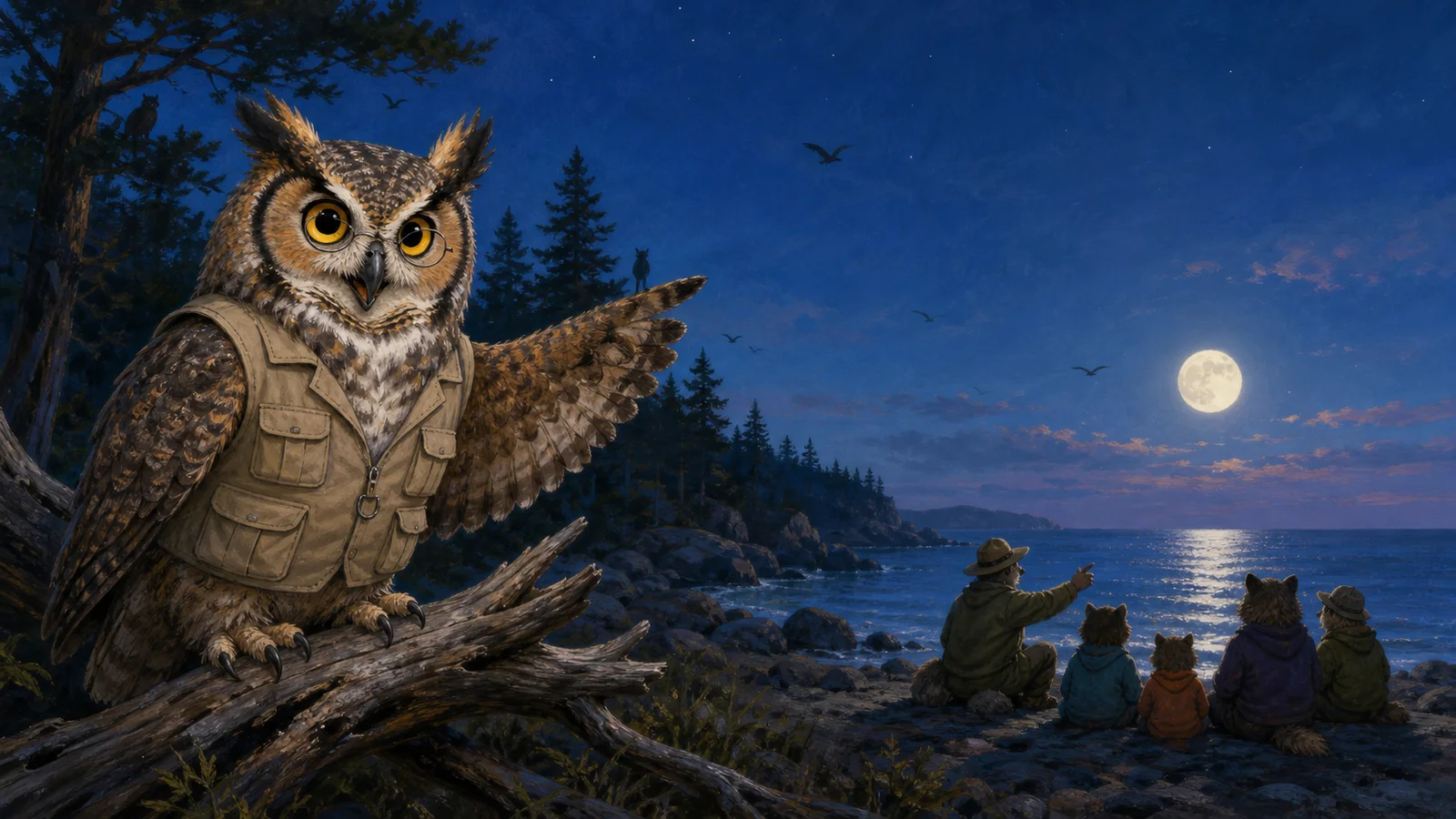
Editorial illustration by Hilarious News; it is not a documentary depiction of the program.
The National Park Service says the program is held at Sand Beach and introduces visitors to crepuscular and nocturnal animals. In plain terms, that is the crowd that treats sunset as an opening bell. Professor Hoot, who is both an owl and therefore an aggressively interested party, supports the arrangement.
Children are welcome with an adult, according to the event listing. The practical details matter, too: reaching Sand Beach involves stairs and uneven ground, and the park advises visitors to prepare for wind, cold, moisture, insects, and the usual consequences of taking the coast seriously after dark. A flashlight or headlamp and appropriate footwear are part of the sensible plan; the program may be canceled in severe or unsafe weather.
A very small evening assignment
Goodnight Acadia is not a summons to become a wilderness expert before dessert. It is a ranger-led chance to listen and look during the brief moment when the daytime crowd thins out and the night shift begins. The event page notes that visitors can continue with Acadia’s Night Sky Program an hour after the twilight talk ends, if they would like to turn one evening program into a thoroughly respectable late bedtime.
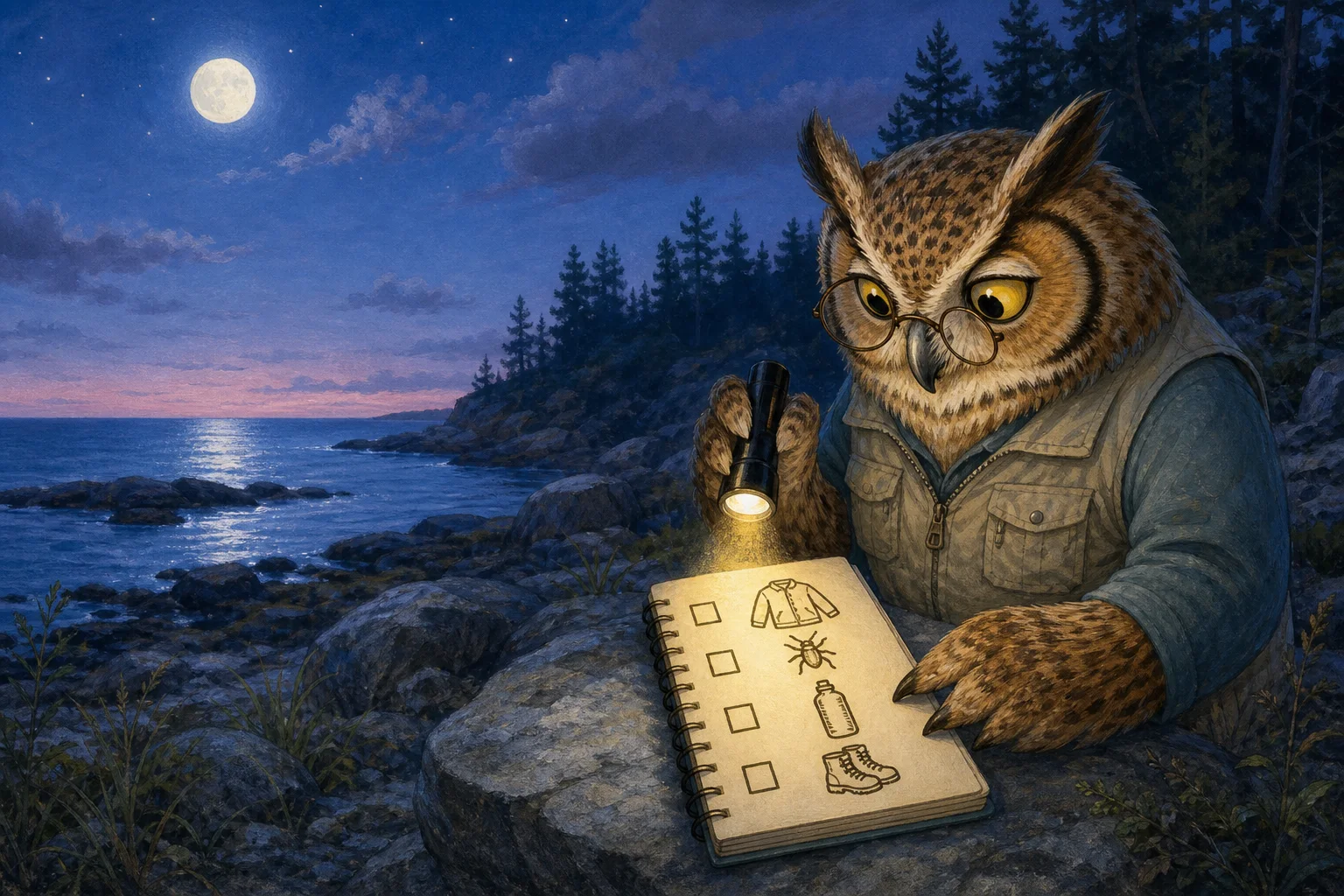
Professor Hoot’s unofficial checklist, illustrated for this article. Please follow park guidance for the actual visit.
The official listing includes accessibility information and asks visitors who need accommodations to contact the park at least 10 days ahead. It also says the talk will go ahead in cloudy conditions, though not in severe weather or unsafe conditions. That is the correct level of drama for a shoreline evening: enough mystery for the animals, not enough for anyone’s footwear.
For the time, location, accessibility requests, and any last-minute conditions, check Acadia’s official event listing before heading out. Professor Hoot’s final ruling is characteristically precise: be warm, be prepared, and allow the creatures with better night vision to have the first word.
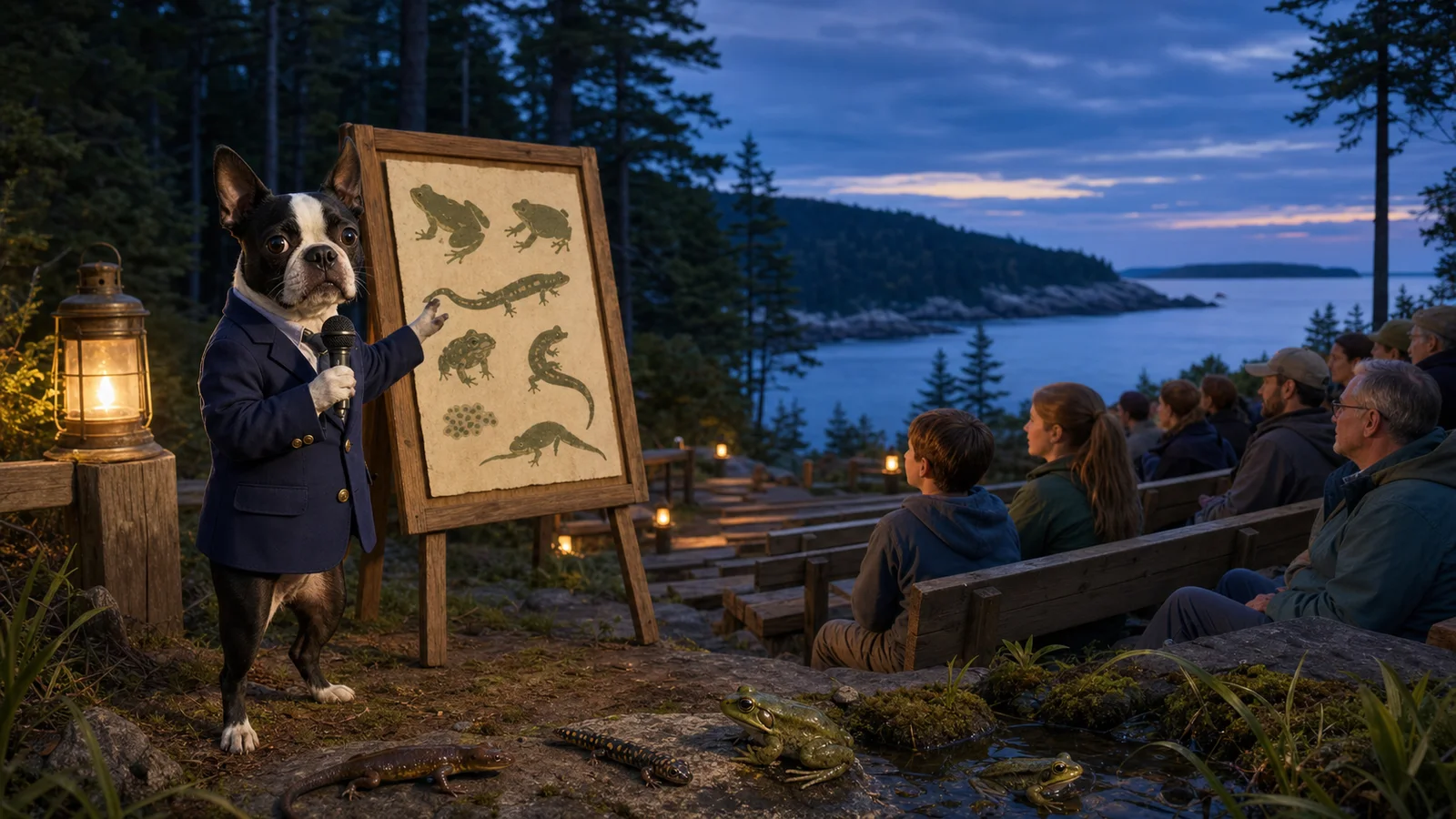
Acadia National Park has scheduled an amphibian program for 7 p.m. Tuesday, which is a surprisingly formal way to announce that frogs, salamanders, and their damp little colleagues have the evening slot.
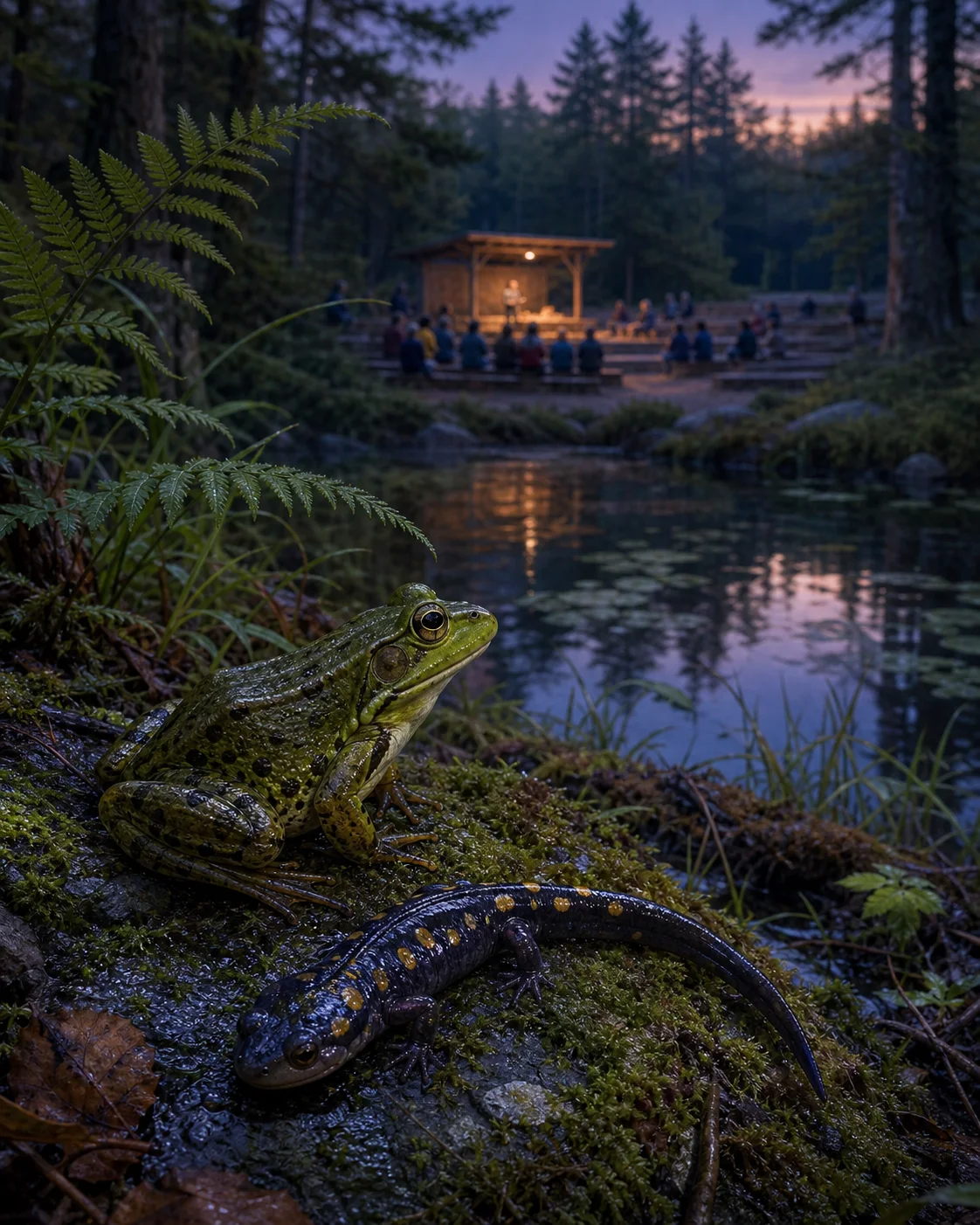
The National Park Service lists “Amphibians of Acadia” as a free ranger program at the Seawall Campground Amphitheater. The listing says it begins at 7 p.m. on July 28 and runs for 44–60 minutes. That is long enough for a proper introduction, a few field notes, and—if the audience is lucky—a lesson in why the guests never need a tie.
The official assignment
The park’s event listing is admirably direct: visitors are invited to join a ranger to learn about Acadia’s amphibians. It identifies the program as an evening campground event, at the Seawall Campground Amphitheater, and says admission is free. The NPS nature guide separately notes that Acadia’s amphibian-and-reptile page covers frogs, snakes, turtles, and salamanders in the park.
In short, the schedule is real. The newsroom angle is that the park’s smallest residents have apparently secured a prime-time educational engagement while the rest of us are still deciding whether bug spray counts as eveningwear.
Editorial illustration
What visitors can count on
A ranger-led program about amphibians at Acadia National Park.
7 p.m. on Tuesday, July 28, at Seawall Campground Amphitheater.
A listed length of 44–60 minutes and no admission fee.
What visitors should not count on is a formal press conference from any frog. They tend to let the ranger handle the speaking, which is probably wise: amphibians have already mastered the difficult art of looking fully prepared while doing almost nothing at all.
Buster’s field note
This is the kind of small, local program that makes a park visit feel less like checking off scenery and more like joining the place for an evening. Bring the usual campground common sense, follow park guidance, and let the ranger do the identifying. The amphibians already have enough on their plates without being asked for autographs.
At Vicksburg National Military Park over the July 4 weekend, the visitor center had an unusually tall historical interpreter on the calendar: Douglas the Camel. The park’s program brought Doug Baum and the Texas Camel Corps to represent Douglas, the camel mascot associated with the 43rd Mississippi Infantry. That is a lot of history to carry before breakfast, even for a camel.
The National Park Service scheduled the living-history program for July 2 through July 5, with the camel team stationed at the visitor center from 9 a.m. to noon. The event was sponsored by Friends of Vicksburg National Military Park and Campaign. The modern camel was there to help visitors explore a real, peculiar chapter of the Vicksburg Campaign—not to play an eyewitness. Buster’s notebook remains firmly in the present tense.
Why a camel?
Douglas was one of several animal mascots connected to Civil War units. The National Park Service says he carried supplies for the 43rd Mississippi and that his presence helped give the regiment its “Camel Regiment” nickname. An archived Vicksburg park release likewise describes Douglas as a mascot tied to Company A of the 43rd Mississippi Infantry.
Editorial illustration generated for Hilarious News; it is not a historical photograph or a depiction of a documented event.
That does not make the story a joke at the expense of the war or the people caught in it. It makes it an unusually memorable route into history: an animal with a practical job, an improbable nickname, and a modern educational program built around explaining the record carefully.
Buster’s official finding
A camel at a Mississippi military-park visitor center is exactly the kind of detail that makes a reporter lower the notepad, blink twice, and ask for the source list. In this case, the sources agree: Douglas is part of the park’s long-running living-history storytelling, and the July program gave families a chance to meet a present-day camel while learning about the historical one.
Our conclusion is therefore modest but firm: history sometimes arrives with four long legs and a better sense of timing than the rest of the newsroom.
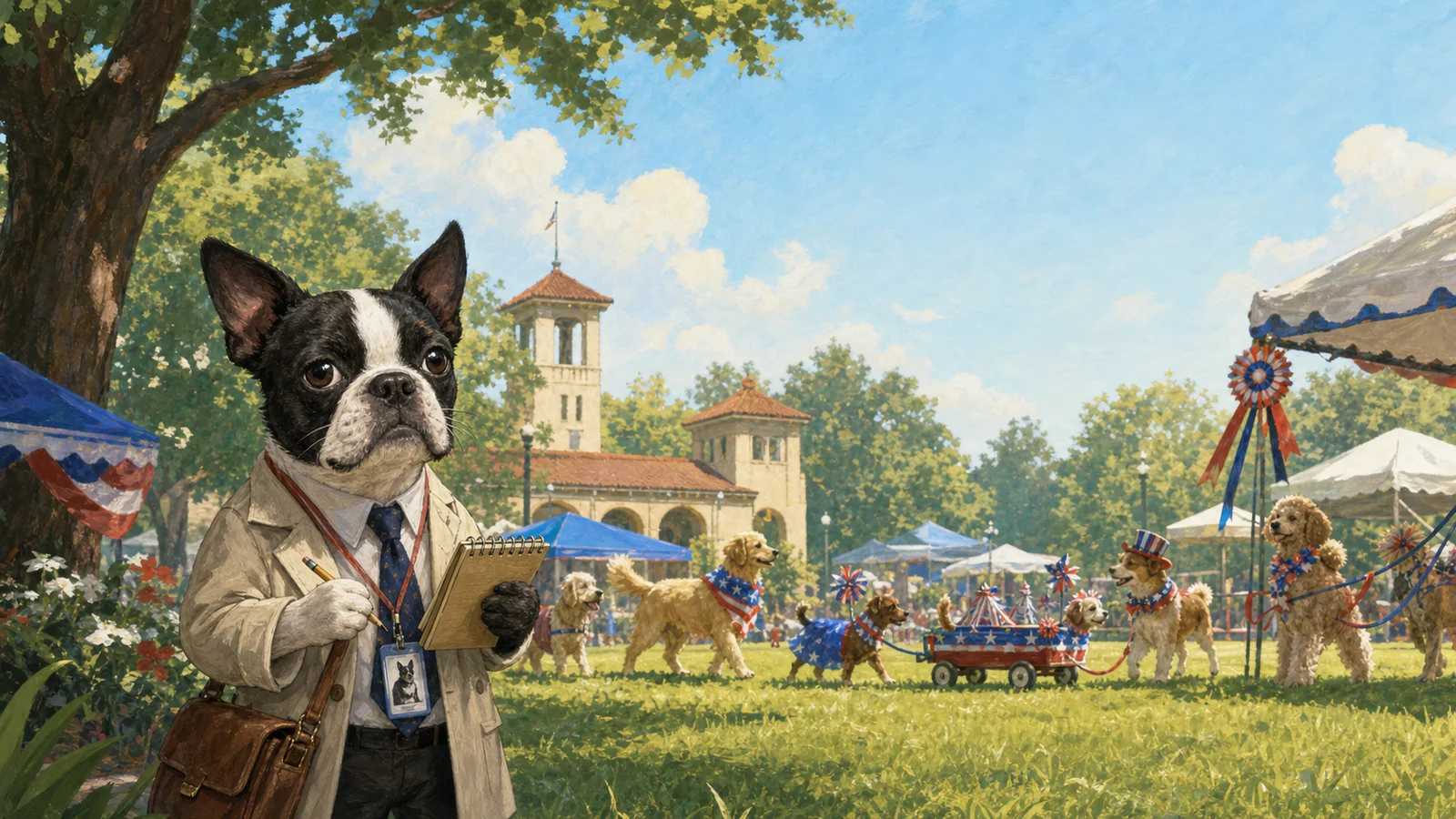
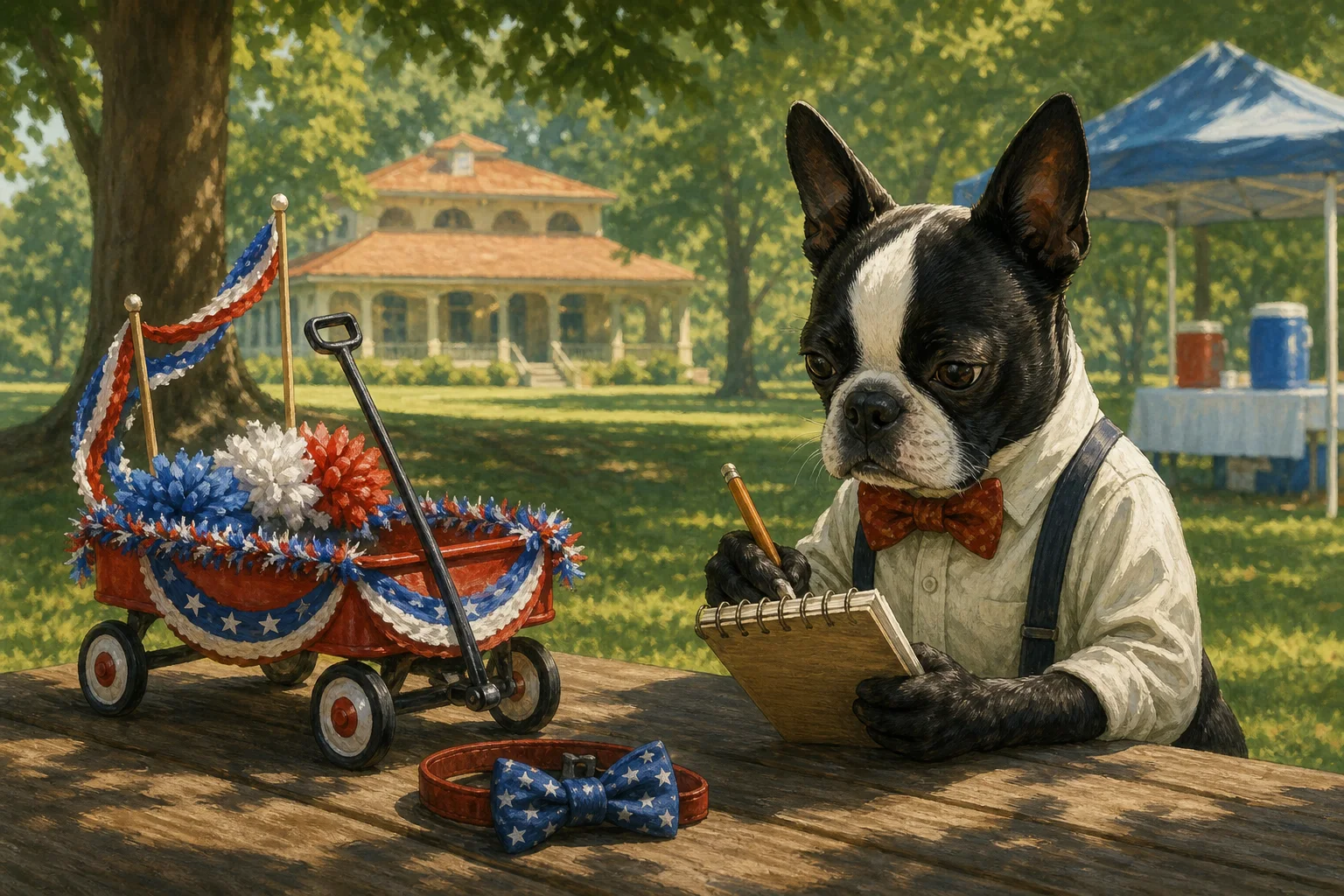
Some parades invite you to find a curb. Hot Springs National Park tried a more direct arrangement for its July 4 celebration: no spectators. If you showed up, the park said, you were in the parade.
The National Park Service’s Freedom 250 page describes the All-American Community Parade as a half-mile trip along Bathhouse Row to Arlington Lawn. Participants were encouraged to dress for the occasion, and small decorative wagon floats were welcome. The park also said leashed pets could join if they behaved well with people and other pets. A concise standard, honestly. Humanity has spent centuries trying to meet it.
At the picnic afterward, the listed activities included games, live performances, a cupcake race, and costume contests for children and pets. The park’s event information says the kids-and-pets contest did not require registration. That is the sort of procedural detail that makes a Boston terrier check his calendar twice and his collar once.
Editorial illustration generated for Hilarious News; it does not depict the Hot Springs event or its participants.
The public event materials reviewed for this story do not identify pet-contest entrants, winners, costumes, or a final tally. That restraint is worth preserving. What the record does establish is a community event designed to make joining in easier: a paved, mostly flat route; a picnic with shade tents and cooling stations; and a program that made room for both people and their leashed companions.
A later park update includes a photo caption saying hundreds of participants walked in the July 4 community parade with floats and patriotic outfits. It does not turn the contest into a scorecard, but it does confirm that the invitation to participate was taken seriously.
Buster’s official finding is therefore narrow: Hot Springs staged a real community parade where the audience became the procession, and the schedule explicitly made space for pets and their costume contest. The unverified details—who wore what, who won, and whether any dog objected to a bow tie—remain in the responsible custody of history.
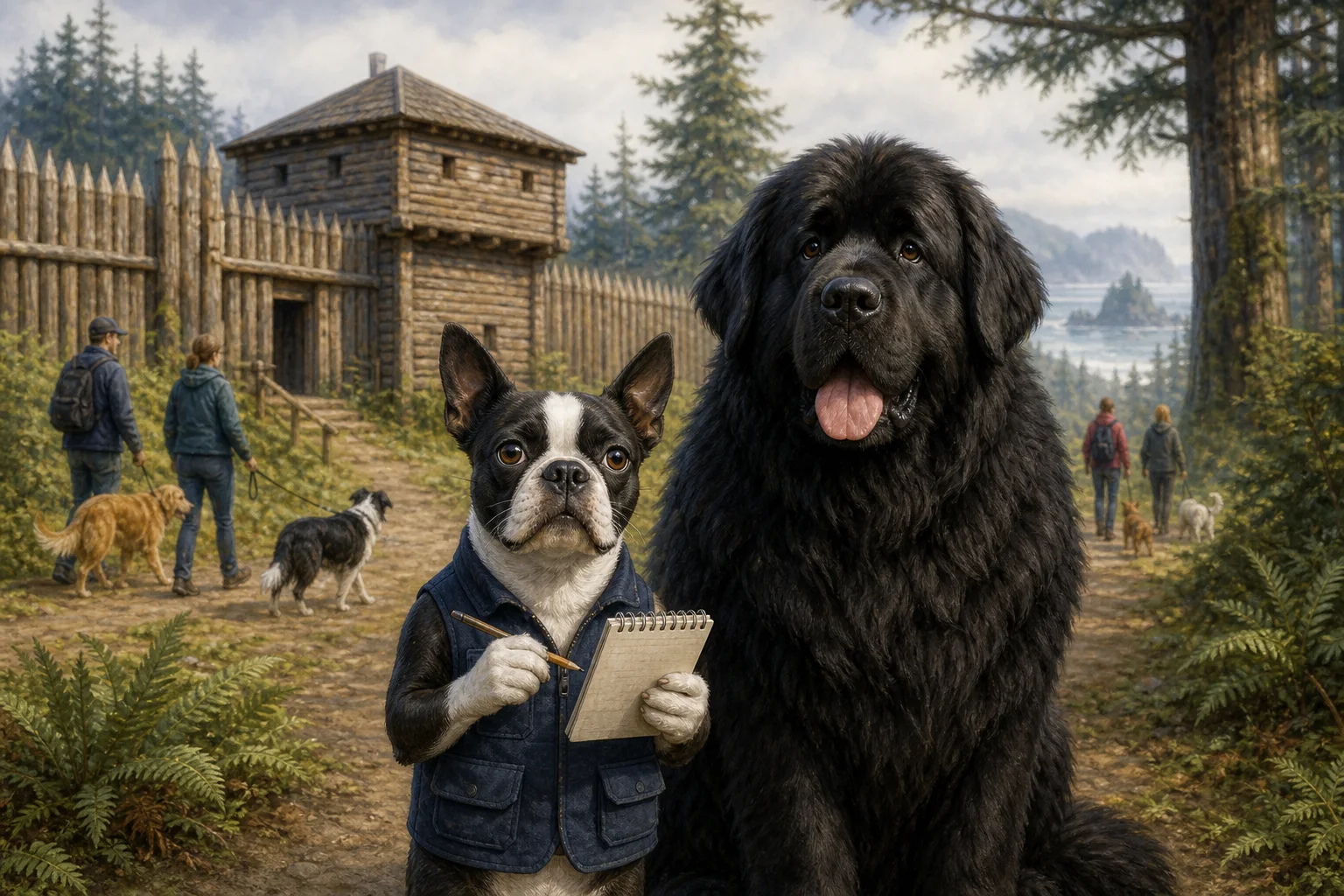
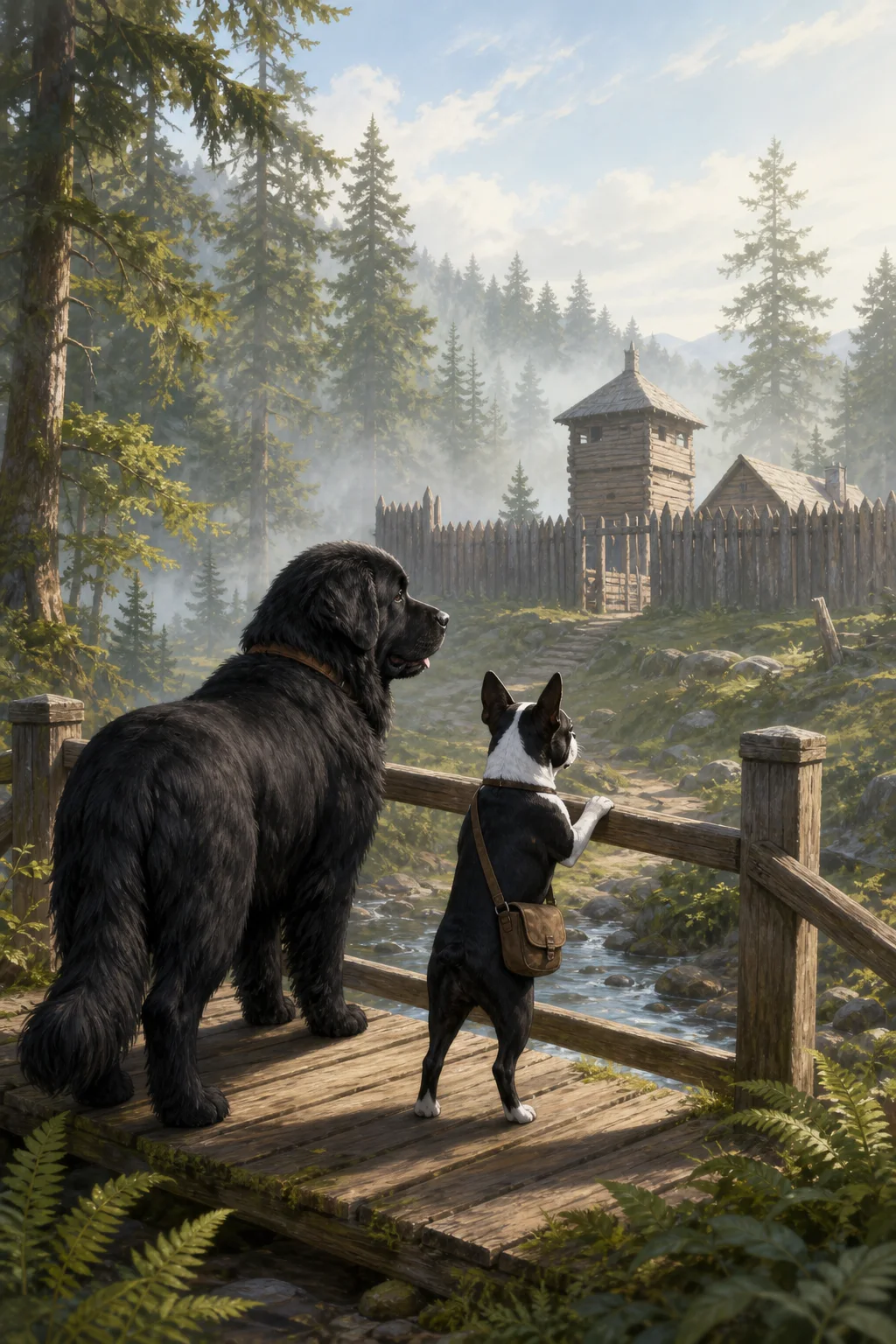
Earlier this month, Lewis and Clark National Historical Park held a day for the one member of the Corps of Discovery who could not have signed the guest book even if he had wanted to: Seaman, Meriwether Lewis’s Newfoundland dog.
The park’s annual Seaman’s Day at Fort Clatsop invited visitors to learn about the expedition dog and meet visiting Newfoundland dogs and their people. The National Park Service says the Lewis and Clark Expedition’s 33 people wintered at Fort Clatsop in 1805–06; Seaman was its canine companion. A historical event with guest Newfoundlands is, by any reasonable reporting standard, an extremely good use of a calendar square.
A dog with a very serious résumé
According to the park’s event description, explorers’ journals described Seaman as a watchdog, hunter, retriever, companion and diplomat during the expedition. That is a formidable list for any colleague, especially one whose professional paperwork was presumably paw-print based.
The park’s frequently asked questions page likewise identifies Seaman as Lewis’s Newfoundland and notes that today’s dogs can follow in his pawprints in many areas of the park, provided they follow the park’s leash and access rules. That is fair: history belongs to everyone, but the visitor center carpet has a job to do.
Editorial illustration; it is not a depiction of Seaman, the 2026 event, or a historical scene.
Guest Newfoundlands, please report to the fort
For this year’s program, the park said it had invited guest Newfoundland dogs and their people to volunteer, giving visitors a chance to meet modern dogs of the same breed while learning about Seaman. The event listing asked visitors to limit bringing additional Newfoundland dogs for the safety of the canine participants and advised anyone bringing another dog to make sure that dog was comfortable around large dogs.
That is not a snub; it is sensible event planning. Newfoundlands are famously substantial, and a gathering of them deserves the same calm logistics normally reserved for a parade float, a marching band, or a particularly ambitious couch.
Why the story still works
Seaman’s Day connects a big national story to a small, wonderfully direct question: what was the expedition dog like? The NPS pages give visitors a practical route into that question—history programming, a visit to Fort Clatsop, and a chance to meet the breed that keeps the story tangible without pretending the modern dogs are historical evidence.
Buster’s field note is therefore brief: a park honored its famed expedition dog, welcomed some very large modern cousins, and asked everybody to keep the occasion safe and leashed. It is the kind of assignment that makes a reporter grateful for notebook paper, sturdy shoes and a respectful distance from an enthusiastic tail.
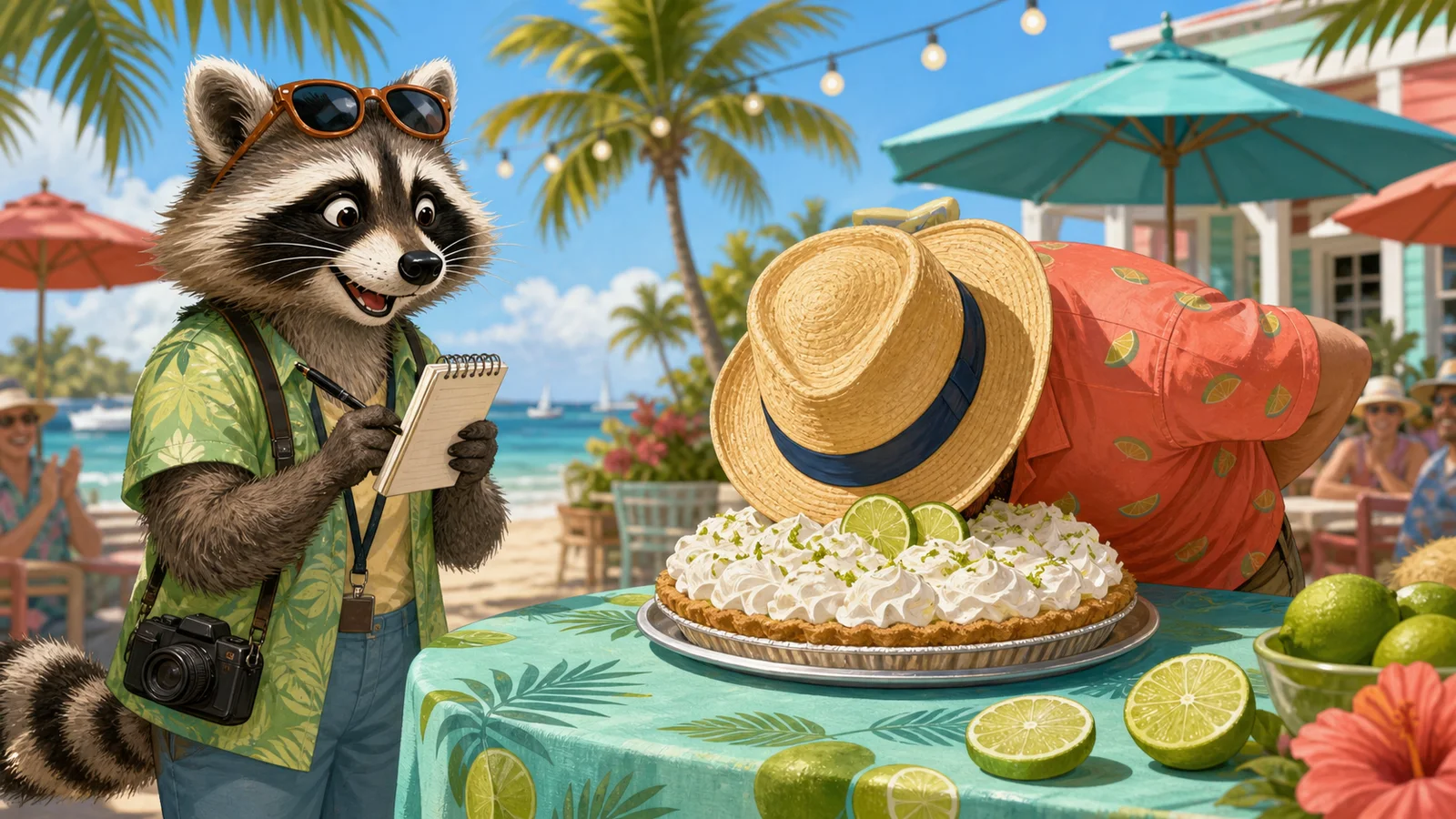
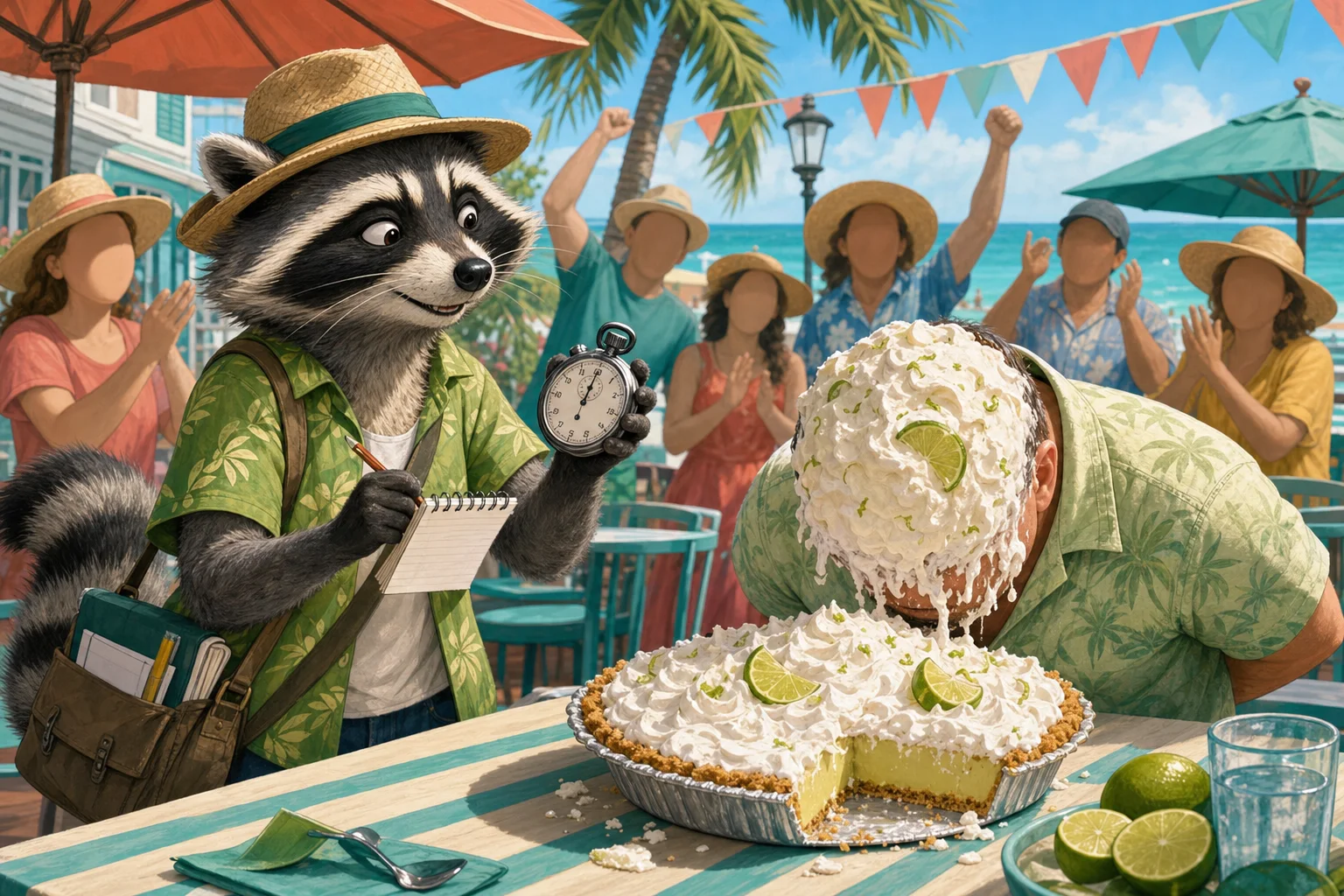
Key West’s latest pie champion did not need a fork, a plate, or even the normal dignity associated with dessert. Kevin Renly of Summerland Key won the World Famous Key Lime Pie Eating Championship on July 4 by finishing a whipped-cream-topped, 9-inch Key lime pie in 59.60 seconds.
The contest, part of the 2026 Key Lime Festival, asked competitors to keep their hands behind their backs. The festival schedule put the championship at Southernmost Beach Café in Key West, with 25 contestant places available; the Key West Chamber of Commerce reported that 25 people took the plunge on the day.
A very specific route to glory
Renly was not a first-time optimist. According to the Chamber’s report, he had competed in 2024 and 2025 before winning this year. Its account says he called the third attempt “the charm” and noted that he did not want to go home with another near miss on his 37th wedding anniversary.
That is a lot of pressure to place on one pie. Rita’s consumer desk can confirm only the essentials: one whole pie, no hands, plenty of whipped cream, and a clock that apparently does not care about anyone’s shirt.
Editorial illustration; it does not depict Kevin Renly or the 2026 contest.
The rules were delightfully unforgiving
The festival described the event as a head-to-head race to finish a 9-inch Key lime pie without using hands. The Chamber’s post-event report added that goggles and dive masks were permitted. That practical allowance suggests the organizers had a realistic understanding of whipped cream’s travel plans.
Public radio station WLRN also identified Renly as the winner of the festival’s 14th annual contest. The result makes him this year’s holder of a title that is both highly specific and, for obvious reasons, unlikely to be defended in a white linen suit.
Why Key West keeps making room for the mess
The pie-eating championship was one event in the July 1–5 Key Lime Festival, a program that also listed tastings, a vendor village, a 5K, trivia and other citrus-centered gatherings. The City of Key West’s calendar recorded a festival kickoff street closure on July 1, another small signal that the celebration extends beyond a single very determined face-first moment.
Renly’s 59.60-second finish is the measurable part of the story. The less measurable part is the public service performed by any grown adult who volunteers to turn a local dessert into a stopwatch event. On behalf of snacks everywhere: thank you for your citrus-forward commitment.